


Ask this question anywhere and you get a number back. Six months. A year. Two years. Three to six months with daily wear. Every one of those answers is confident, none of them agrees with the others, and not one of them tells you where the figure came from.
They disagree because they are all answering in the wrong unit. A clip-in set does not expire on a date. It has no shelf life, no clock running inside the box, and nothing happens to it at all while it sits in a drawer. It wears out only when it is used, and the thing that uses it up fastest is not wearing it.
So the question that can actually be answered is not how many months a set lasts. It is how many wears you have in it, and how fast you are spending them.
Short answer: A human hair clip-in set lasts anywhere from three months to several years, and that spread is so wide because months are the wrong unit. A set has a wear count, not a calendar life. Most human hair sets are finished somewhere between 150 and 300 wears. Daily wear spends that in under a year, twice-weekly wear takes two years to reach the same point, and occasional wear can keep a set going for several years. Washing consumes a set far faster than wearing it does.
The set referred to throughout is the Seamless 7 Set Clip-in Extensions, 100% human Remy hair with the cuticle aligned in one direction. Cuticle direction is the single thing that decides whether a set tangles more each month or stays brush able, which is why it comes up repeatedly below.Almost everything that follows is about slowing the clock rather than reading it. The wear count you start with is fixed. How quickly you get through it is not.
- How Long Do Clip-In Extensions Actually Last?
- Why Does Every Answer Give a Different Number?
- How Do You Work Out Your Own Number?
- Which Part Wears Out First, the Hair, the Wefts or the Clips?
- What Actually Shortens the Life of a Set?
- How Often Should You Wash Clip-In Extensions?
- Can You Sleep in Clip-In Extensions?
- Does Heat Styling Shorten the Life of a Set?
- How Do You Know When a Set Is Finished?
- Can You Replace the Clips Instead of the Whole Set?
- What Does a Set Cost You Per Wear?
- Do Human Hair and Synthetic Sets Last the Same?
- How Should You Store Them Between Wears?
- Does Hair Quality Change How Long a Set Lasts?
- How 1 Hair Stop Thinks About This
- Shop Clip-In Hair Extensions
- Frequently Asked Questions
How Long Do Clip-In Extensions Actually Last?
Between three months and several years, and anyone who narrows that to a single figure without first asking how often you intend to wear them is guessing.
The useful version of the answer is a count. A good human hair set has somewhere in the region of 150 to 300 wears in it before the ends stop responding to conditioning and start tangling on every brush. That range is wide for honest reasons, covered below, but the count itself is stable in a way that a calendar figure never is.
Convert it and the contradictions resolve themselves. Worn every day, 200 wears is roughly seven months. Worn twice a week, the same 200 wears is two years. Worn for occasions only, you may never reach the count at all, and the set will be retired because the colour no longer suits you rather than because the hair gave out.
Both of those are the same set. Neither answer is wrong. They just describe different people.
Why Does Every Answer Give a Different Number?
Because the published figures are averages across wearers who have nothing in common, and the words used to group them are never defined.
Read enough of these and you will find the same three words doing all the work: regular, occasional and premium. None of them is ever given a value. Regular wear might mean five days a week or five days a month. Occasional might mean a wedding a year or a night out every fortnight. A figure built on an undefined word cannot be checked, and quite often it cannot even be self-consistent. It is common to find a six to twelve month figure and a well over a year figure in the same piece of writing, describing the same product.
There is a second problem underneath the first. The three parts of a clip-in set wear out at completely different speeds, and most answers treat the set as one object. The hair, the weft and the clips are on separate clocks, and in a great many sets the clips fail long before the hair does. A set that is described as dead is quite often a perfectly good set of hair with four tired clips on it.
What that means for you: Ignore the headline figure and read what a source says about wash frequency, heat and storage instead. Those are mechanisms, they apply to your set specifically, and they are the only part of any of this you control.
How Do You Work Out Your Own Number?
Start from how often you will genuinely wear them, not how often you imagine you will. Then look up the row.
| How you wear them | Wears a year | Washes a year | Where a human hair set usually lands |
|---|---|---|---|
| Every day | 300 or more | 15 to 20 | Under a year |
| Most working days | About 200 | 10 to 13 | Around a year |
| Two or three times a week | About 130 | 6 to 9 | A year and a half to two years |
| Weekends and events | About 60 | 3 to 4 | Three years or more |
| A few occasions a year | About 12 | 1 | Many years, if stored properly |
The wash column is there because it is doing most of the work. Every row above assumes a wash every 15 to 20 wears, which is the point at which product build-up starts to weigh the hair down. Extension hair has no scalp feeding it, so every wash takes something out that nothing puts back. Two people on the same number of wears a year, one washing every ten wears and one every twenty, are not on the same timeline at all.
The realistic adjustment most people need to make: Daily wear is far rarer than intentions suggest. Taking a set out and putting it back in is a five minute job once learned, and five minutes every morning is a commitment many people make for three weeks and then settle into two or three days a week. If you are buying your first set, budget against the two or three times a week row rather than the daily one.
Which Part Wears Out First, the Hair, the Wefts or the Clips?
Usually the clips, which is the most useful thing on this page, because clips are the cheapest part to replace and almost nobody knows they can be.
| Part | What wears it out | First sign | Can it be fixed |
|---|---|---|---|
| The clips | Opening and closing, bending against the scalp | A clip that no longer snaps shut with resistance, or one that creeps down during the day | Yes. Clips are sewn on and a hairdresser can swap them in minutes. This is the cheapest repair there is |
| The hair | Washing, heat, brushing, friction against clothing | Ends that go dry and tangle after every wash rather than every few | Partly. Deep conditioning buys time and point cutting the ends buys more |
| The weft | Repeated flexing, and pulling pieces apart when they are tangled together | Short hairs working loose along the sewn edge, then visible shedding | Often. A weft can be restitched. A weft shedding along its whole length usually cannot |
| The colour | Sun, chlorine, hard water, pigmented shampoos | Brassiness at the ends, or an overall dullness that no longer matches your roots | Usually. Human hair takes a toner refresh. Book a salon rather than doing it at home |
Work through that table before you replace anything. A set where the hair still brushes smoothly and the colour still matches is not finished, whatever the clips are doing.
What Actually Shortens the Life of a Set?
Six things, in rough order of how much damage they do.
- Washing too often: The single biggest one, and the easiest to fix. Extension hair is not replenished by a scalp, so each wash strips oils that never come back on their own. Wash at 15 to 20 wears, not weekly, and not because it feels like it should be time.
- Sleeping in them: A full night of friction against a pillow does more to the hair than a week of wearing, and it pulls on your own roots for eight unbroken hours. Covered in its own section below, because it is the thing people most want permission to do.
- Heat without protection: Human hair takes heat, but it cannot repair itself afterwards. Your own hair recovers from a hot straightener over weeks. Extension hair carries every pass it has ever had.
- Brushing wet, or brushing from the roots down: Wet hair stretches and snaps. Brushing downward from the weft drives tangles into the stitching and loosens hairs at the seam. Always start at the ends and work upward, and always on dry hair.
- Storing them loose: A set left in a drawer or a handbag tangles against itself, and the untangling is what causes the shedding, not the storage. Most of the damage attributed to wearing actually happens between wears.
- Chlorine, salt water and hard water: All three strip and roughen the cuticle, and chlorine will shift the tone of lighter shades permanently. Take a set out before swimming. There is no product that makes this safe.
Notice how few of those happen while the set is on your head. Wearing clip-ins is close to the gentlest thing you can do to them.
How Often Should You Wash Clip-In Extensions?
Every 15 to 20 wears, and the gap between washes is the most powerful lever you have over how long a set lasts.
Count wears rather than days. A set worn twice a week needs washing every two months or so. A set worn daily needs it roughly every three weeks. If you are reaching for the shampoo because a fortnight has passed, you are washing on a schedule the hair does not have.
The signal to wash is build-up rather than time. Hair that has gone limp, lost its movement or stopped holding a style is carrying product. Hair that still swings and still takes a curl does not need washing, however long it has been.
- Brush thoroughly before water touches it: Starting at the ends. A tangle that goes into water comes out as a knot and the knot comes out as shedding.
- Lukewarm water, never hot: Hot water lifts the cuticle, and a lifted cuticle is what makes hair catch against itself.
- Sulphate free shampoo, applied downward: Stroke it through the length rather than scrubbing in circles. There is no scalp to clean, so all you are doing is lifting product off the hair shaft.
- Keep conditioner off the wefts: Mid-length to ends only. Conditioner at the stitching softens the thread and loosens hairs over time.
- Air dry flat, away from the sun: Lay the wefts on a towel rather than hanging them, which stretches the seam under the weight of the wet hair.
- Do not brush until fully dry: Then start at the ends again.
Between washes, a light mist of leave-in on the ends does more for longevity than any wash ever will.
Can You Sleep in Clip-In Extensions?
No, and this is the one place where the whole category is unanimous.
It is worth understanding why, because the instinct behind the question is reasonable. Taking a set out at night and putting it back in the morning feels like a lot of work, and leaving it in appears to skip the work entirely. It does not. It moves the cost somewhere worse.
- Eight hours of friction against a pillow: Rolling over drags the hair in every direction against fabric. One night does more mechanical damage to the ends than several days of ordinary wear, and the tangle you wake up to has to be brushed out, which sheds more.
- Eight hours of unbroken tension on your own hair: This is the serious one. Clips are designed to be in for a day and then released. Sustained pull on the same small sections of root, night after night, is how traction damage starts at the hairline and the nape. It is slow, it is not dramatic, and by the time it is visible it has been happening for months.
- Clips bending in directions they are not built for: A clip pressed between a skull and a mattress flexes open and closed all night. This is the fastest way to kill the part of the set that was going to fail first anyway.
For a holiday or several days away, where taking them out nightly feels impractical: Take them out anyway. The practical answer is to get faster rather than to leave them in. Taking a set out is quicker than putting it in, usually two or three minutes once you are used to it, and the step by step for fitting and removing them is worth reading once if you have only ever improvised it. If the daily handling genuinely is the obstacle, clip-ins are the wrong format for you rather than a format to be worn wrongly, and a halo on a wire is the honest alternative because it goes on in under a minute.
Does Heat Styling Shorten the Life of a Set?
Yes, more than it shortens the life of your own hair, and the difference is worth stating plainly because it is rarely explained.
Your own hair is attached to a scalp that oils it and to a follicle that is growing a replacement. Damage from a hot tool is diluted over time by hair you have not damaged yet. Extension hair has neither. Every pass of a straightener is permanent and cumulative, and the set you are holding in year two carries every pass from year one.
- Stay below 180°C, which is about 350°F: Most tools default considerably higher. Human hair styles perfectly well at this temperature and the difference it makes to the lifespan of a set is substantial.
- Always use a heat protectant: On the extension hair specifically, not just your own.
- Keep the tool away from the clips and the weft: Metal conducts heat straight into the stitching, and heated thread is weakened thread.
- Style the set off your head where you can: It is easier, you can see what you are doing, and you are not working near your own scalp.
- Use heatless methods where they will do: A set left in loose plaits overnight, in its storage bag, takes a wave without any heat at all.
A set that is never heat styled can outlast an identically worn set that is straightened daily by a considerable margin. That is often the single biggest difference between two people who bought the same thing on the same day.
How Do You Know When a Set Is Finished?
Nobody publishes this, which is strange, because it is the actual decision. Here are the signs, and the order they usually appear in.
- It tangles after every wear rather than occasionally: The clearest single indicator. Tangling that returns within hours of being brushed out means the cuticle is roughened along the length, and no product reverses that.
- The ends stay dry however you treat them: If a deep conditioning treatment improves things for a day and the dryness returns, the hair is no longer holding moisture. One treatment is a test worth running before you decide.
- Shedding along the weft rather than from the ends: A few hairs is normal for the life of any set. Hairs coming away from the stitched edge in numbers means the weft itself is going.
- It no longer blends: Often this is your own hair changing rather than the set failing. A colour that has drifted or a length that has grown out is a reason to replace, but it is not the hair wearing out and it should not be read as one.
- Clips that will not hold: On its own, this is a repair rather than a replacement. See the next section.
Run this test before replacing anything: Wash the set, deep condition it, let it dry flat and brush it through from the ends. If it comes back soft and brushes cleanly, you have more wears in it than you thought. If it tangles while you are still brushing, it is done. That one hour saves a great many sets that get replaced early, and it confirms the decision on the ones that do need replacing.
Can You Replace the Clips Instead of the Whole Set?
Yes, and it is the most underused answer in this whole subject.
Clips are sewn onto the weft with thread. They are a separate component, they are sold separately, and a hairdresser or anyone comfortable with a needle can swap them. A full set of clips costs a fraction of a set of hair and the job takes under an hour.
Because clips take the most mechanical punishment of any part, they very often fail first. A set with good hair and tired clips looks and feels like a dead set. It is not. It is a repair.
- Replace the whole row, not the one that failed: They have all had the same use and the others are close behind.
- Match the clip width to the weft: A clip wider than the piece it sits on will catch and press into the scalp.
- Have the stitching checked while it is apart: The person replacing the clips can reinforce a loosening seam at the same time, which is the repair that extends a weft's life the most.
It is worth saying that a set which has had its clips replaced once and is approaching the same point again is telling you something. At that stage the hair has usually done the same mileage, and a second repair is often money better spent on replacement.
What Does a Set Cost You Per Wear?
This is the figure that matters, and it is the one nobody works out, including the sources that put a heading about it on the page.
The arithmetic is simple. Take what you paid, and divide it by the number of times you will actually wear the set across its life. Use the wear count from the table above rather than an optimistic guess.
- A set worn twice a week for two years: Roughly 200 wears. Divide by 200.
- A set worn most working days for a year: Roughly 200 wears. The same divisor, reached four times faster.
- A set bought for one wedding: One wear, unless you wear it again. The full amount, for one day.
Where this changes a decision: It reverses the usual instinct about cheaper sets. A set at half the price that reaches its end in a third of the wears is more expensive per wear, not less, and you will have spent the handling time twice. The per-wear figure is also what makes occasional wear look so different from the way people think about it. A set bought for events and stored properly between them can serve for years and arrive at a per-wear figure lower than almost anything else in a wardrobe.
The honest version of the objection: If you genuinely will wear a set once, per-wear maths does not rescue the purchase and nothing here is going to pretend otherwise. Rent, borrow, or buy the smallest piece that does the job, such as a ponytail piece rather than a full set.
Do Human Hair and Synthetic Sets Last the Same?
No, and the difference is not a matter of degree. They fail in completely different ways and only one of them can be rescued.
| Human hair | Synthetic | |
|---|---|---|
| Typical working life | Measured in hundreds of wears | Measured in weeks to a few months of regular wear |
| How it ends | Gradual dryness and tangling at the ends | Permanent frizz that cannot be brushed or conditioned out |
| Heat styling | Yes, with protectant, below 180°C | No, unless sold specifically as heat friendly |
| Can it be repaired | Deep conditioning, toning and re-cutting all work | Nothing reverses the frizz once it appears |
| Colour over time | Can be toned and refreshed to match your own | Fades and cannot be re-dyed |
| Response to washing | Each wash costs something but the set recovers | Each wash moves it measurably closer to the end |
The practical consequence is that a synthetic set has a fixed and short life you cannot extend, while a human hair set has a long life you can shorten or protect. Everything else on this page only applies to the second kind.
How Should You Store Them Between Wears?
Flat, dry, brushed and contained. More sets are damaged in storage than anyone expects, because the damage is invisible until the untangling starts.
- Brush before putting them away, not before putting them on: A tangle left in storage tightens into a knot over weeks. Brushed hair goes in and comes out ready.
- Clip the wefts together in a row: Fasten each weft to the next so the set travels as one piece rather than seven pieces working against each other in a bag.
- Lay flat, do not hang: Hanging puts the weight of the hair on the stitching for however long it is in there.
- Use a bag or a box, not a drawer: An open drawer means dust, friction against everything else in it, and hairs catching on edges.
- Keep it out of sunlight: A sunny shelf will lift the tone of a set over a summer without it ever being worn.
- Never store damp: Fully dry before it goes away, every time.
For a set worn a few times a year this matters more than anything else on this page, because storage is where that set spends almost all of its life.
Does Hair Quality Change How Long a Set Lasts?
Substantially, and there is one specific thing to look for rather than a general sense of quality.
Cuticle direction. Each strand of hair has a cuticle layer that lies in one direction, like scales on a fish. In Remy hair, every strand in the weft is aligned the same way, so the strands slide past each other. In non-Remy hair, which is collected loose and sorted, the strands run in both directions and their cuticles catch on each other every time the hair moves.
That single difference is most of what separates a set that is still brushable in year two from one that mats in month three. It is also why so much cheap hair feels excellent in the first week and is unmanageable by the second month. Many non-Remy sets are coated in silicone, which gives a convincing smoothness that washes off in three or four washes and takes the illusion with it.
- Remy, cuticle aligned: The thing that actually determines longevity. Ask specifically rather than accepting human hair as an answer, because non-Remy hair is also human hair.
- Single donor where possible: Strands from one head behave the same way in heat and water. A blend from many heads drifts out of step over time.
- Unprocessed or lightly processed: Heavy bleaching to reach a very pale shade costs the hair some of its life before you ever wear it. This is a real trade rather than a reason to avoid light shades, and it is worth knowing when comparing a platinum set against a dark one.
- Weft construction: A hand-tied or well machine-sewn weft sheds far less than a glued or heat-sealed one, which starts releasing hairs as soon as the bond ages.
If you are choosing a first set and weighing weight, length and colour as well, the full guide to choosing clip-in extensions covers those alongside this.
How 1 Hair Stop Thinks About This
We make the hair rather than fit it, which means the question we are asked most often is exactly the one at the top of this page, and we have never given a single number in answer to it.
Trusted by 300,000+ women worldwide | 4.8★ from 14,700+ reviews | 100% Human Remy Hair | Sourced From Temples | Clip-Free | Handmade in our own facility since 2009 | Damage-free application guarantee
"We are asked how long a set lasts every single day and we will not put a number on it, because the number is not ours to give. Two people buy the same set on the same morning. One washes it every fortnight and sleeps in it, and one washes it when it needs it and puts it away brushed. A year later those are not the same set and nothing we did in the workshop accounts for the difference. What we can be held to is the hair going in: one direction of cuticle, sourced from temples, wefted by hand in our own facility. The rest of it is honestly yours."
Raina Grover and Richa Grover, Co-Founders, 1 Hair Stop
Every set is 100% human Remy hair with the cuticle aligned in one direction, hand-wefted in our own facility since 2009. That is the part that decides whether the hair is still sliding against itself in year two, and it is the part a maker is actually responsible for.
The honest limitation: We cannot tell you how long your set will last and neither can anyone else. We will not publish a figure for our own hair, because a figure we cannot measure for your washing, your heat and your storage is marketing rather than information. What we can tell you is which habits move the number, and those are on this page whether you buy from us or not.
Shop Clip-In Hair Extensions
All of these are 100% human Remy hair with the cuticle aligned in one direction. Choose by how you will actually wear them, because that decides the life you get far more than the set does.
-
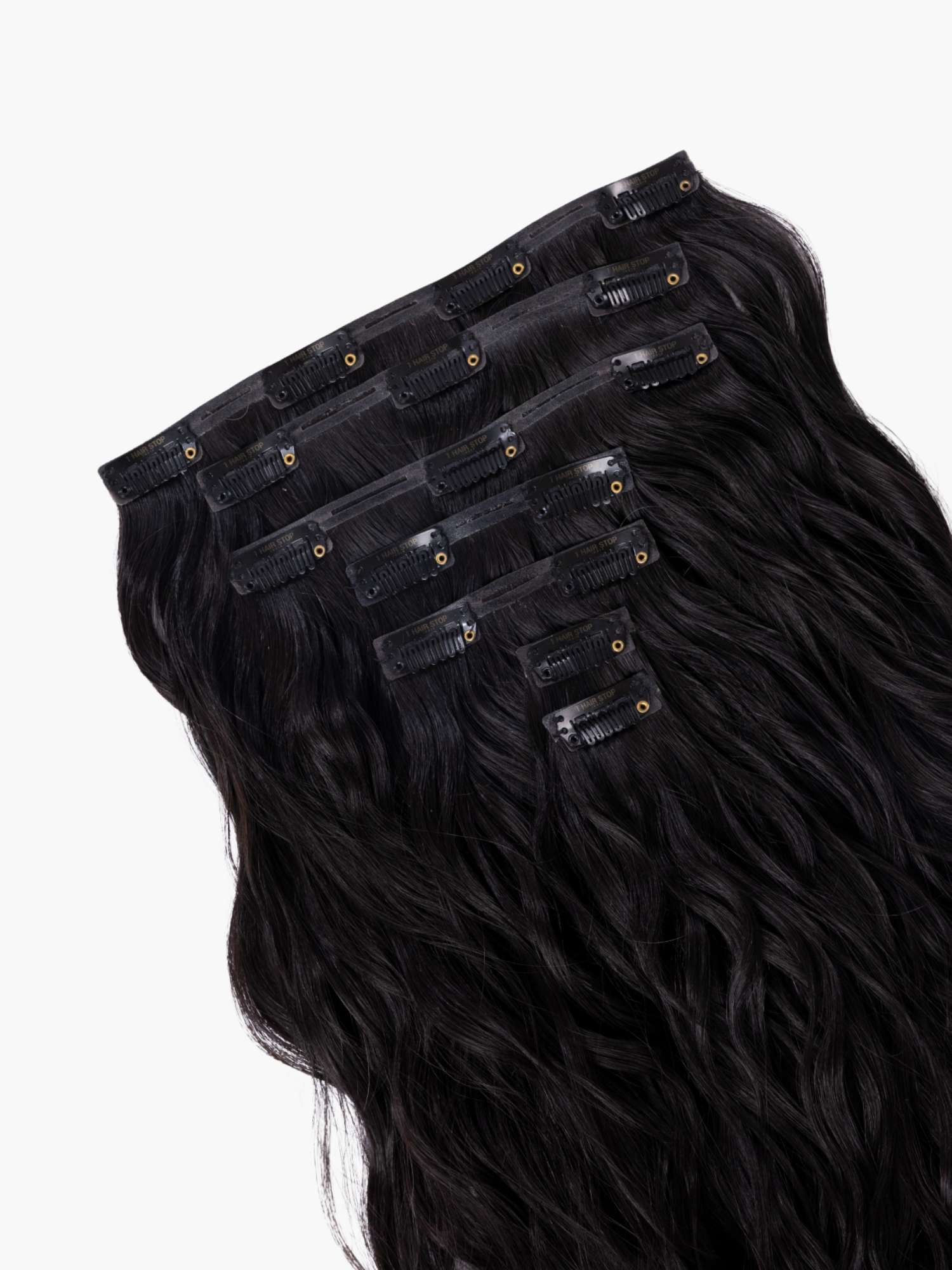
For regular wear, where it has to sit flat every day: Seven pieces across four widths in the Seamless 7 Set Clip-in Extensions. The flat weft puts less bulk at the root, which means less flex through the clips over hundreds of fittings.
-
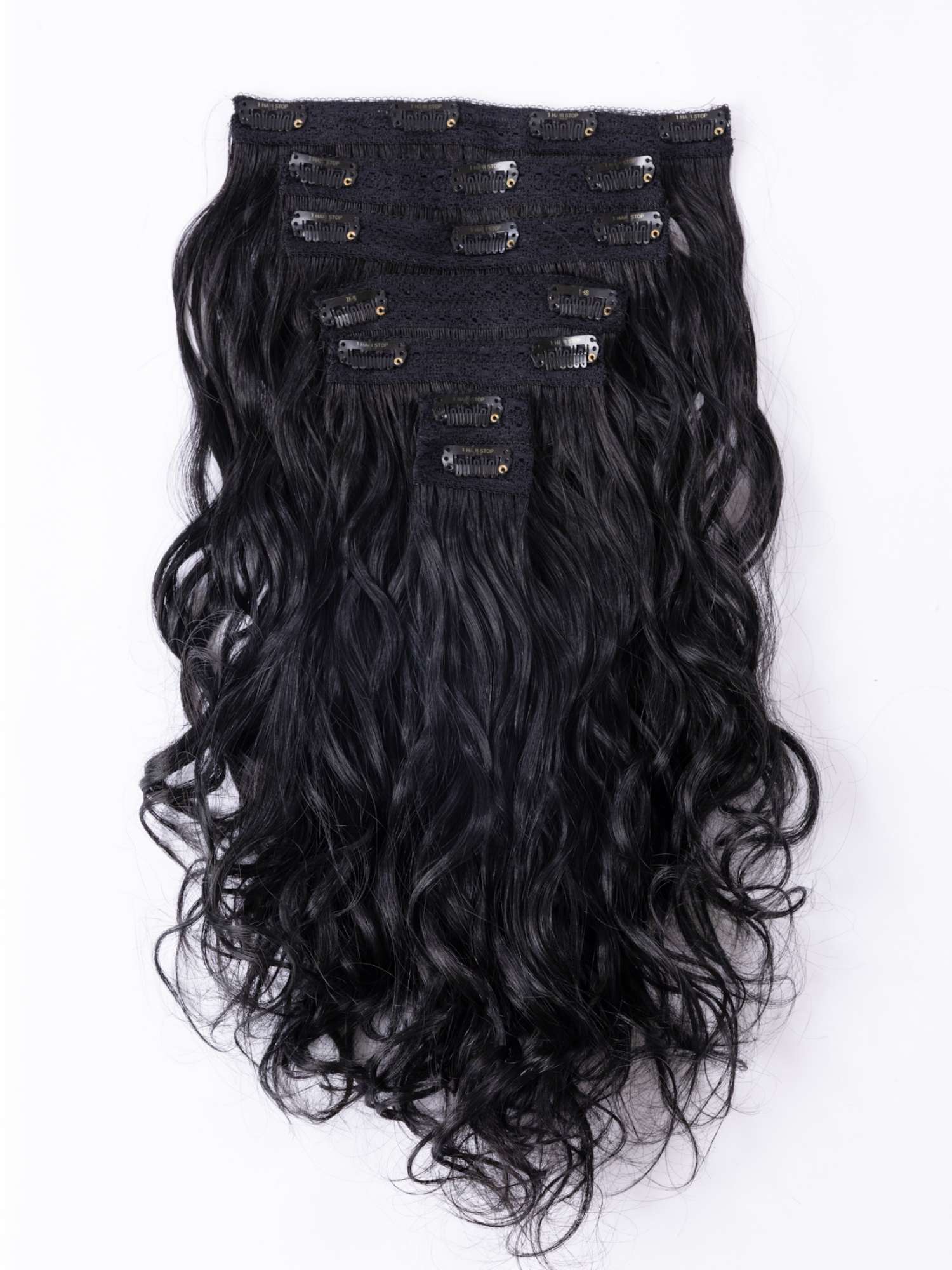
For thicker hair that needs more density per row: Carry more hair in fewer rows with the Classic 7 Set Clip-in Extensions. Fewer rows means fewer clips opening and closing each day, which is the component that usually goes first.
-
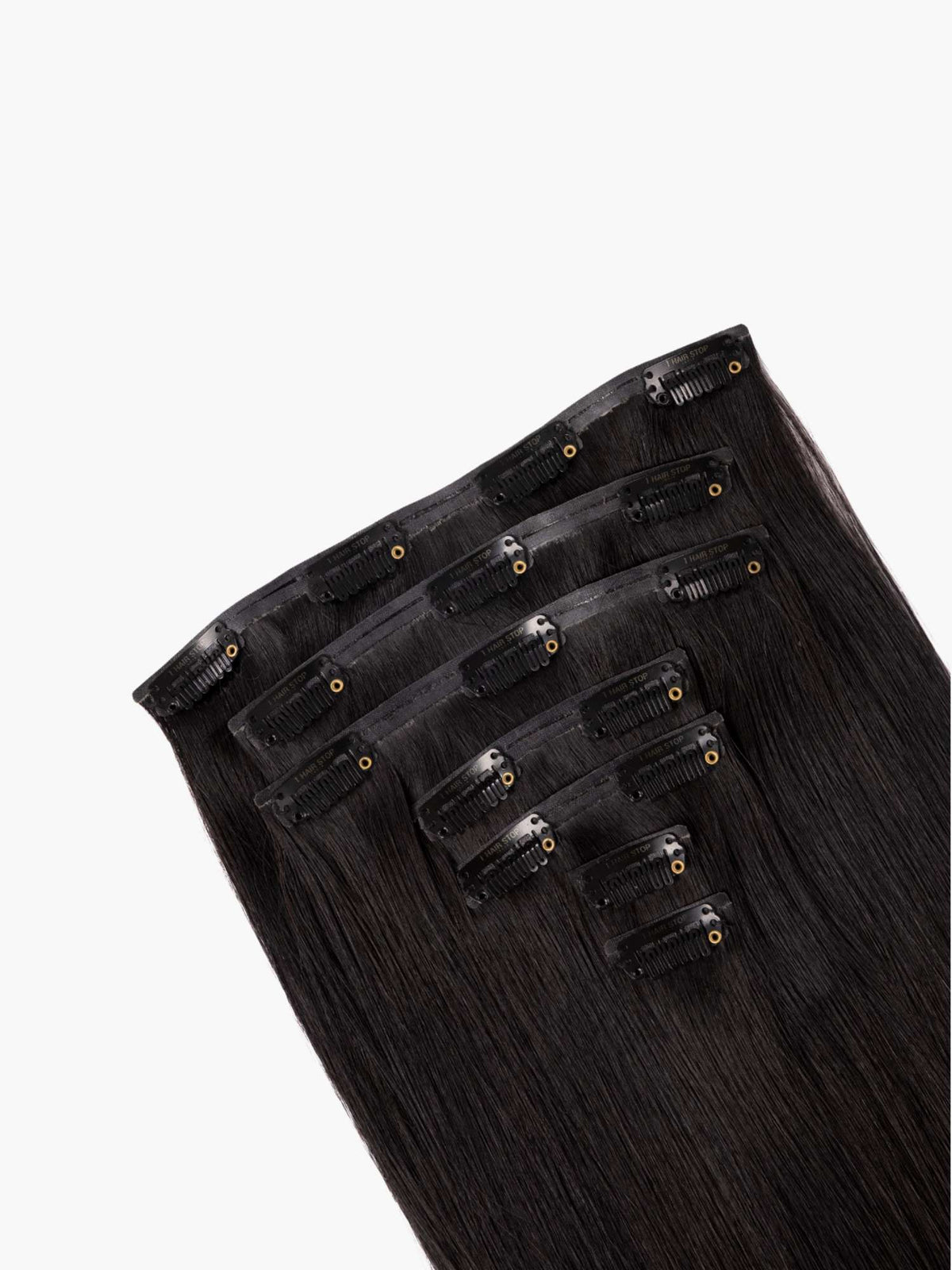
For straight hair, where a texture mismatch shows up as the set ages: Match your own fall from the start with the Seamless 7 Set in Natural Straight, so you are not heat styling the set into shape every time you wear it.
-
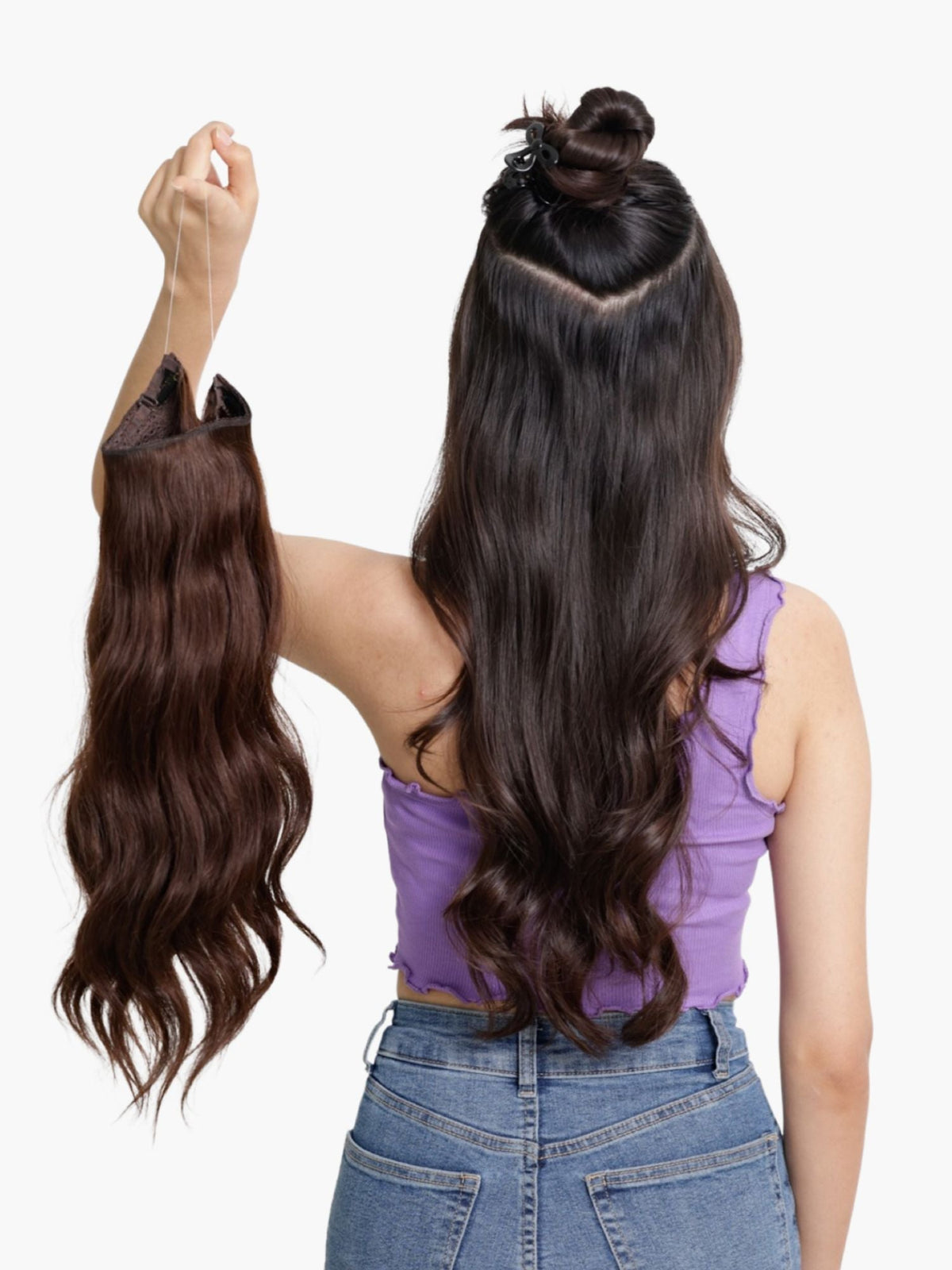
If you want the fewest contact points on your own hair: A single wire and no clips anywhere with Halo Hair Extensions. Nothing to wear out mechanically, under a minute to put on, and no tension on any individual section.
-
For occasional wear, where a full set is more than you need: One piece and seconds to fit with the Flat Clip-in Ponytail Extensions. Worn a few times a year and stored properly, a single piece like this outlasts almost anything else in the category.

- Not sure which weight or length suits how often you will wear it? Read our guide for finer hair, or book a free video call and we will work it through with you before you buy anything.
Frequently Asked Questions
How long do clip-in extensions last?
A human hair set lasts anywhere from three months to several years, because the life of a set is a wear count rather than a calendar figure. Most human hair sets have somewhere between 150 and 300 wears in them. Worn daily that is under a year, worn two or three times a week it is a year and a half to two years, and worn for occasions it can be many years. Synthetic sets last weeks to a few months of regular wear and cannot be extended.
How many times can you wear clip-in extensions before they need replacing?
Most good human hair sets are finished somewhere between 150 and 300 wears, though washing, heat and storage move that figure a long way in both directions. Count wears rather than months, because a set sitting in a drawer is not ageing. The clearest sign you have reached the end is hair that tangles again within hours of being brushed out, which means the cuticle is roughened along the length and no treatment will reverse it.
Can you wear clip-in extensions every day?
Yes, provided you take them out every night and vary where the clips sit so the same small sections of your own hair are not carrying the weight day after day. Daily wear does shorten the life of a set considerably, bringing most human hair sets under a year because it means fifteen to twenty washes in that time. Taking them out at the end of each day takes two or three minutes once you are used to it.
Can you sleep in clip-in extensions?
No. A night of friction against a pillow does more damage to the hair than several days of ordinary wear, and the tangle you wake up to has to be brushed out, which sheds more. More importantly, clips are designed to be in for a day and released. Eight unbroken hours of tension on the same small sections of root, repeated night after night, is how traction damage starts at the hairline and the nape. Clips also bend open and closed against the mattress all night.
How often should you wash clip-in extensions?
Every 15 to 20 wears, counted in wears rather than weeks. Extension hair has no scalp feeding it, so every wash takes out oils that nothing puts back, which makes wash frequency the strongest single influence on how long a set lasts. Wash when the hair has gone limp or stopped holding a style, which means product has built up. Use lukewarm water and a sulphate free shampoo, keep conditioner off the wefts, and dry flat rather than hanging.
How do you make clip-in extensions last longer?
Wash them less, keep heat below 180°C with a protectant, never sleep in them, brush from the ends upward on dry hair only, and store them flat and brushed in a bag with the wefts clipped together. Take them out before swimming. Those habits routinely double the working life of a set compared with the same set washed weekly, straightened hot and kept loose in a drawer.
Why are my clip-in extensions shedding?
A few hairs is normal throughout the life of any set. Hairs coming away from the stitched edge in numbers means the weft itself is going, usually from being brushed downward from the root rather than upward from the ends, or from pieces being pulled apart while tangled. Conditioner applied at the stitching softens the thread and loosens hairs over time, which is why it should be kept to mid-length and ends. A loosening seam can often be restitched.
Can you replace the clips on hair extensions?
Yes, and it is the most overlooked repair in the category. Clips are sewn on with thread, sold separately, and a hairdresser can swap a full set in under an hour for a fraction of the cost of new hair. Clips take the most mechanical punishment of any part of a set, so they very often fail before the hair does. Replace the whole row rather than the single clip that failed, since the others have had identical use.
Do clip-in extensions damage your hair?
Not in normal use, because they come out at the end of every day and nothing is bonded to your hair. Damage comes from three specific habits: sleeping in them, clipping to the same sections every single day, and pulling them out of tangled hair. Vary the placement, brush through before removing, and take them out at night. If you feel pain while wearing them, the section carrying that clip is too small for the weight rather than correctly fitted.