


A bald spot has a way of catching you off guard. Someone points to the back of your head in a photo. A hairdresser mentions it before you asked. Or you simply notice it yourself, in a mirror angle you don't usually see. Whatever brought you here, you are likely looking for something that works today, not a routine that takes months.
This guide covers every real way to cover a bald spot instantly, from the fastest and cheapest to the one built for daily wear without a single reapplication.
The short answer: For a same-day fix, use a root touch-up spray or powder on fully bare skin, or colored hair fibers if some thin hair remains for them to grip. For something you do not have to redo tomorrow, a discreet invisible hair patch covers the exact spot with real human hair and stays through a full day, without the smudging or reapplication either temporary option needs.
In this guide
- Fastest Fix: Hair Fibers and Scalp Concealer
- Free Fixes: Styling, Parting, and Accessories
- The Option Most Guides Skip: An Invisible Patch
- Instant vs Daily Wear: Which Fits Your Life?
- Choosing the Right Patch Size and Type
- How to Apply a Patch So It Stays Invisible
- How 1 Hair Stop Makes the Choice Easier
- FAQ
Fastest Fix: Root Spray, Fibers, and Powder
Before choosing a product, there is one distinction that matters more than any brand name: hair fibers only work if you have some existing hair for them to cling to. On a fully bare patch of skin, fibers have nothing to hold onto and will not stay. This is the single most common frustration people run into, and it is easy to avoid once you know it.
- If the spot is fully bare skin: a root touch-up spray or a matte hairline powder is the better choice. These color the scalp itself rather than relying on hair to bind to, which is why they work even on smooth, bare patches.
- If there is some thin hair remaining: colored keratin fibers cling to those strands using static charge and can add real, natural-looking texture and density.
Both approaches are fast, inexpensive, and widely available. A root touch-up spray typically costs very little and is sold near the hair color aisle in most drugstores. Fibers run somewhat more, often around $50 for a compact that lasts several months.
- Best for: right now, for a single event, or before you have decided on anything longer-term.
- The trade-off: neither is waterproof, both need reapplying daily, and both can transfer onto clothing, pillows, or your hands if you touch the area.
Free Fixes: Styling, Parting, and Accessories
If you have hair around the spot, brushing it strategically and locking it with a firm-hold product can cover a smaller area entirely at no cost. A deep side part redirects the eye, and volume-focused styles like a loose pompadour reduce the flat, scalp-forward look that draws attention to thin patches.
If your hair is curly or textured, brushing it out while wet, in small sections, softens the sharp separation lines that can expose a bald spot between curls. A light scrunch once dry helps break up any remaining definition without adding frizz.
When you are short on time, a well-chosen hat, beanie, or scarf covers everything instantly and honestly, with zero downside beyond simply not always wanting to wear one.
The Option Most Guides Skip: An Invisible Patch
Most guides jump from temporary fibers straight to a full topper or wig, which is more coverage than a single bald spot usually needs. An invisible hair patch sits in between: a small, targeted piece of real human hair built specifically to cover one spot, not the whole crown or top of the head.
Because it is sized to the spot itself rather than a broad general area, it sits flatter, costs less than a full topper, and is easier to apply quickly once you know your size.
Instant vs Daily Wear: Which Fits Your Life?
| Method | Lasts | Reapplication | Best for |
|---|---|---|---|
| Root spray / powder / fibers | Until you shower or sweat | Daily | A single event, testing coverage |
| Styling / accessories | As long as worn | None, ongoing habit | Free, everyday backup option |
| Invisible patch | A full day, reusable | None during wear | Daily wear without a routine |
Choosing the Right Patch Size and Type
Measure the bald spot directly, then choose a patch slightly larger on every side, the same rule that applies to any hair topper. Two patch styles cover different needs:
- Cover-up patches sit flat over a spot with visible scalp, for the most discreet, close-to-skin coverage.
- Push-up patches add lift and volume around the spot as well as covering it, useful if the surrounding hair has also thinned.
How to Apply a Patch So It Stays Invisible
- Part your hair naturally around the spot, the way you normally wear it.
- Position the patch directly over the spot, checking it sits flat with no visible edge.
- Secure the clips gently, without pulling tightly against the surrounding hair.
- Blend your natural hair over the patch's edges with a wide-tooth comb.
How 1 Hair Stop Makes the Choice Easier
We have made human-hair solutions for 13 years and served more than 3 lakh women across India and worldwide. Every patch we make uses 100% Remy, ethically sourced human hair, is heat and color safe, and comes with exact color matching, so it disappears into your natural hair rather than sitting on top of it.
"A single bald spot doesn't need a full topper, and most women don't realize a smaller, dedicated patch exists until they ask us directly. It costs less, sits flatter, and does exactly the job a full piece would, for the one spot that actually needs it."
Raina Grover and Richa Grover, Co-Founders, 1 Hair StopTrusted by 300,000+ women worldwide | 4.8★ from 14,700+ reviews | 100% Human Remy Hair | Sourced From Temples | Clip-Free | Handmade in our own facility since 2009 | Damage-free application guarantee
Shop Invisible Patches
-
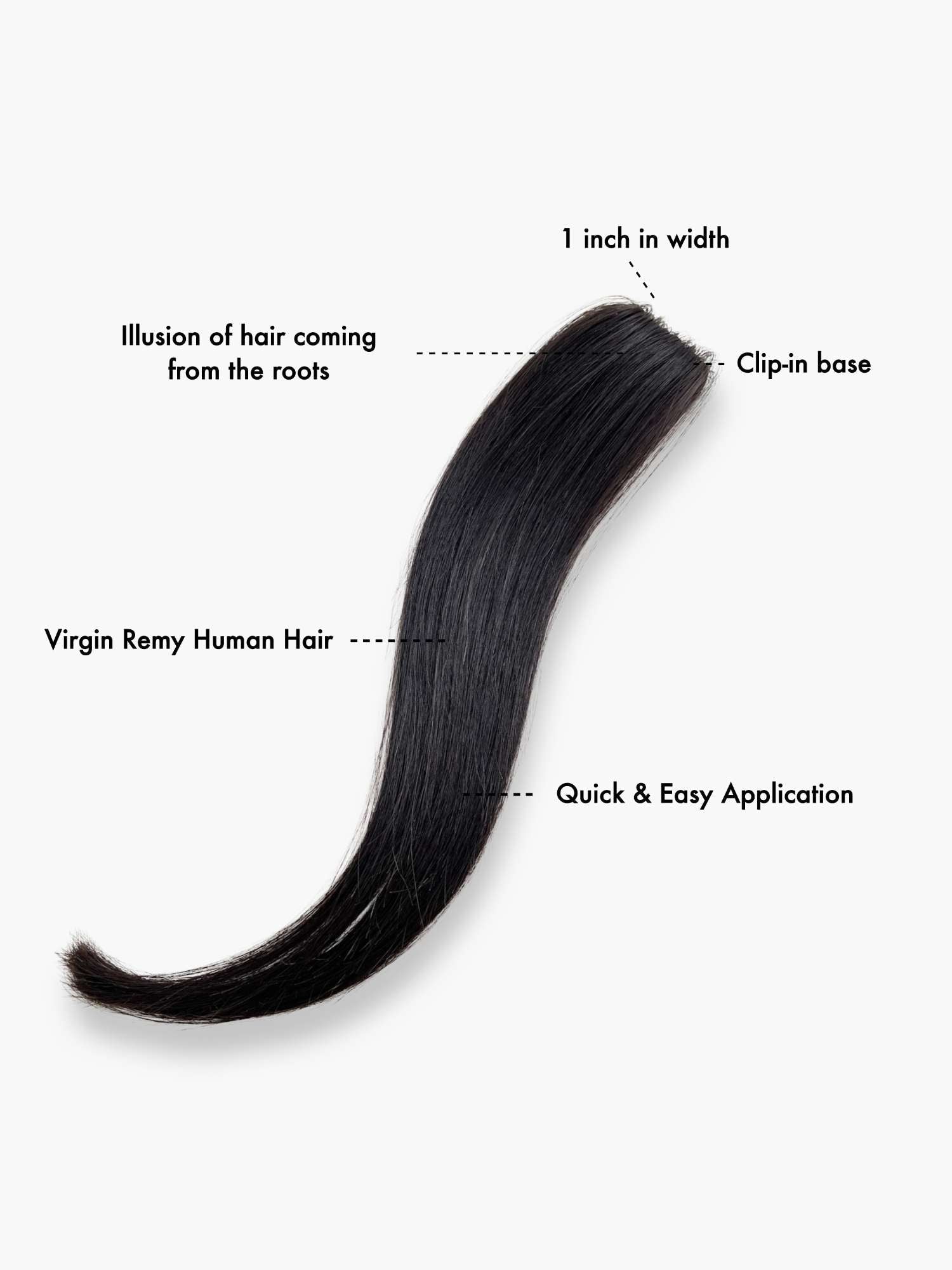
Smallest spot: Invisible Cover-Up Patch. Bring instant lift and natural-looking volume to your roots with this 100% Human Remy Hair solution. The easy clip-based application makes styling quick and effortless, while its heat-resistant and recolorable design offers long-lasting versatility with proper care.
-
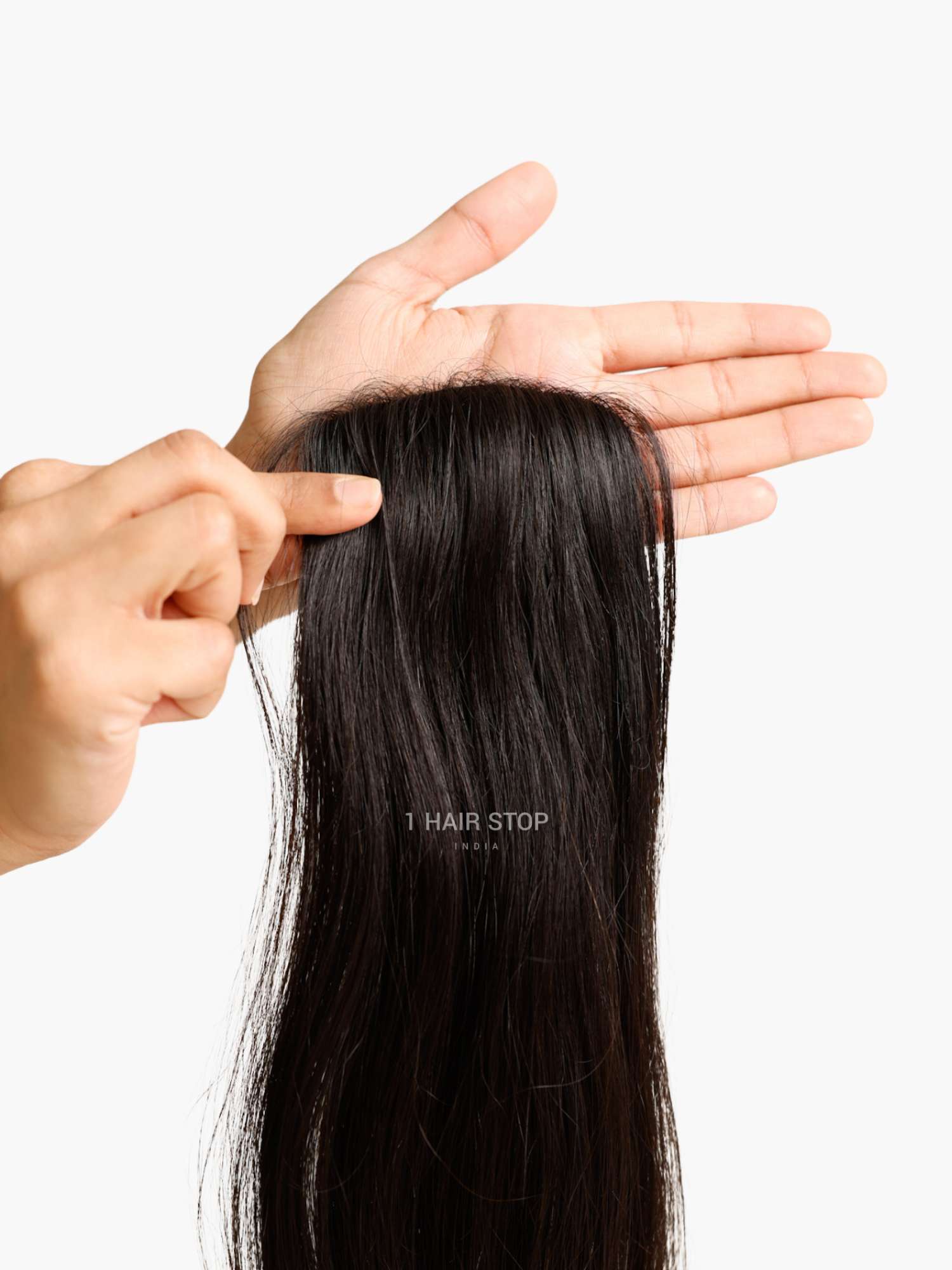
Standard coverage: Designed for seamless coverage, the 3x2" Invisible Pro Hair Patch blends naturally into thinning areas while maintaining a remarkably flat and discreet finish. Available in multiple lengths, it is an ideal choice for adding targeted volume, enhancing backcombing, and creating a fuller-looking hairstyle.
-
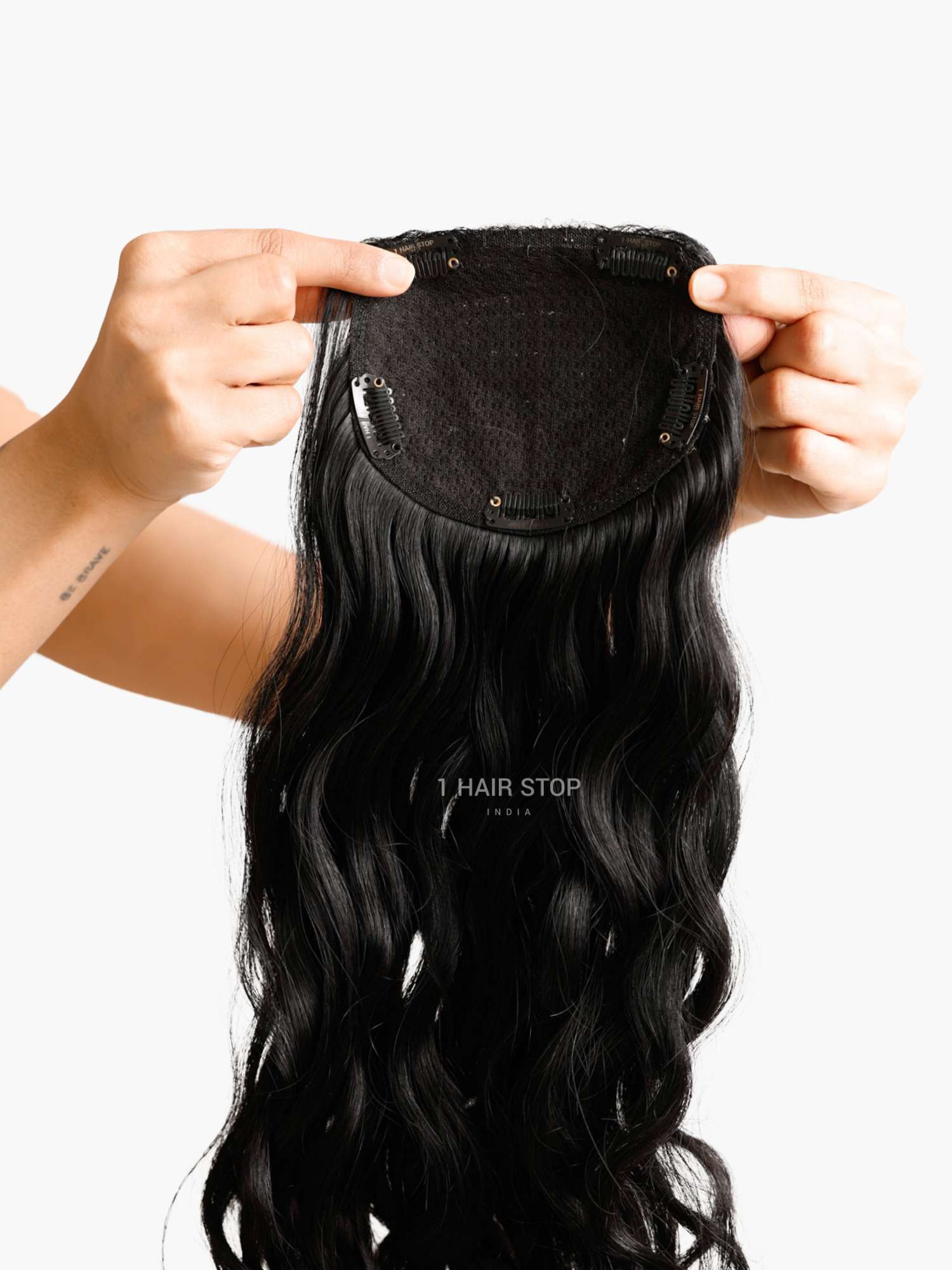
Larger area: For broader coverage and a naturally fuller appearance, the 5x4" Invisible Pro Hair Patch is designed to blend discreetly with your existing hair. Its ultra-flat construction helps conceal thinning areas seamlessly, while also providing added volume and support for versatile styling.
-
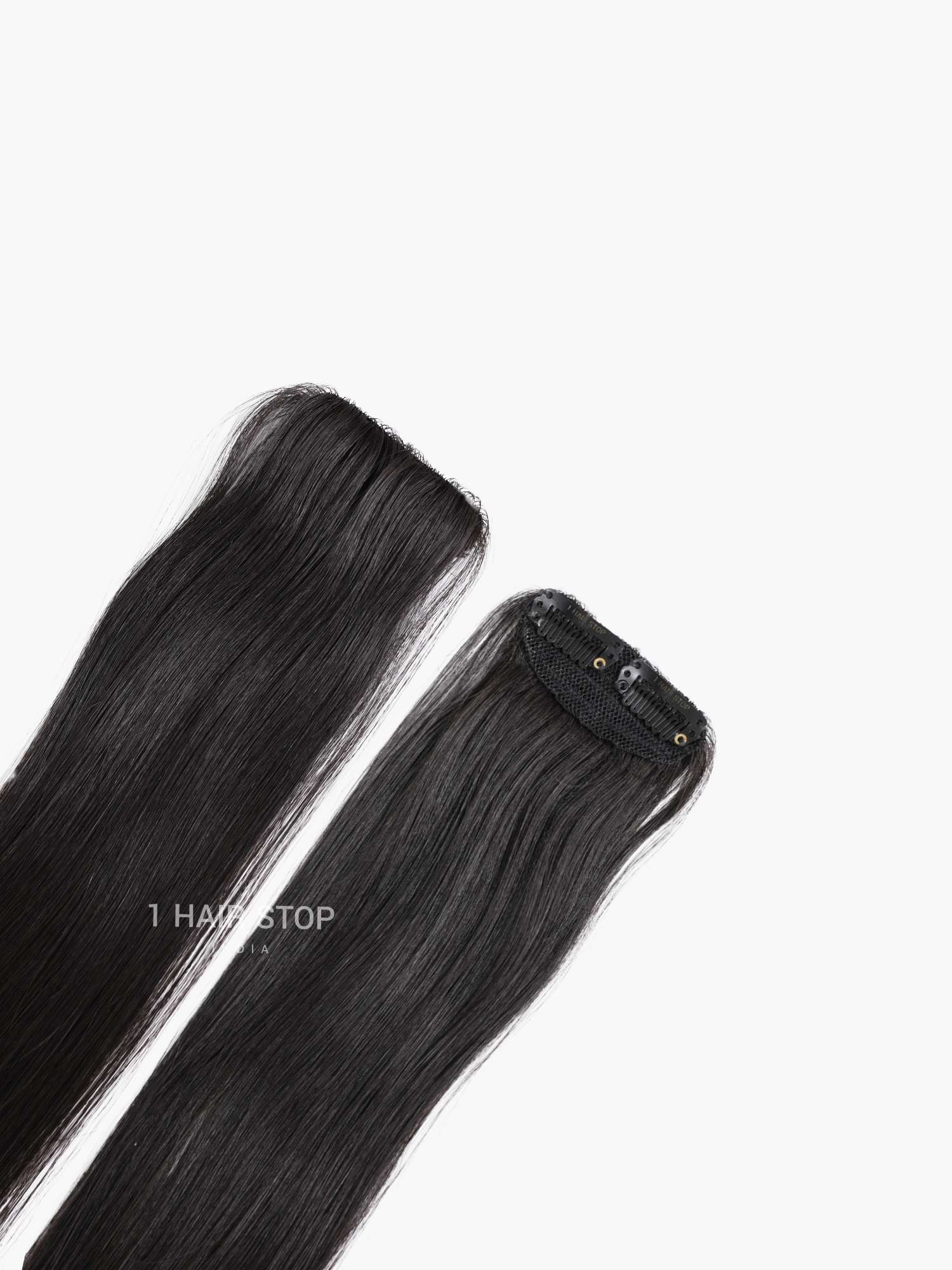
Added lift and volume: Give your hairstyle an instant boost with the Invisible Push-Up Patch , designed to add natural lift and volume right from the roots. Made from 100% Human Remy Hair, its easy clip-based application blends smoothly with your own hair for a fuller, more elevated look that can last 2+ years with proper care
- Not sure which size you need? See our complete guide to choosing a hair topper for the same measuring principles.
- Thinning at the hairline instead of one spot? See our guide to covering a receding hairline without surgery.
- Thinning concentrated at the crown? See our guide to crown toppers.
Frequently Asked Questions (FAQs)
Do hair fibers work on a completely bald, bare patch?
Not reliably. Fibers cling to existing hair using static charge, so on fully bare skin they have nothing to hold onto. A root touch-up spray or matte hairline powder works better on bare patches, since it colors the scalp directly.
What is the fastest way to cover a bald spot?
A root touch-up spray or powder works in minutes on bare skin, and colored hair fibers work just as fast if some thin hair remains. Both are the fastest options, though they need reapplying daily and are not waterproof.
What is the difference between a hair patch and a hair topper?
A patch is sized specifically to cover a single bald spot, while a topper covers a broader area such as the crown or top of the head. A patch is usually smaller, sits flatter, and costs less when only one spot needs coverage.
How long does an invisible patch last through the day?
A properly fitted invisible patch stays secure through a full day of normal wear and does not need reapplication the way fibers or concealer do.
Should I choose a cover-up patch or a push-up patch?
A cover-up patch sits flat for the most discreet coverage over visible scalp. A push-up patch adds lift and volume as well, which helps if the hair surrounding the spot has also thinned.
Will a hair patch damage my remaining hair?
Applied correctly, with clips secured gently rather than pulled tight, a patch should not damage surrounding hair. Avoid attaching it in the exact same spot every single time to reduce repeated tension.
Can hair fibers be used together with a patch?
Yes. Some people use fibers on smaller surrounding thinning while wearing a patch over the main spot, though most find the patch alone gives sufficient coverage on its own.
Ready to Cover It Today?
You do not need a full topper for one spot. Shop invisible patches or book a free online video consultation, and we will help you find the right size and shade.


