


On a forum for women with long hair, somebody posted a photograph of a thick waist-length plait and asked for something else to do with it. A reply underneath says her own braid is so thick and gorgeous that it makes the commenter laugh out loud to think of her tiny one.
Further down, a woman on a different board describes the same problem from the inside. Her fingers and her brain, she says, cannot process the sequence of movements. Her hair is thin and slippery, so the end result is usually sad looking. She has watched a million tutorials, and all they do is make her feel like there is a part of her brain missing.
Short answer: Easy hairstyles are not failing because you are bad at hair. They fail for three physical reasons. Not enough grip, so the style slides out. Not enough hair in the gather, so the braid or bun looks thin. Not enough length, so the style cannot be built at all. Fix the grip first, because it is the fastest and it is free: hairdos hold on second-day hair and slide out of freshly washed hair.
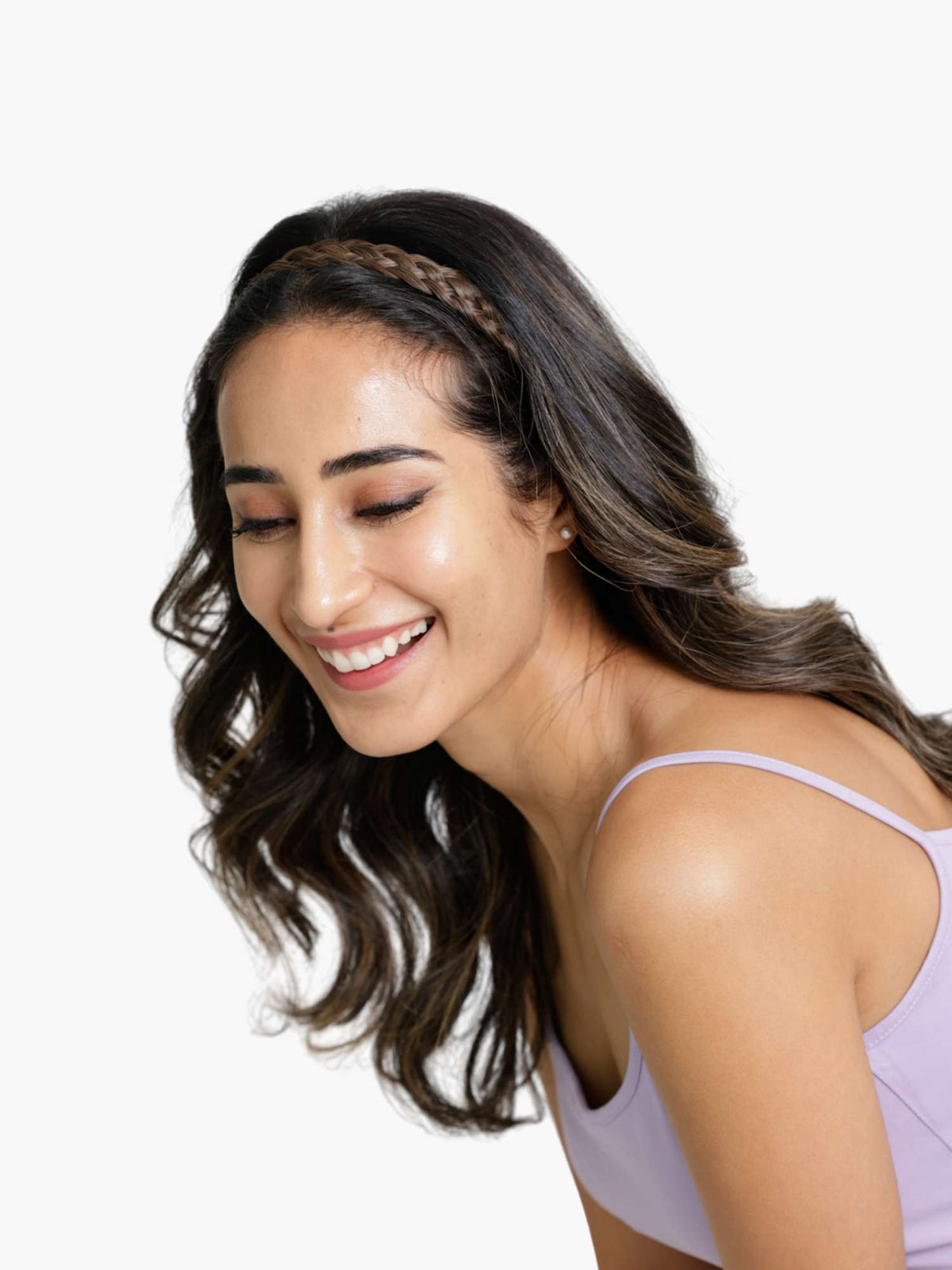
That piece is at the top of this article because of the woman whose brain will not process the sequence. The Braid Hairband is a four strand braid in human hair on an adjustable strap. It goes on in about five seconds and it requires no braiding at all. There is no skill floor to clear.
- Why Easy Hairstyles Are Not Easy
- The Three Things That Decide Whether a Style Holds
- The Grip Problem, and the Free Fix
- Six Easy Hairstyles, Timed and Sorted by Length
- Easy Hairstyles for Long Hair
- Three Easy Updos, Step by Step
- Why Your Braid Looks Thinner Than Your Hair
- Weight, Tension and the Headache Nobody Mentions
- Learn Three Hairdos, Not Fifty
- The Shortcut: Styles You Attach Rather Than Build
- How 1 Hair Stop Makes This Easier
- Shop Pieces That Do the Style for You
- Frequently Asked Questions
Why Easy Hairstyles Are Not Easy
There is an enormous amount of content on this subject and almost all of it takes the same shape. A numbered list of styles, each with four steps, each with a photograph of somebody it worked on.
What is missing from all of it is the acknowledgement that these styles do not behave the same way on different heads. The four steps are correct. They are also not the reason it went wrong.
Look at what women actually say when they describe a failure. One writes that hair sticks kept slipping out after about an hour, and that it made no difference whether they were plastic or metal. Another writes that she has decent volume when her hair is out, from the wave and the curl, but that it all disappears into braids. A third says her hair was too short so she simply gave up and forgot the style existed. A fourth says her hair is fine and curly and that unless she covers it in cream and spray it ends up a frizzy mess.
Not one of those is a skill problem. They are, in order, a friction problem, a volume problem, a length problem and a texture problem. All four are physical properties of the hair, all four are measurable in under a minute, and none of them appears in a single article on this subject.
That is what the rest of this is about. Once you know which of the three you have, the list of styles that will work for you gets short and reliable, and you can stop collecting tutorials you will never be able to execute.
The Three Things That Decide Whether a Style Holds
| What to check | How to check it | What it changes |
|---|---|---|
| Grip | Gather your hair into a ponytail with your hands, twist it once and let go. Count how long before it unwinds | If it unwinds immediately you have low grip. Every twisted, tucked or pinned style will slide out. This is the most common cause of failure and the easiest to fix |
| Volume in the gather | Pull all your hair into a ponytail and circle the base with your thumb and forefinger. Note whether they overlap, meet, or cannot reach | This, not the hair hanging loose, is the volume every gathered style is built from. A gather thinner than a thumb and forefinger circle will make a thin braid and a small bun no matter what technique you use |
| Length | Gather your hair at the crown and see whether the ends reach past the top of your ear when held up | Sets which styles are physically possible. Below the shoulders almost everything works. At the chin, most gathered styles do not, and the answer is a different set of styles rather than better technique |
Run those three and you have your own profile in about ninety seconds. Most women who describe themselves as bad at hair turn out to have low grip and a small gather, which is a combination that makes almost every popular style behave badly.
One image answers the question that women in these threads ask each other repeatedly and never get a straight answer to. The braid is thin because the gather is thin. It is arithmetic, not technique.
The Grip Problem, and the Free Fix
Grip is friction between strands. Without it, hair behaves like silk thread: everything you tie in it works its way loose because there is nothing holding one strand against the next.
Fine, straight, freshly washed hair has almost no grip. This is why professionals almost never style genuinely clean hair, and why a style that held beautifully on Thursday falls out on Friday morning after a wash.
Four ways to add it, in order of how little effort they take.
- Use second-day hair: Free, and it is the biggest single improvement available. Natural oils at the root add exactly the friction a gathered style needs. If you have an event, wash the day before rather than the morning of.
- Dry shampoo at the roots, on clean hair: Counterintuitive and widely recommended by women who have worked this out for themselves. One commenter puts it plainly: if you want to braid it dry, use some dry shampoo, because it gives the hair texture and volume. It is a grit product as much as an oil absorber.
- A light mist of water: Damp hair grips itself. Not wet, just misted. This is the standard trick behind a slicked back bun that actually stays slicked back.
- Texture or sea salt spray: The product designed for the job. Worth it if your hair is very fine and very straight, and unnecessary for most people once the first two are in use.
One warning on the second-day approach, because it interacts with something else. If you wear a fringe, the fringe goes oily long before the rest of your hair does, so second-day hair means a second-day fringe. The fix is to wash and dry the fringe alone, which takes about two minutes, and leave the rest.
Six Easy Hairstyles, Timed and Sorted by Length
Every style below is genuinely quick. The columns that matter are the last two, because those are the ones nobody publishes.
| Style | Time | Minimum length | What it needs to hold | Where it fails |
|---|---|---|---|---|
| Claw clip twist | Under 30 seconds | Shoulder | Almost nothing. The clip does the work | Very thick hair, which overwhelms a standard clip. Size up rather than giving up |
| Messy bun | 1 minute | Shoulder | Grip. Falls out of clean fine hair within the hour | A small gather, which produces a bun the size of a walnut |
| Slicked back bun | 2 minutes | Shoulder | Damp or second-day hair, and a brush rather than fingers | Short layers around the face, which will not lie down and will not reach the gather |
| Half up | 30 seconds | Collarbone | Nothing. The most forgiving style on this list | Nothing much, which is why it is the one to learn first |
| Low ponytail, wrapped | 1 minute | Collarbone | Enough length to wrap a strand around the band and tuck it | Fine hair, where the wrap strand is too thin to hide the band |
| French twist | 2 to 3 minutes | Shoulder | Grip above everything. This is the style that most needs second-day hair | Silky straight hair with no product. It will slide out in twenty minutes |
Two notes on the table.
Shorter hair is not excluded, it is redirected: Below the shoulders, gathered styles stop working and the useful set becomes a deep side parting, pinned back sides, a half up on a bob, and accessories. This is dealt with properly in our guide to bob haircuts for women, which covers what a short cut takes away and what puts it back.
A bubble ponytail is the exception on time: It looks elaborate and it is genuinely easy, because it is a plain ponytail with small elastics spaced down it and the sections pulled out. It needs length rather than skill, and it is the best value for effort of anything in this category.
Easy Hairstyles for Long Hair
Long hair gets treated as the easy case in every article on this subject, on the reasoning that more hair means more options. That is half right and it hides the thing that actually goes wrong.
Here is the distinction nobody draws. Above the shoulder, styles fail at the scalp, because there is not enough grip or not enough hair to build with. Past the mid back, styles fail at the tie, because the mass of the hair is more than one elastic can hold against gravity. Those are different failures and they need different fixes, and almost every piece of advice you will read is written for the first one.
Four things change once your hair is long.
- The elastic becomes the weak point: A single wrap that holds a shoulder-length ponytail will slide down a waist-length one within an hour. Three wraps rather than two, and a fabric covered elastic rather than a plastic one, fixes most of it and costs nothing.
- A bun needs a second anchor: Long hair makes a heavy coil, and a heavy coil pulls away from the head. One elastic holds the gather and two pins crossed through the base hold the coil. Skip the pins and it unwinds by lunchtime, which is the single most common long hair complaint.
- Weight stops being theoretical: Everything in the tension section below applies twice over. A high ponytail on long hair is the setup most likely to produce an ache, and a low gather solves it immediately.
- The ends decide how it looks: Long hair tapers, and a long style finishes wherever the density runs out. This is why a trim every ten weeks does more for a long hairdo than any technique, and it is covered properly in hairstyles for thin hair for women.
Five styles that genuinely work on long hair, in order of how little they demand.
- The claw clip twist, sized up: Thirty seconds, and the only change from the short version is the clip. A standard clip will not hold waist-length hair. A large one will, and this is the cheapest upgrade in this article.
- The low wrapped ponytail: One minute. Long hair is the only length with enough spare to wrap a strand around the band properly and tuck it underneath, which is what makes a ponytail read as deliberate.
- The single braid, pancaked: Two minutes. Braid loosely, then pull outward on the edge of each loop from the bottom up. On long hair this makes a visible difference because there are more loops to widen.
- The twisted low bun: Ninety seconds, and the steps are in the next section. The most useful long hair style there is, because it takes all the weight off your neck.
- The half up: Thirty seconds and the most forgiving thing on this page. On long hair it is also the one style where the length is still doing the work, so nothing is wasted.
One woman, five styles, all photographed from the angle other people actually see. That is the asset this category never publishes, because it does not look like enough content.
Three Easy Updos, Step by Step
The honest weakness of everything above is that it explains why styles fail and never shows you one. So here are three, with the steps, in the order you should learn them.
All three are things you can do yourself in a bathroom mirror. None needs a second pair of hands, heat, or a product you do not already own.
1. The claw clip updo, thirty seconds: The easiest updo there is and the one to learn first.
- Gather all your hair at the back of your head as though starting a low ponytail, using your fingers rather than a brush.
- Twist the length once, away from your face, until the whole gather spirals.
- Fold the twist upwards against the back of your head so the ends point at the ceiling.
- Open the clip, place it over the fold, and close it so it bites the twist and a little of the hair underneath.
- Pull two pieces loose at the temples so the front reads as soft rather than scraped.
2. The twisted low bun, ninety seconds: The one that takes the weight off your neck, and the best updo for long hair.
- Gather into a low ponytail at the nape and secure with one elastic, wrapped three times.
- Split the ponytail into two sections and twist each one away from the other, in the same direction.
- Wrap the two twists around the base in opposite directions, so they lock against each other rather than unwinding.
- Tuck the ends under the coil and cross two pins through the base, each one catching the coil and then your own hair underneath.
- Loosen the twist gently with your fingers if you want it fuller. This is the same pancaking move that widens a braid.
3. The French twist, two to three minutes: The one that looks the most considered and needs the most grip. Do it on second-day hair.
- Brush everything to one side and hold it flat against the back of your head.
- Place a vertical line of pins up the centre back, each pushed in against the direction you are about to twist, to anchor the side you are holding.
- Twist the hanging hair upwards into a vertical roll, rolling it inwards towards the pins.
- Tuck the ends down inside the roll with your fingers and pin along the seam, going into the roll and then into the hair beneath it.
- If it slides, the problem is grip rather than technique. Mist lightly, wait a minute, and start again.
Learn these in that order and give each one a fortnight. Every one of them gets faster with repetition in a way that no amount of watching does.
Why Your Braid Looks Thinner Than Your Hair
This deserves its own section because it is the most common quiet disappointment in this whole subject, and because the woman who described it had already worked out the answer without realising.
She wrote that she has decent volume when her hair is out, from the wave and the curl, but that it all disappears into braids.
That is exactly right, and here is why. Loose hair looks voluminous because of air. Wave, curl, layers and static all hold strands apart from each other, and the space between them is most of what you see. Gathering hair into a braid or a bun removes all of that space. What is left is the actual mass of hair, compressed, and for most people that is a good deal less than the loose version suggested.
So a woman with wavy medium-density hair can look like she has a great deal of it and then produce a braid the width of a finger. Nothing has gone wrong. The braid is showing her real density and the loose hair was showing her density plus air.
Three things change the outcome, and only one of them is a technique.
- Pancaking, which is free: Once the braid is tied off, gently pull outward on the edge of each loop from the bottom upwards. It flattens and widens the braid and it genuinely adds visible width. This is the technique, and it is the only one that works.
- A looser braid: Braiding tightly compresses the hair further. A deliberately loose braid, pancaked afterwards, looks close to twice the width of a tight one made from the same hair.
- Adding hair, which is the honest answer: Pancaking has a ceiling and that ceiling is your own density. If you want the braid in the photograph, the woman in the photograph has more hair in the gather than you do. That is a supply problem, not a skill problem, and it is solvable.
The same arithmetic governs buns and ponytails. A bun is a coiled braid and a ponytail is an ungathered one. All three are the same volume problem in three shapes.
Weight, Tension and the Headache Nobody Mentions
Two separate comments in these threads mention headaches, and neither gets a proper answer.
One woman says she gets headaches very easily but feels no weight at all with a hair stick. Another says she likes a four strand braid partly because it distributes the weight more evenly. Both have independently found the same principle and neither article in this category mentions it.
The principle is that a headache from a hairstyle is almost never about total weight. It is about where the weight is concentrated and how much tension is on the scalp.
A single high gather is the worst case: A high ponytail or topknot puts the entire mass of your hair on one small patch of scalp, and it pulls upward on the hair follicles around it. That is the setup that produces the ache two hours in.
Spreading the load fixes it: A low bun sits against the head rather than hanging from it. A four strand braid distributes across a wider section than a three strand one. A hair stick threaded through a coil holds by leverage rather than by squeezing, which is why it can feel weightless even on very long hair.
Tension is the part that actually matters: Weight causes discomfort. Tension causes damage. Hair pulled tight from the same point every day, particularly at the temples and the front hairline, thins that area over time, and it is the most common avoidable cause of hairline loss we see. This is covered in full in our guide to wearing a ponytail without damaging your hairline, and if you wear your hair up most days it is the most useful thing on this site.
The short version. Move the height of your gather around from day to day, keep it loose enough to slide a finger under at the temples, and if a style aches within an hour, take it down rather than getting used to it.
Learn Three Hairdos, Not Fifty
There is a post on one of these boards asking how to find hairstyles so easy an idiot can do them. A hundred and sixty four people upvoted it. The word idiot is doing something specific there, and it is worth naming: she has decided the problem is her.
The problem is that she is being offered fifty options when she needs three.
Almost everybody who is good with their own hair has a rotation of three. One quick one for ordinary days, one that looks more considered for work or an event, and one for the days when the hair is unwashed and nothing else will do. They are not fifty styles. They are three, done so many times that they take no thought.
Build yours like this.
- Pick the ordinary one from the top of the table: A claw clip twist or a half up. Both take under a minute and both are forgiving. Do it every day for a fortnight until your hands know it.
- Pick the considered one to match your grip: High grip means a French twist or a slicked back bun are open to you. Low grip means a low wrapped ponytail or a braid, which rely on the tie rather than on friction.
- Pick the wash and go one deliberately: This is the one most people never choose, and then improvise badly on the worst morning of the week. A slicked back bun is the standard answer, because it is the one low maintenance style that is better on oily hair than on clean hair.
Three styles, learned properly, cover every morning of the year. Fifty styles, half-learned from tutorials, cover none of them.
The honest version of this article is three photographs of one person, not fifty photographs of fifty people. That is the asset this category does not produce because it does not look like enough content.
The Shortcut: Styles You Attach Rather Than Build
Everything above assumes you are building the style out of your own hair. There is a second route and it is underused, largely because the articles about easy hairstyles are written by people who sell styling tools rather than hair.
A piece that is already in the shape of the style removes the two things that go wrong. There is no technique to execute, and there is no dependence on having enough hair in the gather.
That matters most in three specific situations.
- When the sequence is the barrier: The woman whose fingers could not process the movements is not unusual. A ready-made braid or bun requires no sequence at all, and the result does not vary by how tired you are.
- When the gather is too small: A bun piece goes over a loose gather rather than needing to be wrapped from one. A ponytail piece attaches around a short gather. Both put volume where your own hair could not supply it.
- When time is the actual constraint: The threads on this subject are full of women styling hair before work, after swimming, with a small child in the room. Clipping something on is measured in seconds, and it does not fail differently on a bad morning.
The honest limitation is that an attached piece has to be blended and matched, and a badly matched one is far more obvious than a slightly untidy bun. Root shade matters more than length, and the detail is set out in how to wear a ponytail extension that looks real.
How 1 Hair Stop Makes This Easier
We make hair, not styling tools, which gives us a different view of this problem. The women who write to us are almost never asking how to do a style. They are asking why the style does not look the same on them.
Trusted by 300,000+ women worldwide | 4.8★ from 14,700+ reviews | 100% Human Remy Hair | Sourced From Temples | Clip-Free | Handmade in our own facility since 2009 | Damage-free application guarantee
"Almost every message we get about styling is really a message about volume. She has watched somebody put her hair into a braid and get a rope, and she does the same thing and gets a shoelace. Nobody has ever told her that the difference is grams of hair, not skill. Once she knows that, she stops apologizing for being bad at hair, and she is usually not bad at hair at all."
Raina Grover and Richa Grover, Co-Founders, 1 Hair Stop
Every piece is hand-knotted or wefted in 100% human Remy hair in our own facility in Hyderabad. Because it is human hair, everything here can be heat styled, re-coloured and cut to match your own.
The limitation worth stating is that a ready-made piece is a fixed shape. A bun piece makes one bun and a braid hairband makes one braid. If what you want is the ability to do anything at all with your own hair, the answer is a clip-in set that adds density to the gather, and then the styles are yours to build.
Shop Pieces That Do the Style for You
All of these are 100% human hair and all of them come off at the end of the day. Choose by which of the three problems you have.
-
A braid with no braiding: Wear a finished braid across the head in about five seconds with the Braid Hairband, a four-strand human hair braid on an adjustable strap with a clasp. A four-strand braid also spreads weight more evenly than a three strand one, which matters if styles give you a headache.
-
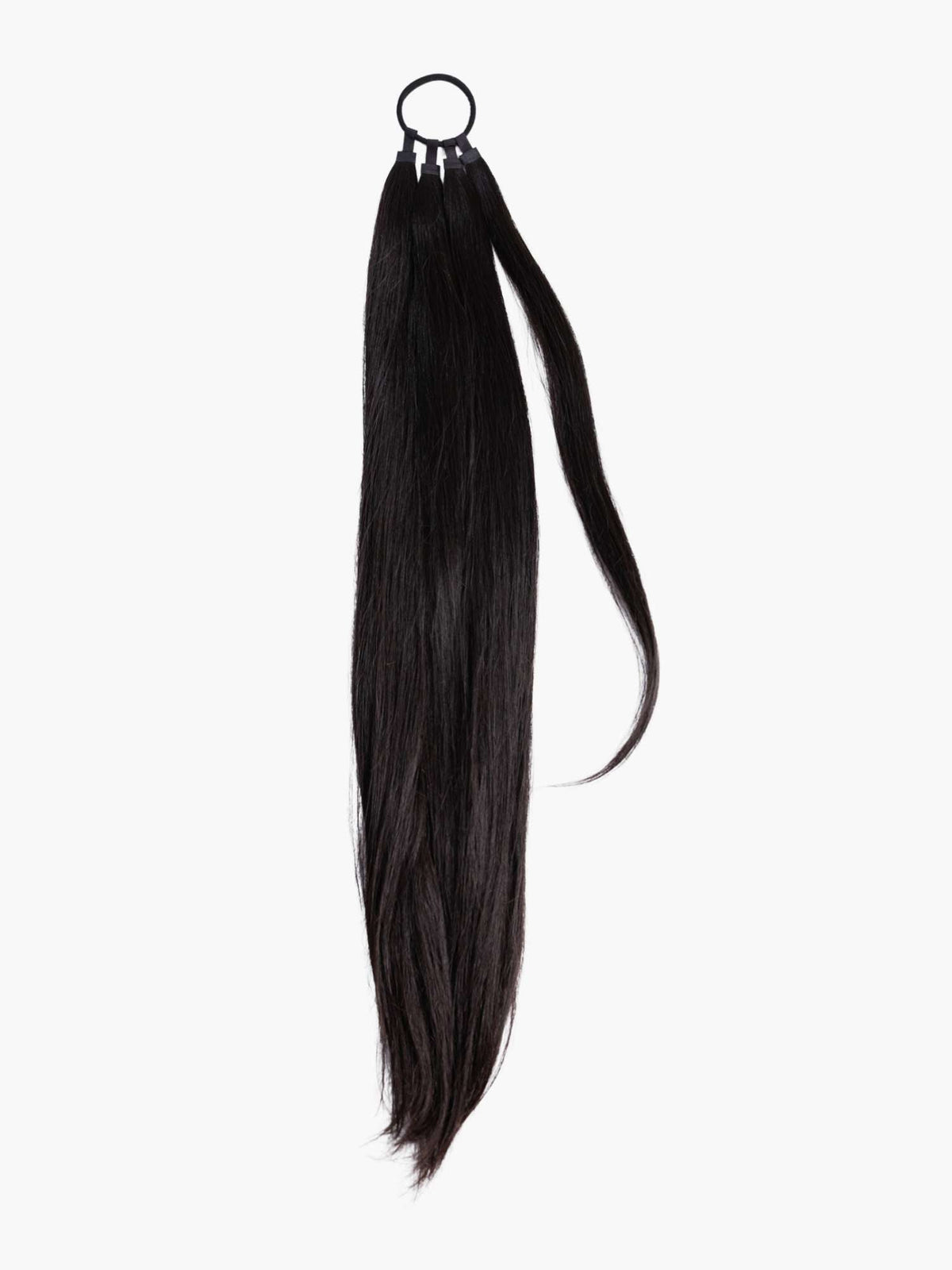
A braided ponytail, readymade: Get a long-finished braid without braiding anything using Braided Ponytail Extensions, which wrap around your own gather on velcro with a small hidden comb. They are built light, so a long braid does not become a weight on one point of your scalp.
-
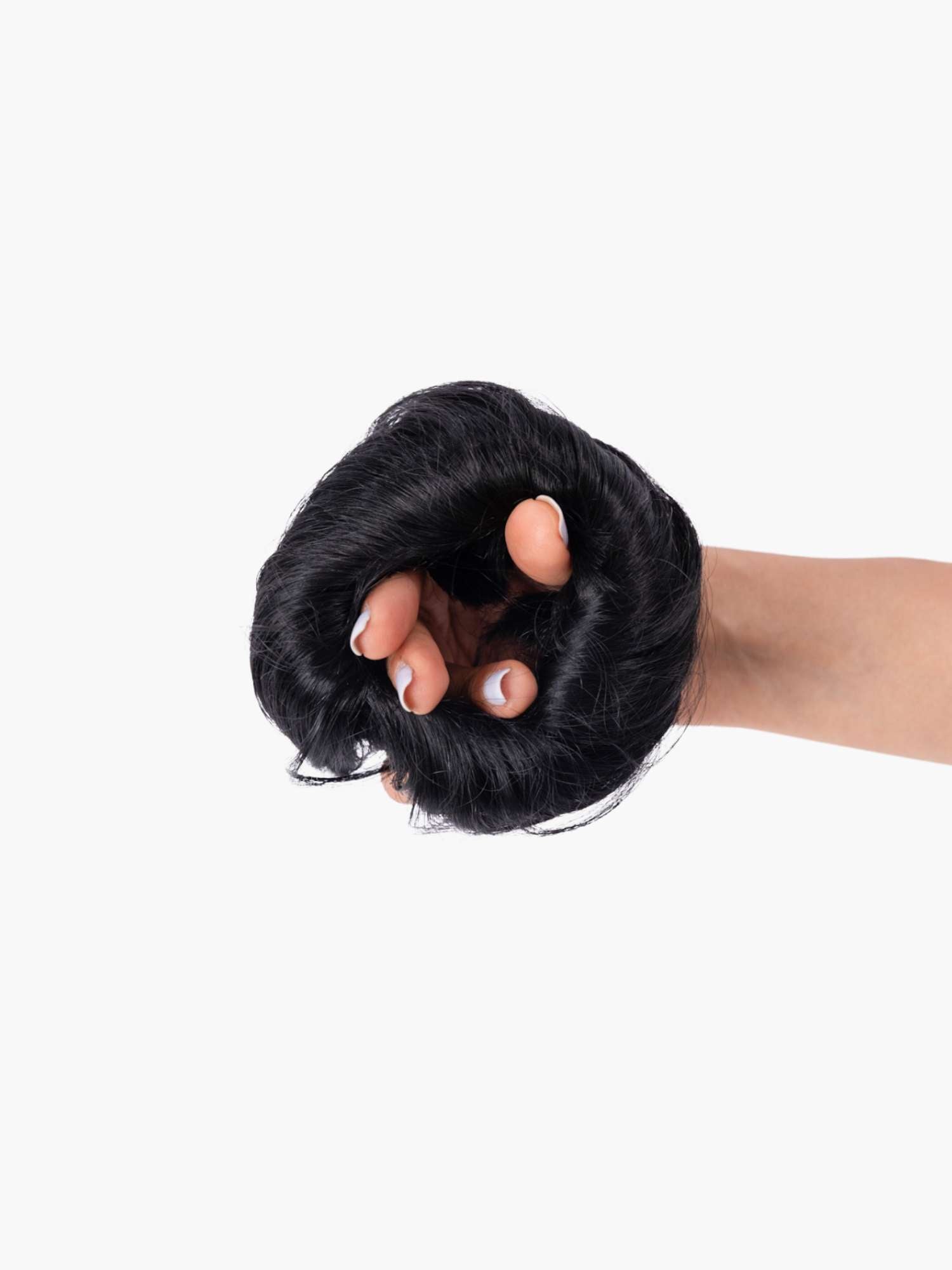
A full bun from a small gather: Build a bun your own hair could not make with the Messy Bun Scrunchie, which goes over a loose gather in about two minutes rather than needing length to wrap. It is the direct answer to a gather that is thinner than a thumb and forefinger circle.
-
A ponytail that sits flat: Keep a long ponytail close to the head rather than bulking out at the base with Flat Clip-in Ponytail Extensions, secured on velcro and a hidden comb. The flat base is what stops a ponytail piece announcing itself from the side.

-
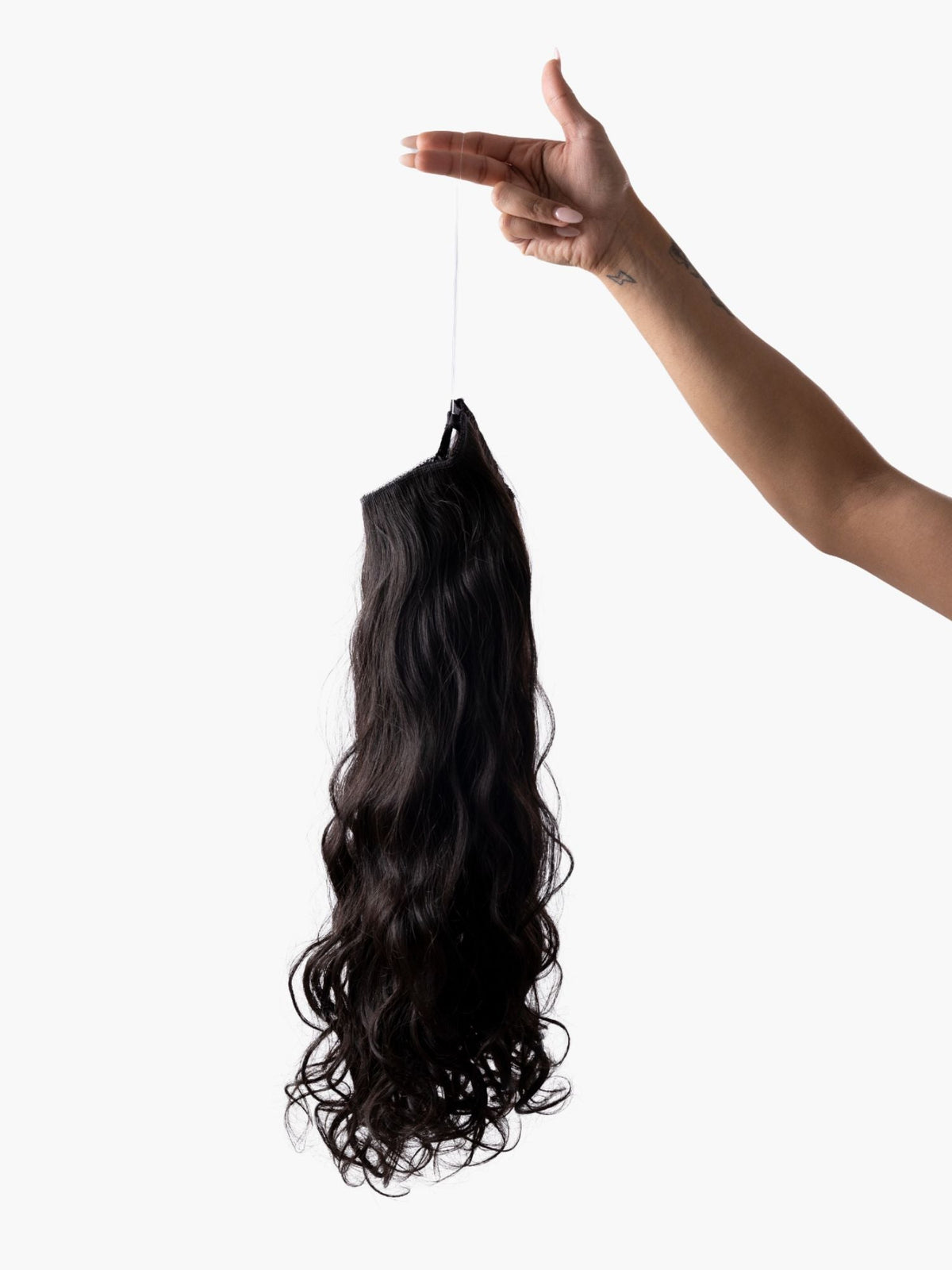
Volume with nothing pulling on your scalp: Add length and thickness with zero tension using HaloHair Extensions, which sit on an adjustable wire about an inch behind the hairline with nothing clipped into your own hair. It goes on in under a minute and there is no attachment point to ache.
-
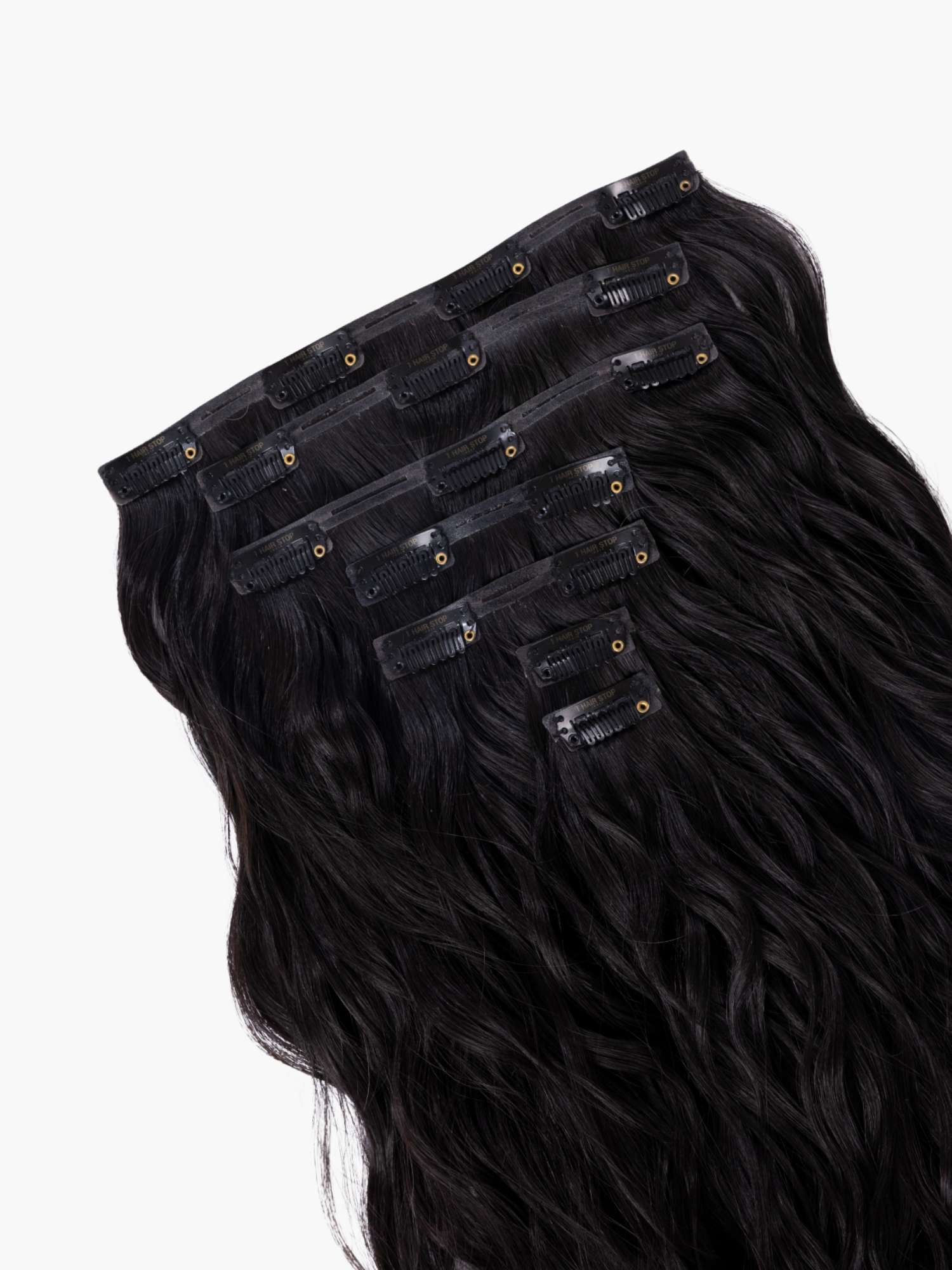
More hair in the gather, for every style: Fix the volume problem at its source with the Seamless 7 Set Clip-in Extensions, whose flat wefts stay hidden on fine hair and go into the gather with everything else. This is the one to choose if you want to build your own styles rather than attach finished ones.
- Not sure which of the three problems is yours? Read hairstyles with bangs for women if a fringe is part of what you are considering, or book a free video call and we will run the three checks with you.
Frequently Asked Questions
What are some easy hairstyles for long hair?
Five work reliably. A claw clip twist with a large clip takes thirty seconds. A low wrapped ponytail takes a minute and long hair is the only length with enough spare to wrap the band properly. A single loose braid, pancaked afterwards, takes two minutes. A twisted low bun takes ninety seconds and is the one that takes the weight off your neck. A half up takes thirty seconds and is the most forgiving. The thing that changes on long hair is that styles fail at the tie rather than at the scalp, so use three wraps of a fabric elastic rather than two.
What is the easiest updo to do yourself?
The claw clip updo, in five steps and about thirty seconds. Gather all your hair at the back as though starting a low ponytail, using fingers rather than a brush. Twist the length once away from your face until the gather spirals. Fold the twist upwards so the ends point at the ceiling. Clip over the fold so it catches the twist and a little of the hair underneath. Pull two pieces loose at the temples. It needs no grip, no pins and no product, which is why it is the one to learn first.
What are the best hairdos for thin hair?
Anything that concentrates what you have rather than spreading it out. A low wrapped ponytail, a braid pancaked wide, and a half up all read as fuller than wearing it loose, because gathering collects the hair into one place. Avoid high gathers, which expose the crown, and avoid anything that needs a thick wrap strand to hide the band. The ceiling on all of this is your own density, so if the gather is thinner than a thumb and forefinger circle, adding hair is the only thing that changes the result.
Why do my buns and updos keep falling out?
Almost always a grip problem rather than a technique problem. Fine, straight, freshly washed hair has very little friction between strands, so anything twisted or tucked works its way loose. Test it by gathering your hair, twisting once and letting go, and counting how long before it unwinds. The fixes in order of effort are styling on second-day hair, dry shampoo at the roots even when the hair is clean, a light mist of water, and texture spray. Second-day hair alone solves it for most people.
Why does my braid look so much thinner than my hair?
Because loose hair looks voluminous partly because of the air between strands, and braiding removes all of that space. What is left is your actual density, compressed. Nothing has gone wrong. Pancaking, which means gently pulling outward on the edge of each loop from the bottom up after tying off, genuinely widens it, and braiding loosely to begin with helps more than most people expect. Beyond that the only thing that adds width is more hair in the gather.
What are the quickest hairstyles for busy mornings?
A claw clip twist and a half up both take under thirty seconds and need almost nothing from your hair. A messy bun takes about a minute but needs grip, so it falls out of clean fine hair. A slicked back bun takes two minutes and is the one low maintenance style that works better on unwashed hair than on clean hair, which makes it the right thing to learn for the worst morning of the week.
Why do hairstyles give me a headache?
Because the weight is concentrated in one place rather than because the hair is heavy. A high ponytail or topknot puts the whole mass on a small patch of scalp and pulls upward on the follicles around it. Lower gathers sit against the head instead of hanging from it, a four strand braid spreads the load wider than a three strand one, and a hair stick holds by leverage rather than by squeezing. Move the height of your gather from day to day, and if a style aches within an hour take it down.
What easy hairstyles work on short hair?
Below the shoulders most gathered styles stop being possible, so the useful set changes rather than shrinking. A deep side parting, pinned or twisted sides, a half up, and accessories all work at chin length. A claw clip needs shoulder length to hold reliably. If what you want is a ponytail or a bun, a piece built to attach to a very short gather is the only route, because there is no technique that creates length you do not have.
Should I style my hair clean or unwashed?
Unwashed, for almost every gathered style. Natural oils at the root add exactly the friction that twists, pins and buns need to hold. If you have something on, wash the day before rather than the morning of. The exception is a fringe, which takes oil far faster than the rest of your hair, so wash and dry the fringe alone and leave the rest.
How do I make a ponytail look thicker?
Three things, in order of effort. Tease gently at the crown before gathering, which adds height rather than width but reads as volume. Wrap a strand of your own hair around the band to hide it, which makes the base look deliberate rather than thin. Then, if the gather itself is the problem, add hair to it, because a ponytail can only ever be as thick as the hair collected into it.


