


Every guide to this length opens the same way. Medium length is the perfect in-between, the sweet spot, the most versatile thing you can do with your hair. Then it lists ten cuts and photographs all of them on women who have already lived with the length for a year.
What none of them tell you is that medium length is not one haircut. It is three, they sit centimetres apart, and the difference between them is not how they look. It is what you can still do with your hair on a Tuesday morning when you are late.
Short answer: Decide by the ponytail, not the photograph. Just above the shoulder gives you a stub and not much else. On the shoulder gets everything into a low ponytail but flicks outward as it grows, which is the single most complained-about thing about this length. Collarbone length ties back properly and does not flip. Work out which of the three you are asking for before you sit down, because a stylist hearing "about shoulder length" is hearing three different instructions.
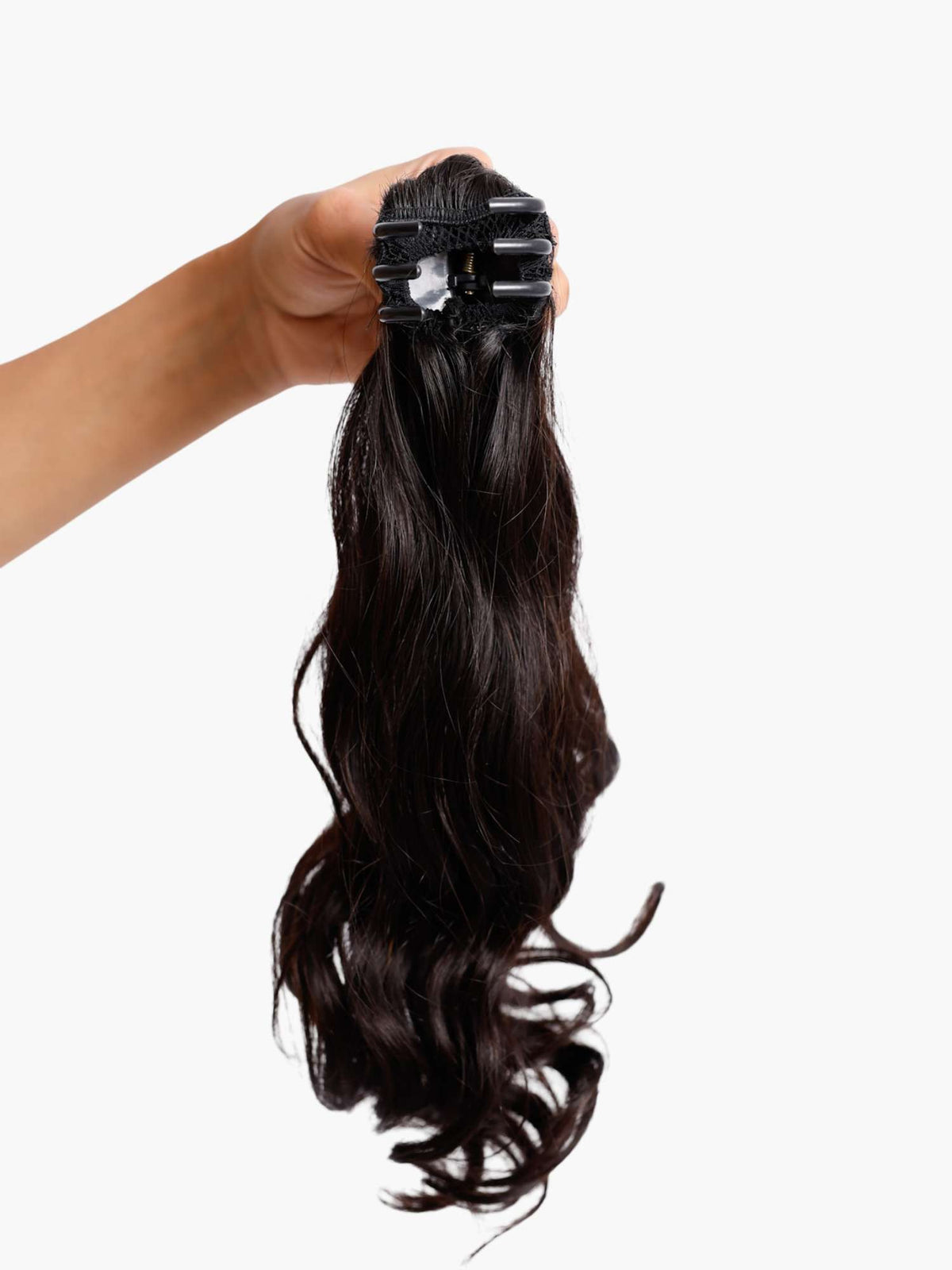
The piece in that photograph exists because of the problem this article is about. Women who cut to this length describe trying to tie it up and getting something that looks, in their words, like a lump. A Mini Clip-In Ponytail is the smallest piece we make and it clips onto exactly that stub, which is why it is here at the top rather than buried at the bottom.
- Medium Length Is Three Haircuts, Not One
- The Three Lengths, Side by Side
- The Flip, and Why Nobody Warns You
- Run the Ponytail Test Before You Book
- Layers, and Where They Should Start
- The Low Maintenance Version
- Two Surprises in the First Week
- The Cuts, and Which Length Each One Needs
- Medium Length Hair With Bangs
- What Your Texture Does to the Length
- If You Have Cut It Already and Regret It
- How 1 Hair Stop Makes This Easier
- Shop Pieces for Medium Length Hair
- Frequently Asked Questions
Medium Length Is Three Haircuts, Not One
Medium length, mid length and shoulder length all describe the same stretch of hair, roughly from the jaw to the collarbone. The words are used interchangeably and the hair does not care which one you say. What it cares about is where exactly you stop.
Working stylists split this length into three, and they pause when a client says "about shoulder length", because those words cover three very different outcomes. We are talking about a couple of centimetres either way, and a couple of centimetres changes everything about how the hair behaves.
Just above the shoulder: The ends sit clear of your shoulders with visible space between them. This is a true bob, and it is the most flattering of the three in a photograph. It is also the one with the shortest life before it needs cutting again, and the one where tying your hair back stops being an option.
On the shoulder: The ends touch. This sounds like the safe middle choice and it is the one most people accidentally ask for. It is also the only one of the three that develops a specific problem, which the next section is about.
Collarbone length: The ends sit an inch or so below the shoulder, on or just above the collarbone. Often called a lob. It does everything the other two do not: it ties back, it does not flick, and it grows out without a bad stage.
Read those three again and notice that not one of the differences is about how it looks. They are all about what happens afterwards, which is the part the galleries leave out entirely.
The Three Lengths, Side by Side
| Where the ends sit | What you can tie it into | Does it flick out? | Trim cycle | Best for |
|---|---|---|---|---|
| Just above the shoulder | A short stub at the nape, and little else | No, it is clear of the shoulder | Six weeks, and it is not optional | Anyone certain they want a bob, and happy to style daily |
| On the shoulder | All of it into a low ponytail, front pieces escaping | Yes, and it gets worse as it grows | Six to eight weeks, mostly to manage the flick | Thicker hair, wave or curl, a shorter neck, no heavy layers |
| Collarbone length | Low and mid ponytails, a bun, most half-up styles | No, it hangs past the shoulder | Eight to ten weeks if the ends are healthy | Anyone who ties their hair back regularly, or is unsure |
If you are undecided, the bottom row is the answer. Collarbone is the only one of the three you can leave alone, and it is the only one you can retreat from without living through an awkward stage.
The Flip, and Why Nobody Warns You
Hair cut to rest exactly on the shoulder does not hang straight down. It meets the shoulder, runs out of room, and turns outward. That is the flip, and it is the defining property of the middle length.
A good cut suppresses it for the first fortnight. Then the hair grows, the ends reach the shoulder at a slightly different angle, and it comes back. Some women never notice. Others find it is the only thing they can see. How aggressively it happens depends on your texture, on how well the cut was done and on how you dry it, which is a polite way of saying nobody can promise you it will not happen.
This matters because the flip is the reason a lot of people conclude they do not suit medium length hair. They usually do. They just chose the one length out of three that fights back.
Three frames from behind would do more for this decision than any gallery of styled models. The flick only shows from the back, which is precisely why nobody photographs it and why women discover it in a changing room mirror two weeks later.
Two ways round it. Go past it to the collarbone, or go above it and accept you are committing to a bob. What does not work is asking for the middle and hoping.
Run the Ponytail Test Before You Book
This takes ten seconds and it is more useful than any amount of scrolling.
Gather your hair into the ponytail you actually wear, the one you use when you are running late or going to the gym. Now hold the length you are considering cutting to, so the ends of your gathered hair finish at that point. That is your ponytail after the cut.
Be honest about the answer, because the pattern in the conversations women have about this length is not about how it looked. It is about what they lost.
- One describes a ponytail at the new length looking, in her words, like a lump.
- Another says her styling skill is ponytails, and after the cut that skill no longer applied to her hair.
- A third mentions missing the low bun specifically, as the thing the cut took away from her.
None of them are complaining about the haircut. They are all describing a hairstyle they used to rely on and can no longer do. That is a completely predictable outcome and it is decidable in ten seconds at home, before anyone picks up scissors.
If the answer is that you would lose your everyday ponytail and that matters to you, you have two options. Choose collarbone length, which keeps it. Or cut shorter and plan to add a piece back, which is a real answer rather than a sales line, and is covered further down.
Layers, and Where They Should Start
Layers are the most requested thing at this length and the most commonly got wrong, because almost nobody specifies the only number that matters. Not how many layers. Where the shortest one starts.
A medium length haircut with layers is really a question of one measurement: the height of the top layer. Everything else follows from it.
- Layers starting at the cheekbone: Maximum movement and the most visible shape. This is what most reference photographs are showing. It needs density, because the shorter top layer has to look like part of the same head rather than a separate, thinner layer sitting on it.
- Layers starting at the chin: The safe default. Enough movement to break up a solid line, not so much that the perimeter looks stripped. If you are unsure, ask for this.
- Layers starting below the jaw: Long layers in the real sense. They remove weight from the ends without touching the shape at the top. The right choice on fine hair, where anything higher takes away density you cannot spare.
- No layers, a blunt perimeter: One length all the way round. It is the strongest option for fine hair because a solid line reads as density, and the worst option for thick hair because all the weight collects at the bottom and goes triangular.
Choppy layers are a different request: Choppy means the ends are point cut rather than cut straight across, so the layer edges are broken instead of solid. It is a finish rather than a structure, it suits straight hair that goes flat, and you can ask for it on top of any of the four options above.
One sentence to take to the appointment. Say where you want the shortest layer to start, by naming a landmark on your face, and say whether you want the ends solid or point cut. Those two things describe your haircut more accurately than any photograph you could bring.
The Low Maintenance Version
Medium length is sold as the low maintenance choice and it can be, but only one of the three lengths actually earns the description. The other two are a standing appointment.
Four things make a medium length haircut genuinely low maintenance, and three of them are decided in the chair.
- Go to the collarbone, not the shoulder: Eight to ten weeks between trims rather than six, and no flick to manage. This single decision does more than the other three combined.
- Keep the layers long: Layers starting below the jaw grow out invisibly. Layers starting at the cheekbone announce themselves within a month, because the shortest piece moves fastest relative to the rest.
- Skip the fringe, or accept it separately: A fringe needs trimming every four to six weeks regardless of what the rest of your hair is doing. It is not part of the low maintenance decision, it is a separate one.
- Ask for the cut to be air dry friendly: Those are the words. It tells a stylist to cut with your natural texture rather than against it, which is the difference between a haircut that needs a blow dry to look deliberate and one that does not.
Asked for together, that is a layered low maintenance medium length haircut: collarbone length, long layers, point cut ends, no fringe, cut to air dry. It is the lowest effort hairstyle in this whole article and it is almost never described in those terms.
One honest note. Low maintenance is not the same as no maintenance. Ends at this length still need taking off every two to three months, and skipping that is what turns a lob into something that reads as grown out rather than deliberate.
Two Surprises in the First Week
It looks far shorter wet: The most common shock in the first week is the shower. Wet hair clings to the head, straightens out and loses every bit of the volume that was making the cut look right. Women describe getting in the shower and genuinely wondering where their hair went. Nothing has gone wrong. Straight hair reads slightly shorter wet, wave loses its lift, and curl can appear dramatically shorter until it dries and springs back. Do not judge a new cut in the shower.
You have fewer options than you had on Friday: The second surprise is not about how it looks at all. It is opening the drawer, reaching for the hairstyle you do without thinking, and finding it does not work any more. This is the one that actually causes regret, and it is the one no gallery prepares anybody for.
What does still work at this length, and works well:
- Half up, either with a clip at the back or a barrette, which is the single most reliable option at every one of the three lengths.
- One side pinned back off the face with a couple of grips, which takes about four seconds.
- A small twisted section at the crown, secured with two pins going in opposite directions, for lift at the top.
- Braids, which behave better at this length than most people expect and hold their shape without a tie at the top.
Every one of those is a half-up or a partial. The thing you cannot do is get all of it up and out of the way, and that is the gap a piece fills rather than a technique.
The Cuts, and Which Length Each One Needs
The named cuts everyone lists are real, but each one needs a particular one of the three lengths to work. Match them wrongly and the cut is fighting the length.
The lob: Collarbone, by definition. A clean perimeter with soft movement at the ends and few or no layers. The most forgiving of all of these and the right first choice if you are unsure. It also holds a ponytail, which none of the others reliably do.
The clavicut: Also collarbone, cut bluntly and precisely to sit right on the bone. Sleeker and sharper than a lob, and it keeps weight at the ends, which makes it the better pick of the two for hair that is fine.
The butterfly cut: Shorter face-framing layers over longer lengths underneath. It needs the collarbone length, because the shorter tier has to sit somewhere without exposing the perimeter. On the two shorter lengths the top tier starts to look like separate, thinner hair sitting on top rather than part of the same head.
The soft shag or wolf cut: Heavier internal layering and an undone finish. Works at any of the three, and it is the only one that genuinely benefits from the on-the-shoulder length, because the texture and layering break up the flick. If you want the middle length, ask for this rather than a blunt line.
Curtain bangs or a wispy fringe: Not a length decision at all, which is why they get paired with everything. They soften the front and shift attention upward, and they are the cheapest way to change the look without touching the length. They also need trimming every four to six weeks, which is more often than the hair behind them.
Medium Length Hair With Bangs
Bangs and medium length hair get paired more than any other combination, and there is a reason that has nothing to do with fashion. This length can look heavy at the perimeter and empty at the front. A fringe puts hair back at the front without taking any length off the bottom.
Three pairings work and one needs care.
- Curtain bangs with a collarbone lob: The most requested combination in this category and the easiest to live with. The fringe is parted rather than solid, so it grows out into face-framing pieces instead of into your eyes.
- Wispy bangs with layers: Light and textured rather than a solid block. Pairs with layered medium length hair because both are built on the same idea, which is breaking up a hard line.
- A side swept fringe at any of the three lengths: The lowest commitment of the three. It is cut along your growth direction rather than across it, which is why it needs the least daily work.
- Blunt bangs with a blunt lob: Striking, and the one that needs care. Two hard horizontal lines on one head is a strong look and it is unforgiving. It also needs a trim every two to three weeks rather than every six.
One thing to check before any of them. Push your hair back off your face and look for a cowlick at your front hairline, because a cowlick there will split a blunt fringe permanently and no styling fixes it. Curtain and side swept work with it. The full set of checks is in hairstyles with bangs for women.
What Your Texture Does to the Length
The same measurement produces a different haircut on different hair, and this is where asking for a number rather than a feeling matters.
| Your texture | What happens at this length | What to ask for |
|---|---|---|
| Straight | Shows the exact length, and shows the flick most clearly of all | Collarbone, blunt perimeter, minimal layering |
| Wavy | Reads slightly shorter than it measures, because the wave takes up length | Cut a little longer than you think, layers starting below the chin |
| Curly or coily | Shrinks substantially when dry, sometimes by a third or more | A dry cut, assessed at dry length, never measured wet |
| Thick, any texture | Builds width at the bottom and can go triangular | Internal weight removal, perimeter left strong |
| Fine | Gains apparent thickness, because the weight that flattened it is gone | A blunt line, few layers, and resist the shag |
The curly row is the one that causes the most damage. Hair measured and cut wet lands where it was measured, then springs up when it dries and finishes several inches higher than agreed. If your hair curls at all, say the words "cut it dry" before the appointment starts.
If You Have Cut It Already and Regret It
Some of you are reading this after the appointment rather than before it. The honest position on that is worth stating plainly.
Most regret at this length is temporary and it is about adjustment, not about the cut. Give it a fortnight before deciding, because the first few days after any big change are not a fair test. Women who describe hating it on day one very often describe loving it by month two.
The regret that does not pass is the practical kind. If you have lost the hairstyle you relied on, waiting does not fix that, and growing it back takes roughly a year from the shoulder to any real length.
That is the gap we can close, and here is the honest version of how.
- To get the ponytail back, a Mini Clip-In Ponytail clips onto the short stub your own hair now makes. It is the smallest piece we make and it is designed for exactly this length.
- To get the bun back, a Messy Bun Scrunchie goes over a loose gather rather than needing length to wrap, so it works on hair that cannot make a bun on its own.
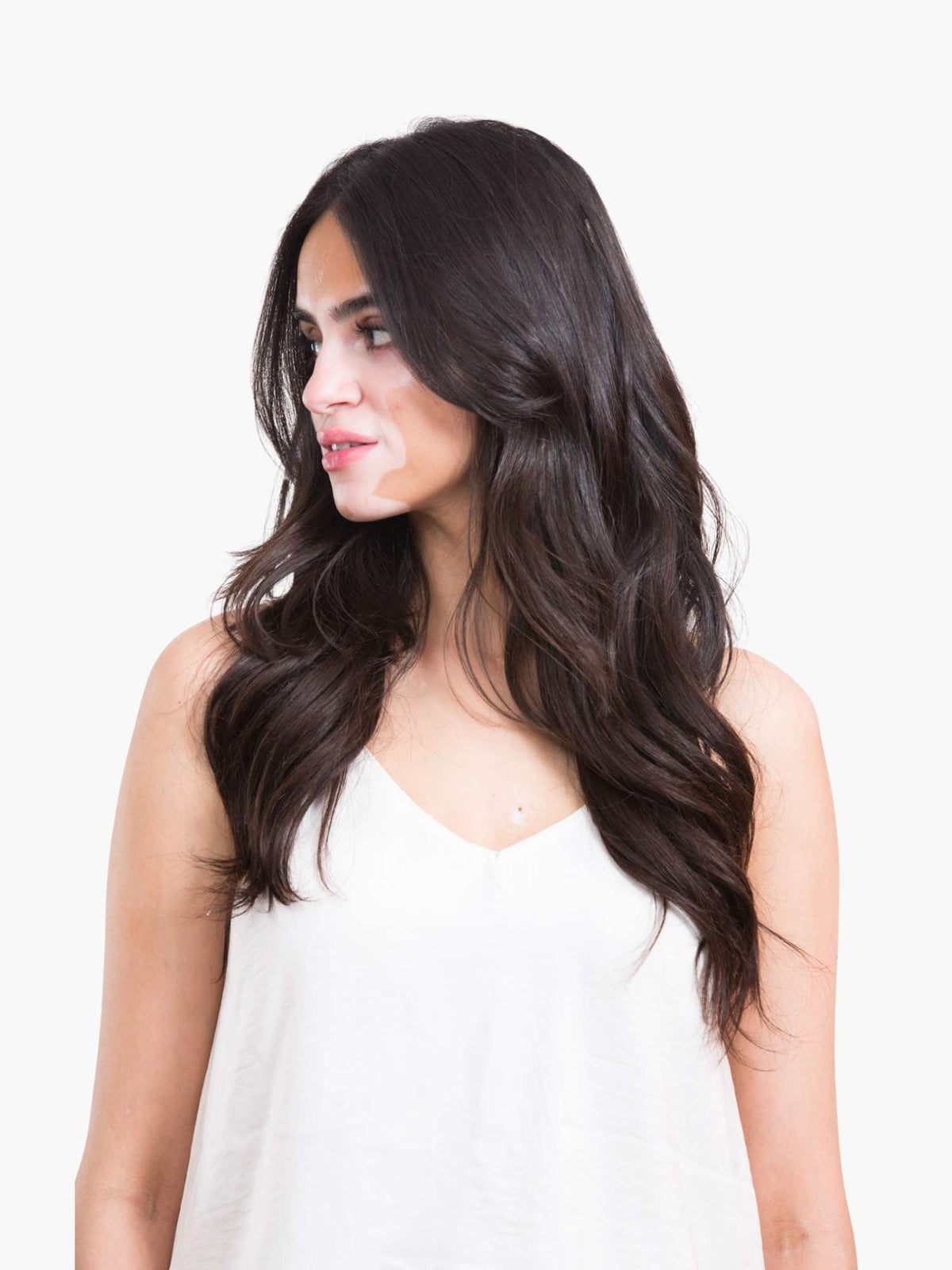
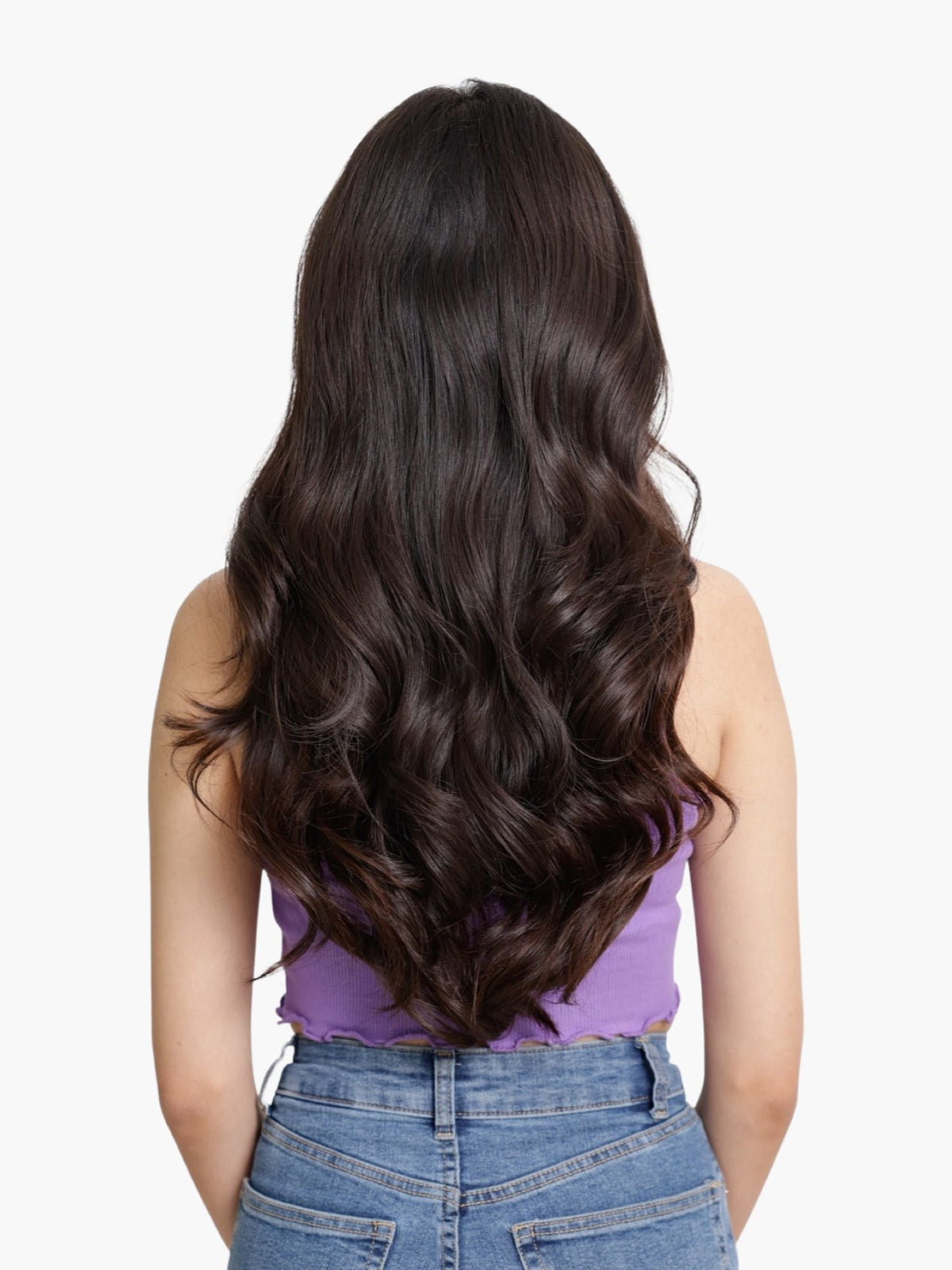
- To get the length back, a Seamless 7 Set puts it back on the days you want it, and comes out on the days you like the cut. Our guide to long layers covers having a stylist cut the set to match your own shape.
Worth saying clearly: none of this is necessary. Plenty of women adjust, learn three half-up styles and never think about it again. This is for the ones who cannot wait a year.
Three frames of the same head in one morning is a more honest picture of this length than any gallery of separate models. It shows what she actually has to work with, which is the question she is really asking.
How 1 Hair Stop Makes This Easier
We do not cut hair. We make it, which means the women who reach us are frequently the ones who cut first and are now working out what they can do about it.
Trusted by 300,000+ women worldwide | 4.8★ from 14,700+ reviews | 100% Human Remy Hair | Sourced From Temples | Clip-Free | Handmade in our own facility since 2009 | Damage-free application guarantee
"Almost nobody regrets a medium length cut because of how it looks. They regret it on the first morning they are late and cannot put it up. If somebody asked us before the appointment rather than after it, we would tell them to try tying it back at the new length first, and then choose. That costs us a sale sometimes, and it is still the right advice."
Raina Grover and Richa Grover, Co-Founders, 1 Hair Stop
Every piece we make is hand-knotted or wefted in 100% human Remy hair, in our own facility in Hyderabad. Because it is human hair, a stylist can cut it to match the shape you have just paid for rather than leaving it sitting underneath as a separate block.
Shop Pieces for Medium Length Hair
This length is short enough to lose options and long enough to hold a piece. These are the ones that work on it.
-
Getting your ponytail back: Turn a short stub into a real ponytail with the Mini Clip-In Ponytail Extensions, the smallest and lightest piece we make. It clips onto very little hair, which is exactly what this length leaves you with.
-
Getting your bun back: Build a full bun on hair too short to wrap one with the Messy Bun Scrunchie, which goes on over a loose gather rather than needing length of its own. You get volume at the crown with almost no pull.

-
Putting the length back when you want it: Add length on the days you miss it using the Seamless 7 Set Clip-in Extensions, whose flat wefts stay hidden even in a shorter cut. They come out again on the days the cut is exactly what you wanted.
-
Volume without clips, on fragile hair: Add body with nothing gripping your own hair using Halo Hair Extensions, which sit on a fine invisible wire. There is no tension anywhere on your scalp, which matters if your hair is fine as well as short.
-
Softening the front without a fringe appointment: Frame your face with Clip-In Curtain Bangs, two soft pieces that clip in at the top of the head in seconds. They pair with every one of the three lengths and come out at the end of the day.

-
Wearing it back on a day it will not behave: Hold the front off your face with the Braid Hairband, a braid on a flexible band that sits over the hairline rather than behind it. It solves the grow-out weeks when nothing else sits right.

- Not sure whether to cut shorter or add length? Read short hairstyles for women for the density question, or book a free video call.
Frequently Asked Questions
What is a lob haircut?
A lob is a long bob, meaning a bob grown or cut to sit past the shoulder rather than above it, usually finishing on or just above the collarbone. The distinction matters because it is the point at which the hair hangs instead of resting on the shoulder, which is what stops it flicking outward. A lob also ties back into a real ponytail, which a shorter bob does not.
What is the best low maintenance medium length haircut?
Collarbone length with long layers, point cut ends and no fringe, cut to air dry. Each of those does something. Collarbone stretches trims to eight or ten weeks and removes the flick. Layers starting below the jaw grow out invisibly, where layers starting at the cheekbone announce themselves within a month. Point cut ends stop the hair reading as a solid sheet as it grows. A fringe needs trimming every four to six weeks regardless, so leaving it out is what makes the rest low maintenance.
Where should layers start on medium length hair?
That is the only layering question that matters, and almost nobody asks it. Layers starting at the cheekbone give maximum movement but need density to carry them. Layers starting at the chin are the safe default. Layers starting below the jaw remove weight from the ends without touching the shape at the top, which makes them the right choice on fine hair. Name a landmark on your face at the appointment rather than asking for a number of layers.
What are the best medium length hairstyles for thin hair?
A blunt perimeter at collarbone length, with long layers only or none at all. Fine hair gains apparent thickness at this length because the weight that was flattening it is gone, and a solid line reads as density. What costs you is layering that starts high, which removes hair from the top where you can least spare it, and the shag, which is built on exactly that. Ask for one length or long layers, and keep the ends blunt.
Do medium length haircuts with bangs work?
Yes, and it is the most requested pairing at this length for a practical reason: the cut can look heavy at the perimeter and empty at the front, and a fringe adds hair at the front without removing any length at the bottom. Curtain bangs with a collarbone lob is the easiest version to live with. Blunt bangs with a blunt lob is the striking one, and it needs a trim every two to three weeks. Check for a cowlick at your front hairline first, because that rules out anything blunt.
Where exactly should medium length hair sit?
There are three answers and they are different haircuts. Just above the shoulder is a true bob with visible space between the ends and your shoulders. On the shoulder is where the ends touch, and it is the length that flicks outward. Collarbone length sits an inch or so lower and is usually called a lob. Pick one and say it out loud at the appointment, because "about shoulder length" covers all three.
Why does my medium length hair flick out at the ends?
Because it is cut to finish exactly where your shoulder is. The hair meets the shoulder, runs out of room and turns outward. A good cut suppresses it for a couple of weeks and then it returns as the hair grows. The only reliable fixes are going longer to the collarbone so the hair hangs past the shoulder, or going shorter so it sits clear of it. Adding texture and layers reduces it but will not remove it.
Can you still put medium length hair in a ponytail?
It depends which of the three lengths you choose. At collarbone length, yes, comfortably, including a bun and most half-up styles. On the shoulder, you can gather all of it into a low ponytail but the shorter front pieces tend to escape. Just above the shoulder gives you a short stub at the nape and not much more. Gather your hair and hold it at the length you are considering before you book, because this is the part women most often regret.
Is medium length hair low maintenance?
Less than the marketing suggests, and it depends entirely on which of the three you choose. Collarbone length is genuinely easy and can stretch to eight or ten weeks between trims. On the shoulder needs six to eight weeks, largely to keep the flick under control. Just above the shoulder needs cutting every six weeks and daily styling, because the shape is the whole look and it loses its outline quickly.
Why does my hair look so much shorter after the cut when it is wet?
Because wet hair clings to the head and loses the volume and movement the cut was built around. Straight hair reads a little shorter, wave loses its lift, and curly hair can appear dramatically shorter until it dries and springs back up. The first shower after a big cut is the moment most women panic, and almost nothing has actually gone wrong. Judge the cut dry and styled, not wet.
What can I do if I cut it shorter than I meant to?
Give it two weeks before deciding anything, because the first few days after a big change are not a fair test and a lot of regret passes on its own. If what you have lost is a hairstyle rather than a look, that does not resolve with time, and growing back from the shoulder takes roughly a year. A mini clip-in ponytail gives you the ponytail back immediately, a bun scrunchie gives you the bun, and a clip-in set gives you the length on the days you want it.


