


A woman approaching fifty was asked by an acquaintance whether she planned to finally cut her hair, because she was going to be fifty. She asked what her age had to do with her hair length. The acquaintance told her long hair was for our youth.
She posted the exchange online, more baffled than angry. Two and a half thousand people replied. A related thread asks why hairdressers all seem to hate long hair on women over fifty, and two thousand people upvoted the question.
Short answer: There is no haircut you are supposed to have at fifty. The rule that older women wear short hair is a leftover from a single fashion era, not a fact about ageing faces. What genuinely changes is the hair itself: each strand gets finer, density drops, grey hair grows in coarser, and the face changes shape. Those four things decide your best length, and none of them is your age. The real question is how much weight your density can carry.
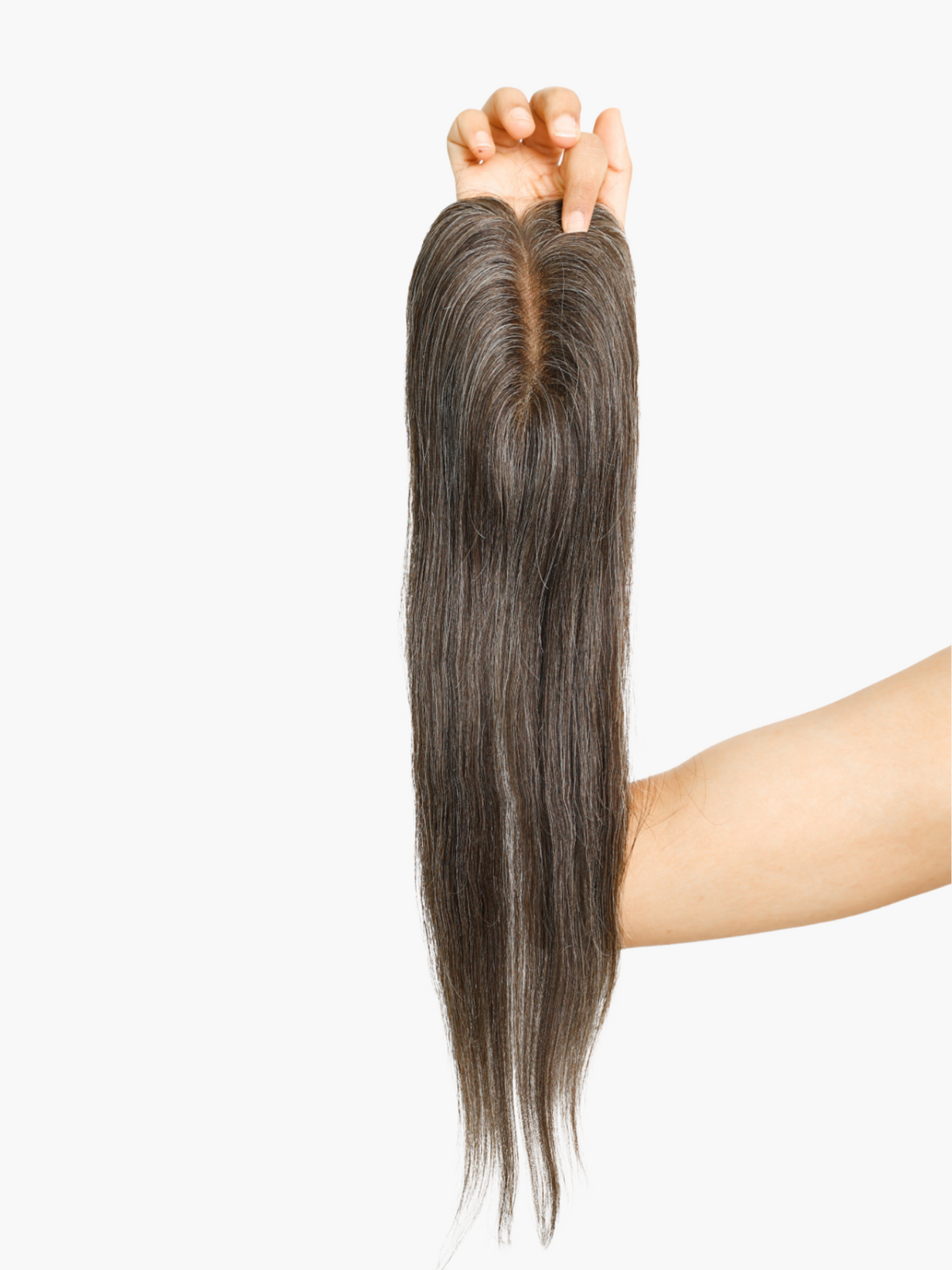
That piece is at the top of this article for a reason you will find further down. The most common change women describe at this stage is thinning at the crown and parting, and the usual advice is to cut it all off to hide it. The 1.5x5 Salt and Pepper Silk Hair Topper comes in Dark Grey and Almost White, which means it blends into greying hair rather than fighting it. It is the option nobody mentions.
- Where the Rule Actually Came From
- What Genuinely Changes, and What Does Not
- Why Grey Hair Behaves Differently
- The Honest Reason Short Haircuts Get Recommended
- Length Decided by Weight, Not by Age
- Over 60 and Over 70: What Changes Again
- Wash and Wear: The Lowest Maintenance Cuts
- The Cuts, Named
- The Cut Everybody Is Frightened Of
- What to Ask For, at Any Length
- The Other Answer: Add Density Instead of Removing Length
- How 1 Hair Stop Makes This Easier
- Shop Pieces for Hair Over 50 and 60
- Frequently Asked Questions
Where the Rule Actually Came From
Buried in that thread, a woman offers a theory almost in passing, and it is the single most useful thing written about this subject anywhere.
Short hair, she points out, was extremely fashionable in the 1950s and 1960s. Most women had short cuts. So the grandmothers we all remember with short hair were not women who cut it because they got old. They were women who adopted the fashion of their twenties and never changed it. The idea that older women have short hair, she says, comes from that. It is just the style they never really changed much.
Somebody else in the same thread confirms it from her own family. Most women she knew, including her mother and all her aunts, cut their hair short during or just after school, or once they got married.
Sit with that for a moment, because it dismantles the whole premise.
The visual evidence everybody carries around, that older women have short hair, is real. The explanation everybody attaches to it is wrong. It is not that hair looks bad long on an older face. It is that one generation of women adopted a short style young and kept it for sixty years, and the generation that watched them grow old mistook a cohort for a law of nature.
That matters practically, not just philosophically. If the rule were about faces, it would apply to you. If it is about the fashions of 1958, it does not, and you can stop treating it as information.
What women in that thread actually report is the opposite of the rule. One is seventy five and has kept her hair waist length or longer since she was sixteen, now mostly white, and says it is easier to keep out of her eyes than when it was shorter. One is over 60 and wearing it the longest she ever has, because being able to put it up in a ponytail is so convenient. One realised during the pandemic that she had been cutting it short only to be appropriate, and grew it back.
The most quoted line in the whole discussion is nine words long. You should wear your hair however makes you feel like yourself.
What Genuinely Changes, and What Does Not
Dismissing the rule is not the same as pretending nothing changes. Four things do, and they are physical and measurable.
| What changes | How you notice it | What it means for your hair |
|---|---|---|
| Strand diameter | The ponytail feels smaller in your hand even though you do not seem to be losing hair | Each individual strand is finer, so the same number of hairs makes a thinner gather. This is the change most women notice first and misread as loss |
| Density | More scalp visible at the parting, particularly at the crown, particularly under overhead light | Fewer hairs per square centimetre. It is the change that decides how much length you can carry before the ends look sparse |
| Texture | Hair that used to be smooth now goes wiry, frizzy or coarse, often in patches rather than all over | Grey and white strands have a different structure to pigmented ones. The style behaves differently even at the same length |
| Face shape | The jawline softens and the face reads wider at the bottom than it used to | One woman put it exactly: she is no longer an oval, she is closer to a square, and longer hair stopped suiting her. This is a real variable and it is nothing to do with age in the abstract |
Two things worth being clear about before going further.
This article is about styling, not about causes: Women in these threads raise menopause constantly and describe real changes in their hair around it. We make hair, we are not clinicians, and we are not going to tell you why your hair is doing what it is doing. If yours is falling out suddenly, coming out in patches, or changing fast enough to worry you, that is a conversation for a doctor rather than a hairdresser, and it is worth having early.
Age is not one of the four: Every variable in that table is a property of your hair or your face. None is a birthday. Two women at the same age can have completely different answers, which is exactly why a rule based on the number never worked.
Why Grey Hair Behaves Differently
This gets glossed over everywhere and it explains a great deal of the frustration.
Grey and white hair is not simply your hair without colour. The strand itself is structurally different. It is usually coarser, drier, and more resistant to being shaped, and it reflects light differently, so it reads as frizz where a pigmented strand of the same texture would not.
Three practical consequences.
- Your old style may not sit the same way: Same length, same cut, different behaviour, because the material has changed. This is often misread as the style no longer suiting your face when it is actually the hair not holding the shape.
- It shows every dry end: Light bounces off white hair rather than being absorbed, so split and dry ends are far more visible than they were. Regular trims do more for grey hair than for pigmented hair, and that is a real reason for more frequent appointments rather than an upsell.
- Blending beats covering: Solid colour over greying hair creates a hard band at the parting within about three weeks, because the regrowth is a completely different colour to the dye. Lightened pieces break up that uniformity so incoming grey reads as one more tone. That approach is set out in full in our guide to brown hair with blonde highlights, where a working colourist explains she uses highlights specifically to mask exactly this.
One woman in the thread describes giving up colour entirely after it burnt the life out of her hair despite every gentle product she tried. That is a common ending, and going grey deliberately is a legitimate choice rather than a surrender. The mistake is doing it accidentally, with three inches of silver above six inches of dye.
The Honest Reason Short Haircuts Get Recommended
Ask why short hair is suggested at this stage and you will be told it looks fresher, or more modern, or more youthful. None of that is the real reason and everybody in the industry knows it.
The real reason is mechanical. Hair has weight, and weight pulls down on the root. The longer the hair, the more weight is hanging from each follicle, and the flatter the hair sits at the scalp. Cut length off and the same hair stands up more, which reads as volume.
So when density has dropped, shortening the hair genuinely does make it look thicker. That is not a lie. It is a real trick and it works.
But notice what the recommendation actually is. It is not that short hair suits older faces. It is that less weight produces more apparent volume on lower density hair. The advice is about grams, and it has been dressed up as advice about age.
Once you see that, two things follow.
The question becomes answerable: How much weight can your density carry before the hair goes flat and the ends look thin. That is a question with a real answer, and your own hair will tell you.
There is more than one way to solve it: If the problem is weight against density, you can reduce the weight, which is the haircut, or you can increase the density, which is everything in the last section of this article. Both are legitimate. Only one of them is ever mentioned.
Three frames of one woman is the comparison this category never publishes, because it would show that the haircut is one option rather than the answer.
Length Decided by Weight, Not by Age
Run one test. Gather all your hair into a ponytail and circle the base with your thumb and forefinger. Then use the table.
| Your gather | Length that will hold volume | What to ask for | What to avoid |
|---|---|---|---|
| Thumb and forefinger overlap easily | Any length you like, including waist | Long layers for movement, trimmed ends | Nothing. Density is not your constraint |
| They just meet | Collarbone to mid back | Layers starting at the jaw, weight removed from the ends rather than the top | One solid length past the shoulder blade, which will go flat at the root |
| They do not quite meet | Shoulder or just above | A blunt perimeter with soft internal layers, and a deeper side parting | Heavy face-framing layers, which remove hair from the front where you can least spare it |
| A clear gap between them | Jaw to chin | A blunt line for density, slight graduation at the back for lift | Anything thinned or texturised, which subtracts from hair you need |
That table is the useful version of everything written about this subject, and it never once mentions how old you are.
Two notes on it. If you land in the bottom row and do not want to be there, the last section of this article is written for you. And if you are cutting to a bob for the first time, the shape at the back of your head matters more than your face does, which is covered in bob haircuts for women.
Over 60 and Over 70: What Changes Again
Fifty is where the conversation starts and it is not where it stops. More women search for hairstyles for women over 60 than for over 50, and a meaningful number are searching over 70. Lumping all three together is the laziest thing this category does, because the constraints genuinely shift.
Nothing on this page stops applying. Density still decides length, grey still behaves differently, and the cohort rule is still nonsense. What changes is the balance between the four variables in the table above.
- In your fifties: Strand diameter is usually the first thing to move. The ponytail feels smaller in your hand before any scalp becomes visible. Most women at this stage have more options than they think and are cutting too early.
- Over 60: Density becomes the governing variable rather than strand thickness. This is where the weight test in the table earns its place, and it is the stage at which the honest answer for a lot of women shifts from cut it to add to it.
- Over 70: Texture leads. Hair is mostly or entirely grey by now, which means coarser, drier and harder to shape, so the trim interval matters more than the cut does. Short hairstyles for women over 70 are popular for a genuine reason at this point, and it is still a choice rather than a rule.
One pattern worth naming, because it causes a lot of unnecessary cutting. Women often change their hair at a birthday rather than at a change in their hair. Sixty arrives, nothing about the hair has actually moved, and the appointment gets booked anyway. Run the weight test instead. Your hair does not know what year it is.
Wash and Wear: The Lowest Maintenance Cuts
Wash and wear is the phrase a lot of women are actually searching for, and it means something specific: a cut you can wash, towel off, leave alone, and walk out of the house with. No round brush, no heat, no product you have to remember.
It is not the same as short. Plenty of short cuts need more daily work than a long one, and the dated bob in the next section is the clearest example. Four things make a cut genuinely wash and wear, and all four are decided in the chair.
- Cut dry, or at least checked dry: A cut measured wet lands somewhere else once it dries, and the hair you then have to fight every morning is the gap between the two. Ask for it to be assessed dry before you leave.
- Cut with your texture, not against it: Say the words air dry friendly. On grey and coarse hair this matters more than at any other stage, because the strand resists being shaped into something it does not want to do.
- Shape from the inside, not the ends: Weight removed from within the shape lets the hair fall where it wants to. Thinned or texturised ends on lower density hair do the opposite and leave you styling the ends to hide it.
- No fringe unless you want one for its own sake: A fringe is the single highest maintenance thing on any head. It needs trimming every four to six weeks and drying every single morning. It can be wonderful. It is never low maintenance.
Asked for together, that is a wash and wear haircut: cut dry, air dry friendly, weight out of the interior, no fringe. It works at any length, and the women who get the best version of it are the ones who use those four phrases rather than asking for something easy.
One genuine caveat for thin hair. A wash and wear cut on lower density hair will look its best on the second day rather than the first, because clean hair has no grip and falls flat. That is normal, it is not the cut failing, and the fix is to wash the day before anything that matters.
The Cuts, Named
Everything above is about the decision. This is the vocabulary, so you can ask for the thing you mean. Each of these works at this stage, and each one is right for a different answer to the weight test.
- The pixie: The biggest volume gain available, because it removes almost all the weight. It suits the bottom row of the table best and it is the most popular short cut among women over 60 for that reason. The cost is a cut every six weeks, because the shape is the whole look. Ask for it textured rather than smooth, which is what separates a modern pixie from the dated version.
- The bob: Jaw to chin, blunt perimeter. It is the safest short cut because the solid line reads as density, and it is the one most women move to before considering a pixie. The shape at the back of your head decides whether it works, which is why it needs the separate guide linked above.
- Medium length, to the collarbone: Usually the sweet spot for the middle two rows of the table. Enough length to tie back, not enough weight to flatten the root. Medium length hairstyles for women over 50 is one of the most searched versions of this question and it is almost always the right first answer.
- The shag: Heavy internal layering with an undone finish. It builds visible movement without needing a blow dry, which makes it one of the few genuinely wash and wear options with a recognisable shape. It needs some density to carry it, so it suits the top two rows rather than the bottom.
- Choppy layers on anything: Not a cut, a finish. Point cut ends rather than a straight line across. It stops hair reading as a solid sheet and it is the cheapest thing you can add to any of the four above.
- Long, layered, trimmed: The option the category forgets. If your gather is thick enough, long hair with layers starting below the jaw and ends taken off every ten weeks is a completely legitimate choice at any age, and it is the one that keeps every hairdo available to you.
One note that applies to all six. Grey hair holds a shape less willingly than pigmented hair, so whichever of these you choose, the trim interval does more work than the name of the cut.
The Cut Everybody Is Frightened Of
Somewhere in the related threads a woman asks how to avoid ending up with a particular haircut that has become shorthand online for looking older than you are. She is nervous, she has reference photographs she likes, and she cannot articulate what she is trying to avoid.
It is worth naming properly, because the fear is real and the usual advice is useless.
The cut in question is a heavily graduated short bob: very short and stacked at the back, angled longer towards the front, with volume built high at the crown. It was everywhere in the early 2000s. It reads as dated for exactly the same reason any cut reads as dated, which is that it was extremely popular in one specific period and has not been since.
It has nothing to do with age and everything to do with era. That is why a woman of fifty five with waist length hair does not read as dated and a woman of thirty five with that specific bob does.
Three things separate a modern short cut from that one.
- Where the volume sits: The dated version builds height at the crown. Modern short cuts keep the weight lower and let the shape sit closer to the head.
- How hard the angle is: A steep line from short at the back to long at the front is the signature. A gentler angle, or none, reads as current.
- How finished it looks: Blow-dried into a smooth, deliberate helmet is the giveaway. The same cut worn with texture and a little movement does not read the same way at all.
Take that description to a stylist rather than the word you are trying to avoid. Describing the shape gets you a result. Describing the fear does not.
What to Ask For, at Any Length
The thread that asks why hairdressers seem to hate long hair on women over fifty drew two thousand upvotes and three hundred and seventy replies, and the honest answer inside it is not a conspiracy. A short cut on lower density hair produces an immediate, visible improvement in the chair, and stylists are rewarded for immediate visible improvements. Growing out, trimming and maintaining a longer length is slower, less dramatic and harder to photograph.
That is not bad faith. It is an incentive. Knowing it changes what you say.
- Say the length you want before you sit down: Not in the consultation, in the booking. It reframes the appointment from what should we do to how do we make this work.
- Ask for weight removed, not length: On lower density hair the flatness comes from weight at the root. Internal weight removal and layers starting lower down solve it without taking the length you want to keep.
- Protect the front: The hair around your face and parting is the hair everybody sees and the hair that thins first. Say explicitly that you do not want face-framing layers cut from it.
- Ask about the trim interval for grey hair: It is genuinely shorter than for pigmented hair, because dryness shows more. Getting this right does more for how the length looks than any cut decision.
And one thing not to do. Do not bring a photograph of a woman with twice your density and ask for her haircut. That is the most common cause of disappointment at every age, and it is entirely avoidable.
The Other Answer: Add Density Instead of Removing Length
Everything above accepts the constraint. This section questions it.
If the mechanism is weight against density, and everybody agrees it is, then removing weight is one solution and adding density is the other. The second one is almost never offered, largely because the people writing about hairstyles sell haircuts and colour rather than hair.
One woman in that thread got there on her own, and her comment is worth reading properly. Her hair is straight and fine with no volume to help her out, and it got thin, brittle and wiry. She now wears hair pieces. For date nights she wears hair that reflects the hair she used to have. When she wants to counter the effects of ageing she lightens the colour and wears something fuller around the chin. She says she has an entire world available to her rather than one hairstyle, and she describes it as freeing and confidence boosting.
Forty four people upvoted that and nobody argued with her.
Three points are worth making honestly about this route.
- It is not all or nothing: The range runs from a small topper covering a parting, through a halo adding thickness through the lengths, to a full change of look. Most women who use these start at the small end and stay there.
- Attachment matters more at this stage than at any other: Clips pull on the hair they attach to, and if the surrounding density is already lower, that matters. Clip-free bands and wire-based pieces exist specifically for this, and they are the right starting point if your hair is fine or fragile.
- Matching grey is the hard part, and it is solvable: This is where most pieces fail, because most are made in pigmented shades only. A piece made in a genuine salt and pepper or near-white shade blends. A dark piece on greying hair does not, at any price.
If the thinning is concentrated at the crown or the parting rather than spread across the whole head, the decision is a different one, and it is set out properly in hair toppers for a thinning crown.
How 1 Hair Stop Makes This Easier
A large share of the women who write to us are in exactly this position, and almost all of them open the same way. They apologise. They explain that they know they should probably just cut it.
Trusted by 300,000+ women worldwide | 4.8★ from 14,700+ reviews | 100% Human Remy Hair | Sourced From Temples | Clip-Free | Handmade in our own facility since 2009 | Damage-free application guarantee
"The thing that still surprises us is the apology. A woman writes in about her hair and the first thing she does is explain why she has not simply accepted it. Nobody apologises for buying glasses. We started making pieces clip-free because women at this stage told us the clips were pulling on the hair they had left, and we make them in salt and pepper and near-white because for years the only honest answer we could give a woman with grey hair was that we did not have her shade."
Raina Grover and Richa Grover, Co-Founders, 1 Hair Stop
Every piece is hand-knotted or wefted in 100% human Remy hair in our own facility in Hyderabad. Our silk base toppers are built with two layers of netting, with each strand individually knotted onto the lower layer and pulled through a fine top layer, which is what makes the parting read as scalp rather than as a base.
Two honest limitations. Weight matters at this stage, and the smaller silk toppers run between sixteen and thirty one grams for a reason, so start smaller than you think. And a piece has to be matched, which is harder on greying hair than on any other kind, so use the free consultation rather than guessing from a screen.
Shop Pieces for Hair Over 50 and 60
All of these are 100% human hair and all of them come off at the end of the day. Choose by where the density has gone, not by how much hair you want.
-
For greying hair, which nothing else matches: Blend into naturally grey or white hair with the 1.5x5 Salt and Pepper Silk Hair Topper, made in Dark Grey and Almost White on a silk base that reads as a real parting. It is the piece women at this stage tell us they could not find anywhere.
-
The smallest place to start: Cover a widening parting with the 1.5x4 Silk Hair Topper, which weighs between sixteen and twenty-three grams and sits on the crown without announcing itself. It comes with an optional adjustable band instead of front clips, which takes the pressure off your own roots.

-
When it is the hairline rather than the crown: Fill a receding or thinning front with the Receding Hairline Clipfree Band, hand-knotted onto lace to mimic natural baby hair and worn directly on the forehead on an adjustable band. Nothing clips into your own hair anywhere.

-
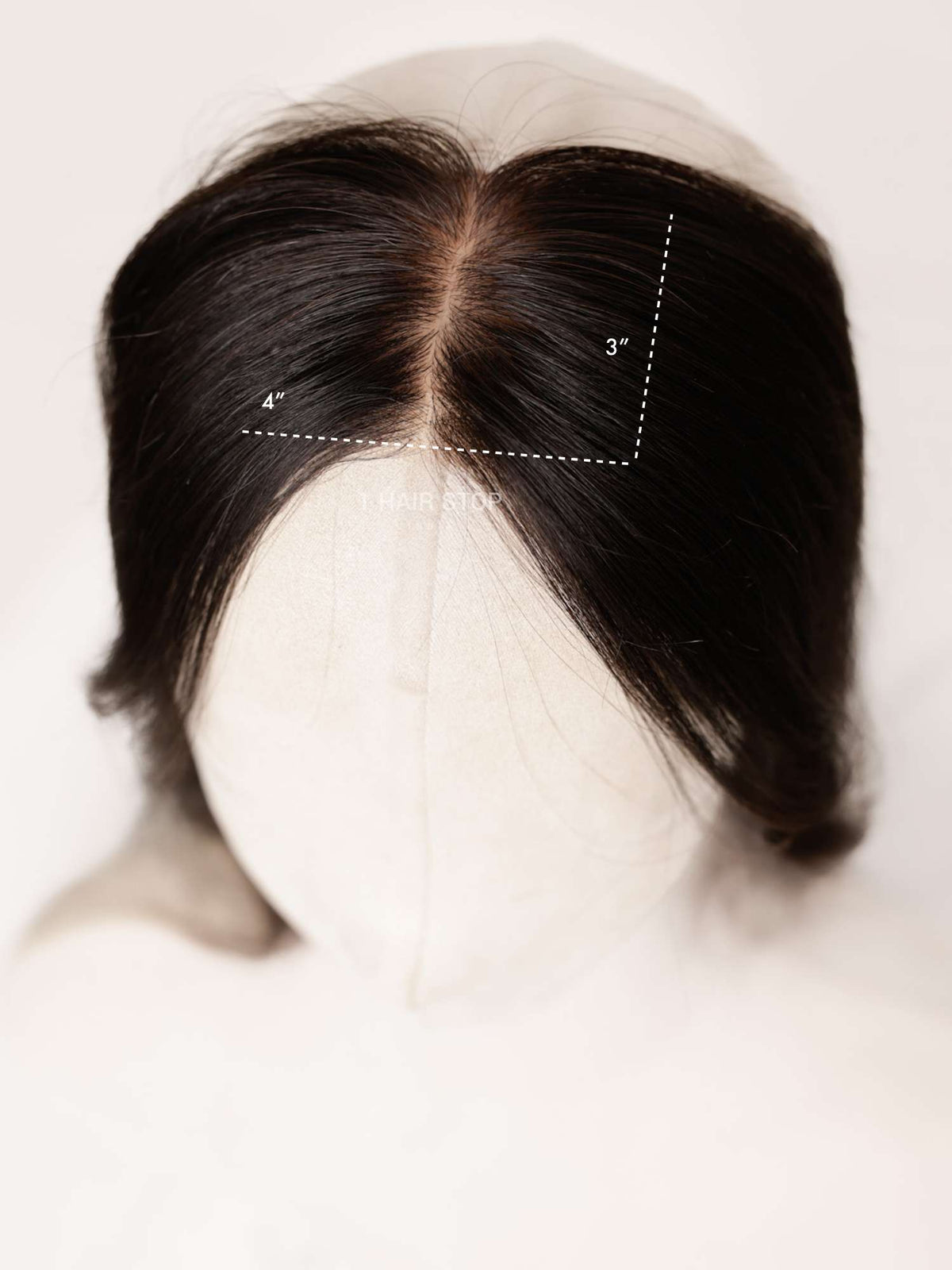
Hairline coverage with a fringe included: Soften the front and add coverage in one piece with the Frontal Fix Clip-Free Hairline Topper, built on a silk part and finished with layered curtain bangs. It holds on an adjustable band, so there is no tension on thinning hair at the hairline.
-
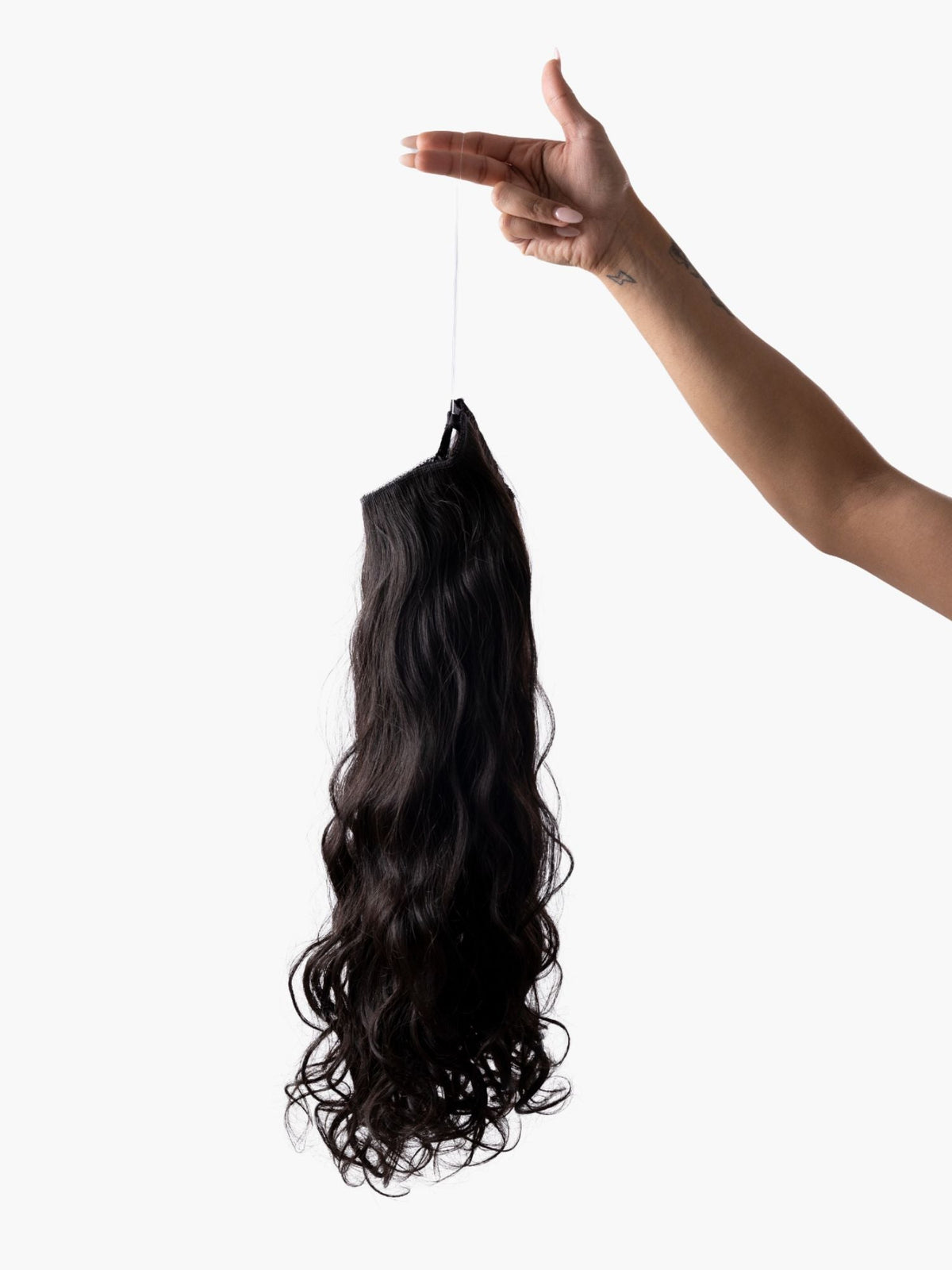
Thickness through the lengths with no tension: Add density without anything gripping your own hair using HaloHair Extensions, which sit on a fine adjustable wire about an inch behind the hairline. It goes on in under a minute and there is no attachment point to pull.
-
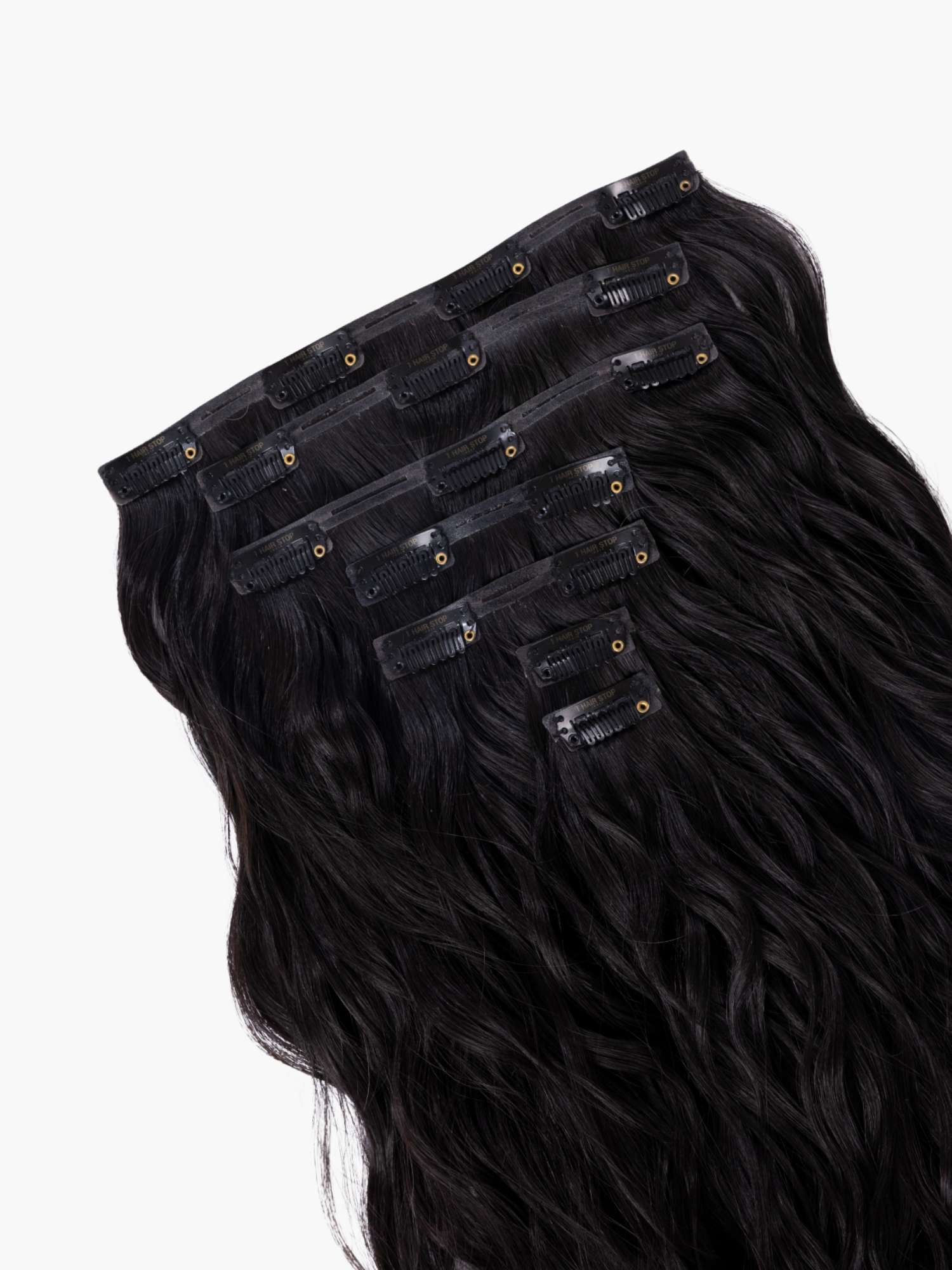
Keeping the length you already have: Carry a longer length that your own density no longer supports with the Seamless 7 Set Clip-in Extensions, whose flat wefts stay hidden on fine hair. This is the alternative to the haircut rather than a step after it.
- Not sure where your density has actually gone? Read how to choose a hair topper for thinning hair, or book a free video call and we will look at your parting in daylight with you.
Frequently Asked Questions
What are the best hairstyles for women over 60?
The same thing that decides it at fifty, which is density rather than age. Over 60, density tends to be the governing variable rather than strand thickness, so run the weight test: gather your hair into a ponytail and circle the base with your thumb and forefinger. Overlap means any length works. A clear gap means a pixie or a blunt bob will look fullest, and adding density is the alternative if you want to keep length. Medium length to the collarbone is the right first answer for most women in the middle.
What is a wash and wear haircut?
One you can wash, towel off, leave alone and walk out with. No round brush, no heat, no product. It is not the same as short, because plenty of short cuts need more daily work than a long one. Four things make a cut genuinely wash and wear: cut it dry or at least check it dry, cut it air dry friendly so it works with your texture, take weight out of the interior rather than thinning the ends, and skip the fringe. Use those four phrases rather than asking for something easy.
Are pixie cuts good for women over 60?
They give the biggest volume gain of any cut, because removing almost all the length removes almost all the weight pulling the root down. That makes a pixie the strongest option if your ponytail gather leaves a clear gap between thumb and forefinger. The cost is a cut every six weeks, because the shape is the whole look and it loses its outline quickly. Ask for it textured rather than smooth, which is the difference between a modern pixie and the dated version.
What are the best haircuts for women over 60 with thin hair?
A blunt perimeter at whatever length your density supports, with weight removed from inside the shape rather than thinned at the ends. A solid line reads as density. What costs you is face-framing layers, which take hair from the front where it shows most, and anything texturised, which subtracts from hair you need. If the hair has changed rather than always being this way, see the note above about speaking to a doctor first.
What are the best medium length hairstyles for women over 50?
Collarbone length with layers starting at or below the jaw, and the ends kept blunt. It is the sweet spot for most women at this stage: long enough to tie back, not so long that the weight flattens the root. Avoid one solid length past the shoulder blade, which goes flat, and avoid layers starting at the cheekbone, which take hair from the top. Medium length is also the easiest length to add density to if your own hair stops carrying it.
What are the best short hairstyles for women over 70?
By this stage texture usually leads rather than density. Hair is mostly or entirely grey, which means coarser, drier and more resistant to holding a shape, so the trim interval matters more than the name of the cut. A textured pixie or a blunt bob both work well and both need cutting on schedule rather than when you remember. Short is popular here for a genuine reason and it is still a choice, not a rule.
Should women over 50 cut their hair short?
There is no age at which you are supposed to cut your hair. The idea that older women wear it short is a leftover from the 1950s and 1960s, when short cuts were the dominant fashion and the women who adopted them kept them for decades. What actually decides your best length is density, not age. Gather your hair into a ponytail and circle the base with your thumb and forefinger. If they overlap, any length will hold volume. If there is a clear gap, shorter will look fuller, and adding density is the alternative to cutting.
Why does short hair look thicker on thinning hair?
Because hair has weight and weight pulls down on the root. The longer the hair, the more weight hangs from each follicle and the flatter it sits at the scalp. Removing length removes that weight, so the same hair stands up more, which reads as volume. It is a genuine mechanical effect rather than a style opinion. It also means the alternative solution is to add density rather than remove length, which produces the same result at the length you want.
Why is my grey hair so frizzy and hard to style?
Grey and white hair is structurally different from pigmented hair, not just uncoloured. It is usually coarser, drier and more resistant to holding a shape, and it reflects light rather than absorbing it, so dryness and split ends show far more. A style that worked at the same length ten years ago can behave completely differently for this reason. Grey hair also benefits from more frequent trims than pigmented hair, because the ends show their condition so clearly.
My hair got thinner around menopause. Is that normal?
Many women describe changes in their hair around this time, including finer strands, lower density and a change in texture. We make hair rather than treat it, so we are not the people to tell you why yours is changing. What we will say plainly is that sudden loss, patchy loss, or a change fast enough to worry you is worth a doctor's appointment rather than a haircut, and it is worth making early. Styling advice is for after that, not instead of it.
Can I still have long hair at 60 or 70?
Yes, and plenty of women do. The constraint is density rather than age: if your ponytail gather is thick enough to carry the weight, long hair will hold its volume at any age. Women over 60 and over 70 routinely describe keeping waist length hair and finding it easier to manage than short hair, because it can be tied up and kept out of the way. If density is the limit, layers that remove weight from the ends and added density both let you keep length you would otherwise have to cut.
How do I cover grey hair without dyeing it?
Two routes. Blending rather than covering is the colour route: solid single process dye creates a hard band at the parting within about three weeks because the regrowth is a completely different colour, whereas lightened pieces break up the uniformity so incoming grey reads as one more tone. The other route is a hair piece made in a genuine grey or salt and pepper shade, which blends rather than contrasting. A dark piece on greying hair never works, whatever it costs.
Are clip-in extensions safe for fine or ageing hair?
Clips put tension on the specific hairs they attach to, which matters more when the surrounding density is already lower. That is why clip-free and wire-based pieces exist. A halo sits on a fine wire with nothing gripping your own hair at all, and clip-free bands hold on an adjustable strap. Weight is the other factor, so start with a smaller and lighter piece than you think you need and move up only if it feels comfortable.


