


These two look almost identical hanging on a rail. Both are a length of hair with a fastening at the top, both add the same thing to a ponytail, and most product pages describe them in near-identical language. The difference is entirely in how they grip your head, and that difference decides which one will still be in use in six months.
The usual framing is that one is more secure than the other. That is not really true. Both hold well when they suit the hair they are on. What actually separates them is what happens when they stop holding, because they fail in completely different ways, and one of those failures is far more visible than the other.
Short answer: A clip-in ponytail grips your hair directly with a clip or claw, goes on in seconds, and holds firmly even on a small base. A wrap-around uses a comb and a velcro strap, then hides everything under a wrapped strand of hair, which is the most invisible finish available but takes longer and needs a firmer base. Choose clip-in for speed, security and fine or short hair. Choose wrap-around for the cleanest look when your base can carry it.
That is the wrap around ponytail, the one that finishes most invisibly when your own base can hold it. The flat clip-in ponytail is the faster and more forgiving option, and on fine hair it is usually the better answer. The rest of this article is the honest comparison between the two.
- What Actually Differs Between Them
- How a Clip-In Ponytail Attaches
- How a Wrap-Around Ponytail Attaches
- Clip-In vs Wrap-Around, Side by Side
- They Do Not Fail the Same Way
- Which One Suits Your Hair
- Where Claw Clips and Braided Pieces Fit
- How 1 Hair Stop Makes the Choice Easier
- Shop Both Attachments
- Frequently Asked Questions
What Actually Differs Between Them
Strip away the marketing and there is one real difference. A clip-in ponytail grips your hair. A wrap-around wraps around it.
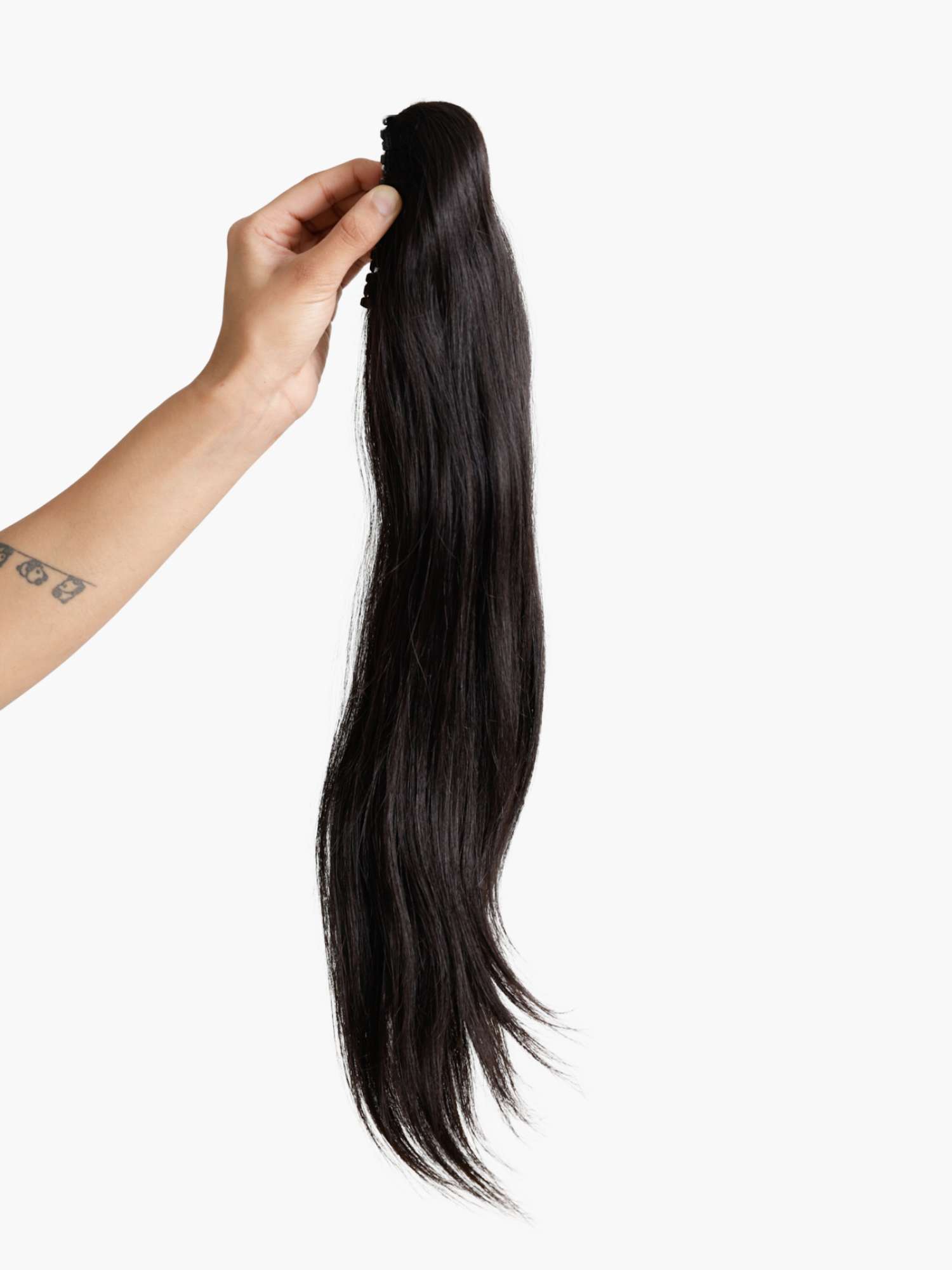
A clip-in has a clip, claw or flat clasp that bites onto the base of your ponytail directly. The hardware does the holding. Most also carry a small hidden comb and a velcro band for extra security, but the clip is what keeps it up.
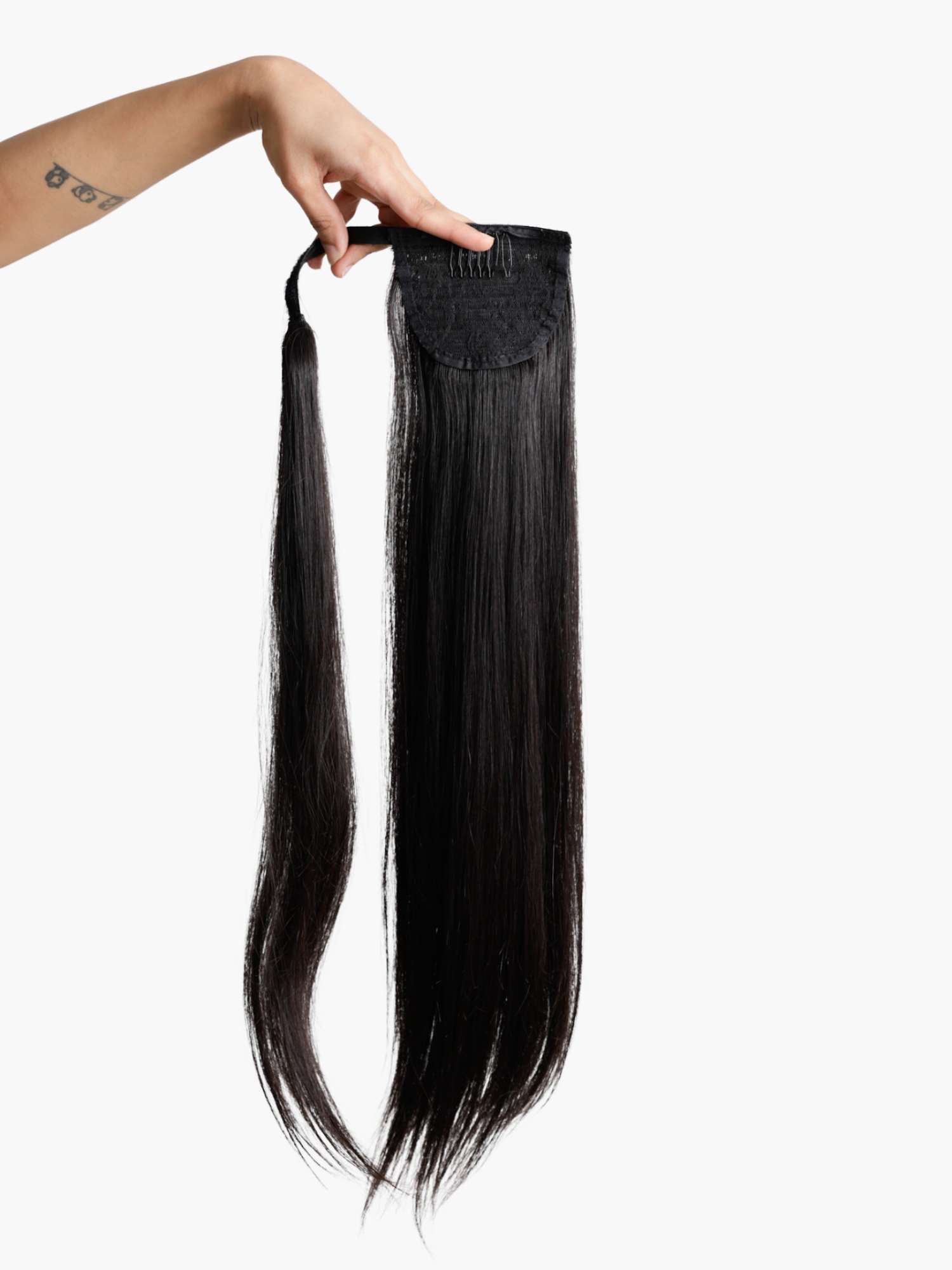
A wrap-around has no gripping clip. It uses a small comb pushed in above your elastic, a velcro strap that closes around the whole base, and then a separate strand of hair attached to the piece that you wind around the join to hide every fastening. The velcro does the holding. The wrapped strand does the disguising.
That single structural difference produces everything else: how long each takes to put on, how much base each needs, how visible each is, and how each behaves on fine hair.
Worth looking at that image properly before you decide anything. Almost every wrong purchase in this category comes from someone choosing on length and colour, then discovering that the fastening does not suit their hair. The fastening is the product.
How a Clip-In Ponytail Attaches
You make a ponytail, then clip the piece on at the base. That is the whole application, and it takes under a minute once you have done it twice.
The clip closes onto the gathered hair just below your elastic, and because it is gripping a bundle rather than individual strands, it holds well even when there is not much hair to work with. This is why clip-ins are the more forgiving of the two on short hair, fine hair, or any base that is smaller than the photographs on the box suggest.
Our Flat Clip-in Ponytail Extensions use a flat clasp with velcro and a small hidden comb, and they come in 8, 12, 16 and 18 inch lengths. That range matters more than it looks. The short options mean you can add fullness without adding much weight, which is exactly what a small or fine base needs, and it is not a choice a wrap-around usually offers.
The Clip-in Ponytail Extensions work the same way in longer 16, 20 and 24 inch lengths for hair that can carry them.
How a Wrap-Around Ponytail Attaches
Three steps rather than one. Push the hidden comb in directly above your elastic. Pull the velcro strap around the base of the ponytail until it is snug and does not rotate. Then take the strand of hair attached to the piece and wind it around the whole join, pinning the end underneath.
Two to three minutes, and it needs a little practice before it looks right. The pay-off is the finish. When it is done properly there is no hardware anywhere on the outside of your head. The elastic, the comb, the velcro and the seam are all under a layer of hair that matches the rest, which is why it photographs better than anything else in this category.
Our Wrap Around Ponytail Extensions use exactly that construction, in 16, 20 and 24 inch lengths.
The reason it needs a firmer base is that the velcro is holding the entire weight of the piece against a ponytail rather than gripping into it. If your own ponytail can shift under load, the whole piece shifts with it, and there is no clip biting in to stop that happening.
Clip-In vs Wrap-Around, Side by Side
| What you are comparing | Clip-In Ponytail | Wrap-Around Ponytail |
|---|---|---|
| What holds it | A clip or claw gripping the ponytail | A comb plus a velcro strap around the base |
| Time to put on | Under a minute | Two to three minutes |
| Learning curve | None | A few attempts to wrap it cleanly |
| Base required | Small base is fine | Needs a firm, reasonably full base |
| Finish when done well | Very good, hardware sits under the hair | The most invisible of any attachment |
| Best for fine hair | Yes, especially shorter flat clip styles | Only if the base holds firm |
| Best for short hair | Yes, grips a small ponytail | Often not, the base is too small |
| Repositioning during the day | Easy, unclip and reclip | Awkward, the wrap has to be redone |
| Lengths we make | 8 to 24 inches | 16 to 24 inches |
The two rows that decide it for most people are base required and time to put on. Everything else is preference.
They Do Not Fail the Same Way
This is the part no comparison covers, and it is more useful than any of the specifications above.
A clip-in fails by showing. The clip is hardware sitting at the base of your ponytail, and on fine hair there may not be enough coverage above it to hide it. Wearers describe seeing the claw or clip through the hair from certain angles, and some end up removing the claw from the piece entirely because of it. The piece stays exactly where you put it. You can just see how it got there.
A wrap-around fails by slipping. Nothing is gripping into your hair, so if the base gives or the velcro loosens across a day, the whole piece creeps downward. The wrapped strand comes loose first, and once that opens, the velcro and the elastic are visible from behind and it reads immediately as a separate piece of hair. It looked flawless at 8am and obvious by lunchtime.
So the honest question is not which is more secure. It is which failure you would rather risk.
- If your hair is fine or thin, the clip is more likely to show, but the wrap is more likely to slip. On balance the clip-in still wins, because a slightly visible clip low on the ponytail is less noticeable than a piece that has slid two centimetres and opened at the seam.
- If your hair is medium or thick, you have enough coverage to hide a clip and enough base to hold a wrap. Choose on finish and time, not on security.
- If you will be wearing it all day, moving, or in heat, the clip-in is the lower-risk choice, because it can be checked and fixed in five seconds without redoing anything.
Which One Suits Your Hair
Work down these and stop at the first that describes you.
- Short or shoulder-length hair. Clip-in. A wrap-around needs a base your hair probably cannot make yet, and no amount of technique gets around that.
- Fine hair, small ponytail. Clip-in, and choose a shorter length rather than the longest one. Weight is what defeats fine hair, not the fastening.
- You want it on in under a minute, most days. Clip-in. The wrap is a two to three minute job every time, and that adds up.
- Thick hair, firm base, and you want the cleanest possible finish. Wrap-around. This is what it is for and nothing else matches it.
- Occasions rather than daily wear, and you will be photographed. Wrap-around. The extra two minutes buys you a join that does not show from any angle.
- You are buying your first one and you are not sure. Clip-in. It is more forgiving of everything, and if you later want the invisible finish you will know by then whether your base can carry it.
If you want the fitting technique rather than the choice, our guide to the full ponytail range shows every attachment in the same hair, so you can compare the actual construction rather than descriptions of it.
Where Claw Clips and Braided Pieces Fit
Two more options sit alongside these, and it is worth knowing where they land so you are not comparing only two things when there are four.
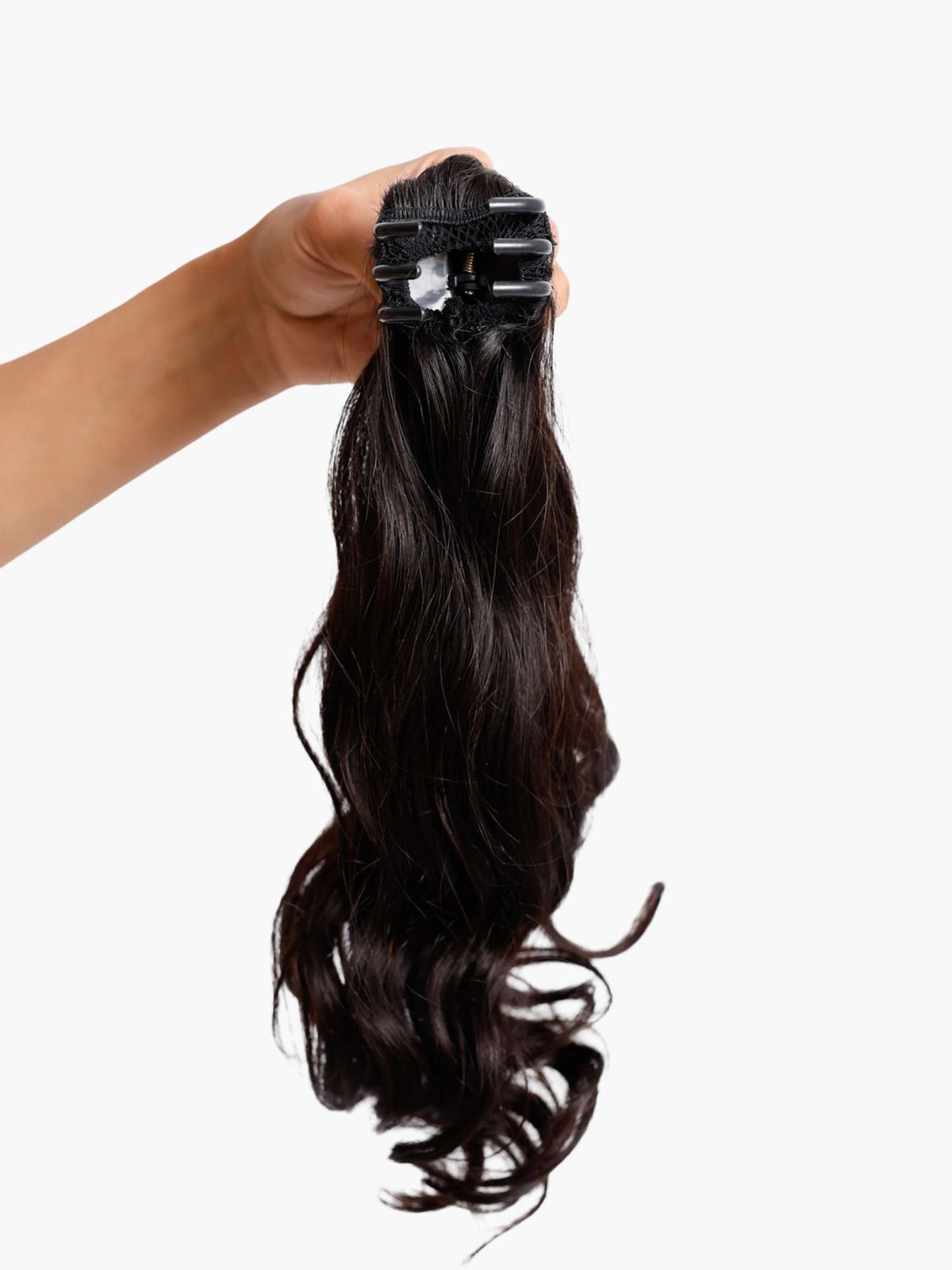
Mini claw clip. A variation on the clip-in, faster still, and the easiest thing in the category for half-up styles or a quick everyday pony. It shares the clip-in failure mode and shares it a bit more strongly, because a claw is bulkier than a flat clasp. Cover it deliberately with hair from above rather than assuming it will hide itself. Our Mini Claw Clip-in Ponytail Extensions are the version of this we make.
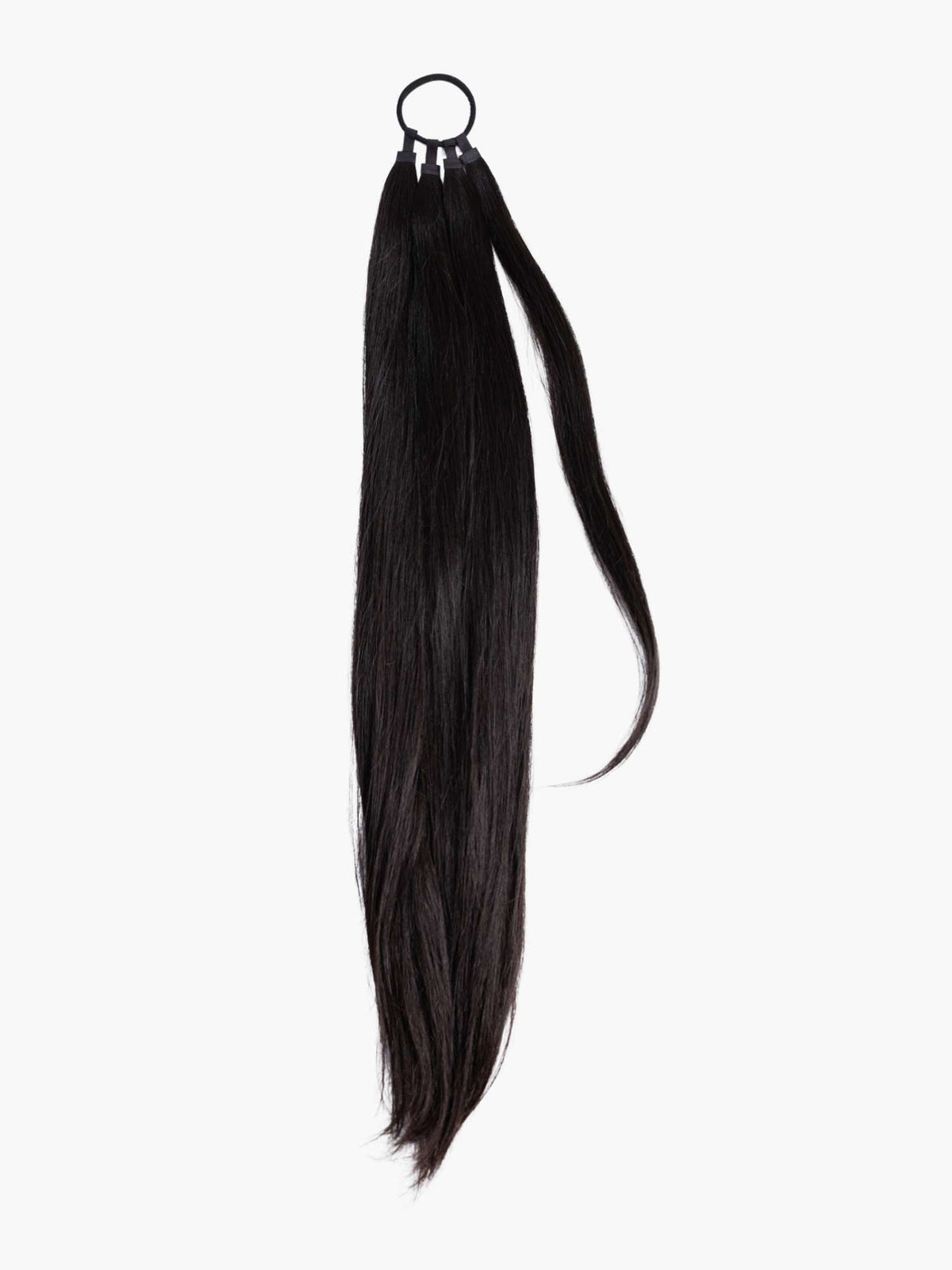
Braided. A different thing entirely. It attaches over the base like the others but finishes as a braid, and a braid disguises a join better than any wrap or clip does, because the crossing sections break up the line where the piece meets your hair. If you like braided styles this is worth considering ahead of both options above, purely for how well it hides. The Braided Ponytail Extensions cover this.
That comparison shot is worth having on the collection page too. Most of the confusion in this category is people buying a fastening they have never actually seen fitted, and one photograph solves it better than a thousand words of specification.
How 1 Hair Stop Makes the Choice Easier
We make what we sell. Every ponytail piece is hand-knotted and wefted in our own facility in Hyderabad in 100% human Remy hair, ethically temple-sourced in South India and never acid-stripped, which is why any of it can be heat styled and recoloured to match your own hair.
Trusted by 300,000+ women worldwide | 4.8★ from 14,700+ reviews | 100% Human Remy Hair | Sourced From Temples | Clip-Free | Handmade in our own facility since 2009 | Damage-free application guarantee
"We are asked which of these is more secure, and the truthful answer is that both are secure on the right head and neither is on the wrong one. A clip needs hair above it to hide under. A wrap needs a base underneath it to hold onto. Tell us which of those you have and the choice makes itself."
Raina Grover and Richa Grover, Co-Founders, 1 Hair Stop
Because we carry every attachment in the same hair, you can start with one and add another later without the colour or texture shifting between them. On a ponytail that matters more than usual, since the piece sits at the back of your head where you cannot check it and everyone else can.
Shop Both Attachments
Both are in the same hair. The only thing that differs is how they hold on.
-
Firm base, most invisible finish: Get the most invisible finish with the Wrap Around Ponytail Extensions, which wrap around your own ponytail and hold with a comb and a velcro fastening rather than clips. Best when your own base is firm enough to keep the piece steady all day.
-
Fine hair or a small base: Add length without bulk using the Flat Clip-In Ponytail Extensions, whose base lies flat against the head so it stays hidden on fine hair. Available in four lengths from 8 to 18 inches, so you can pick the drop you actually want.

- Fastest everyday option: Go from a gathered ponytail to a finished one in a single movement with the Clip-In Ponytail Extensions, the quickest attachment in the range. The sensible pick if it is going on and coming off every day.
-
Short hair or very little to gather: Add a ponytail to short hair with the Mini Clip-In Ponytail Extensions, the smallest and lightest piece we make. Less weight at the base means less strain on hair that is already fragile.
-
A join that will not hide either way: Hide a stubborn join with the Braided Ponytail Extensions, where the braid sits over the attachment instead of beside it. The piece covers its own join, which is what makes it work when wrapping never quite does.
- Not sure your join will sit flat? Read how to hide the join, or book a free video call.
Frequently Asked Questions
Which is more secure, a clip-in or a wrap-around ponytail?
Both are secure on hair that suits them, so the better question is how each one fails. A clip-in holds firmly but the clip can show through fine hair. A wrap-around is invisible when fitted well but has nothing gripping into your hair, so it can creep downward across a day and open at the seam. On fine or short hair the clip-in is the lower-risk choice.
Which one is better for fine or thin hair?
A clip-in, and preferably a flat clasp style in a shorter length. The clip grips a small ponytail that a wrap-around cannot hold, and a shorter piece adds fullness without adding the weight that defeats fine hair. Cover the clip deliberately with hair from above rather than assuming it will hide itself.
Can I use a wrap-around ponytail with short hair?
Usually not, at least not at a high position. A wrap-around needs a firm base to hold onto, and short hair often cannot make a ponytail big enough to carry one. A clip-in grips a smaller base, or a low ponytail or bun gives you more to work with than a high one.
Which looks the most natural?
A wrap-around, when it is fitted properly, because the wrapped strand hides every fastening under a layer of matching hair. A braided piece is close behind for a different reason, since the braid itself breaks up the join. A clip-in is very good but the hardware sits at the base and needs hair above it to disappear.
How long does each take to put on?
A clip-in takes under a minute once you have done it twice. A wrap-around takes two to three minutes because of the comb, the velcro and the wrapping step, and it takes a few attempts before the wrap looks clean. If you plan to wear one most days, that difference matters more than it sounds.
Can I switch between them, or should I pick one?
Plenty of people own both and use them differently, a clip-in for everyday and a wrap-around for occasions and photographs. Buying both from one brand means the colour and texture match, which is not something you can rely on across different suppliers.


