


Ask for long layers and you are asking for the most requested haircut in the world, and the one most likely to come back wrong. Women describe going in with a photograph of soft, moving, voluminous lengths and coming out with something they did not ask for. Eight inches gone. An uneven shape they did not want. Thick wavy hair sent home as a blunt triangle, again.
The reason is not that the stylist was careless, or that the wrong cut was chosen from the wrong gallery. It is that almost everybody, including most of the articles ranking for this search, believes something about layers that is not true.
Short answer: Layers do not add volume. Layering is a technique for removing weight from inside the shape, and that is all it does. What it gives you is hair that will hold the volume you put in when you style it. So a layered cut on thick hair stops it going pyramid-shaped, and a layered cut on fine hair takes away the little weight it had. If you want volume without losing density, the cut is the wrong lever.
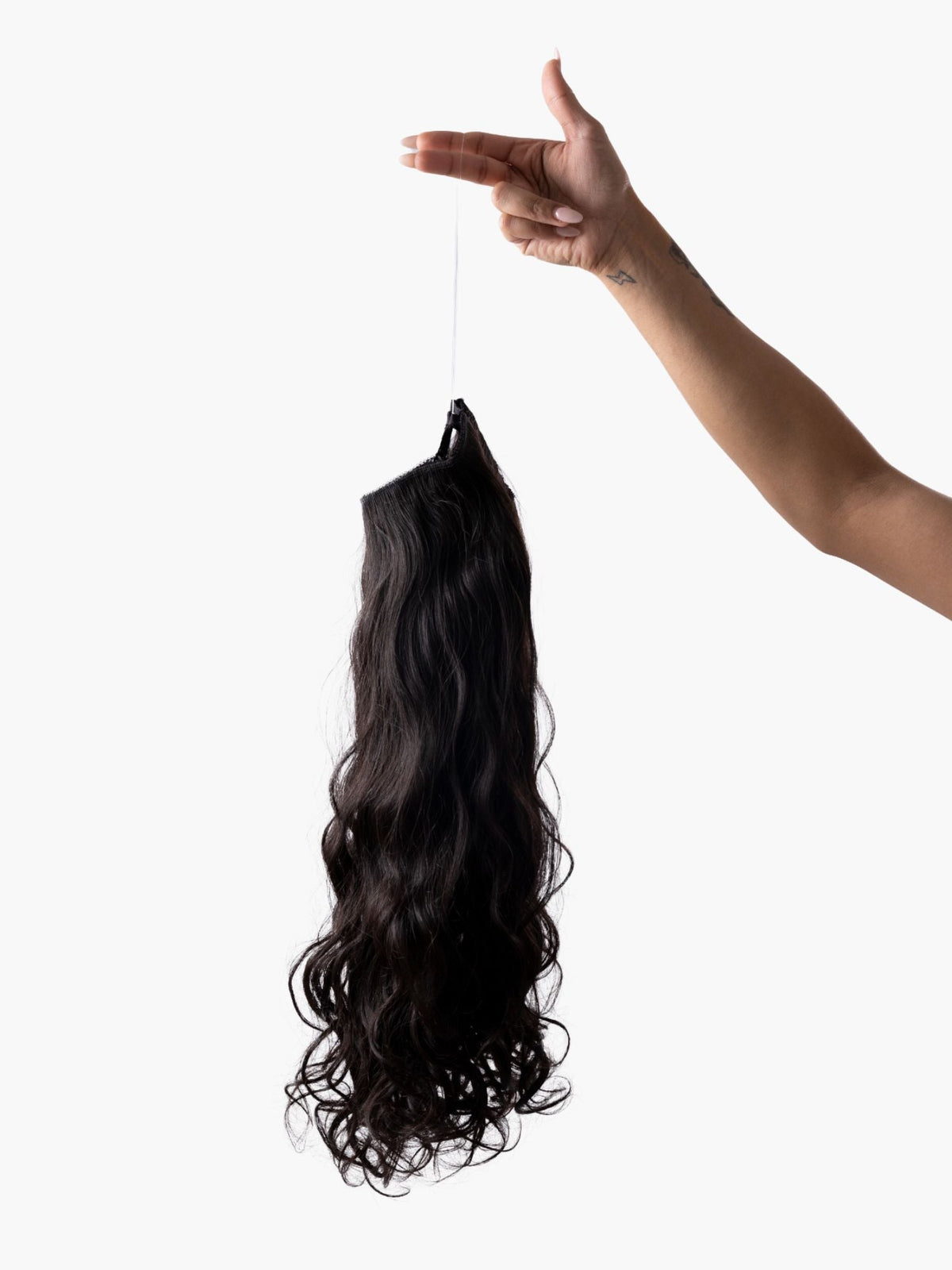
That is a Seamless 7 Set, and it is in this article at the top rather than the bottom for a reason. The photographs you are about to compare yourself against are almost all of hair with more density than yours. Adding density back is the only thing that closes that gap, and no cutting technique can do it.

- The Thing Everyone Gets Wrong About Layers
- Why the Photograph Is Not the Cut
- What Layers Do on Your Hair Specifically
- Butterfly, V-Cut and Long Shag, Explained Properly
- What to Actually Ask For
- If Your Hair Is Fine, Read This Before You Book
- Face Shape, Honestly Assessed
- Why It Comes Back Wrong, and How to Prevent It
- How 1 Hair Stop Makes This Easier
- Shop Length and Volume for Layered Hair
- Frequently Asked Questions
The Thing Everyone Gets Wrong About Layers
Almost every consumer guide to long layers says the same thing: layers add volume. Professional hairdressing education says the opposite, in plain terms. Layering removes weight from the internal lengths of the hair. It does not add volume. What it does is make the hair better able to hold the volume and shape you put into it when you style it.
Read that twice, because everything else follows from it.
Layers are a subtraction. You are taking hair away from the middle of the shape so the outside can move. The lift you see in a photograph is not the layers doing it. It is a round brush, a dryer and product, holding a shape that the layers made possible.
Once you accept that, three things that confuse people stop being confusing.
-
Why thick hair goes triangular: If weight is removed from the wrong place, or not enough is removed from inside, the bulk collects at the bottom and the shape widens as it falls. Women with thick, long, wavy hair describe being sent home again and again with exactly this.
-
Why your hair never looks like the photo when you air dry it: The photo was blow dried. The layers did not put that shape in. You did not, so it is not there.
- Why fine hair often looks thinner after layering: You have removed weight from hair that had very little to spare, and thinned the ends, which is where fine hair is already weakest.
Why the Photograph Is Not the Cut
The result you are looking at in any inspiration photo is made of three things, and the cut is only one of them.
| What makes the result | Who controls it | What happens if it is missing |
|---|---|---|
| The cut | Your stylist, for two hours | The shape is wrong and no styling fixes it |
| The density and texture underneath | Nobody. You have what you have | The same cut reads thin and stringy instead of full |
| The styling | You, every single morning | It falls flat, whatever was cut into it |
Every guide in this category writes about the first column and photographs the other two. That is why a woman can take the right picture to a competent stylist, get a technically good cut, and still be disappointed. She changed one third of the equation.
The density row is the one nobody will say out loud, because most publishers in this space have nothing to sell you for it. We do, which is a conflict worth naming rather than hiding. It also means we are the only ones with a reason to tell you the truth about it.
What Layers Do on Your Hair Specifically
| Your hair | What long layers actually do | The failure to watch for |
|---|---|---|
| Thick and straight | Remove the bulk that makes long hair sit like a curtain | Layers cut too high and too obviously, sitting in visible steps |
| Thick and wavy | The best case. Releases weight so the wave can spring | The triangle, when weight is left at the bottom |
| Fine and dense | Work, if kept long and few. Movement without losing the outline | Over-layering, which leaves the ends see-through |
| Fine and sparse | Usually the wrong call. There is no spare weight to remove | Wispy ends and an outline that has gone soft and thin |
| Curly | Excellent, but only cut dry, so the stylist sees where each curl lands | Cut wet to a straight-hair length, then springing up far shorter |
Find your row before you look at a single photograph. Then look only at photographs of women in your row, which is the thing a gallery will never let you do.
Air dried is the honest condition to photograph this in, and nobody does it. Every inspiration image in this category is finished with a round brush, which is exactly why the cut disappoints on the second morning.
Butterfly, V-Cut and Long Shag, Explained Properly
Three names dominate this search. Here is what each actually is, underneath the marketing.
The butterfly cut: Two tiers rather than one continuous graduation. A shorter internal layer set around the face and crown, and the full-length left underneath. It gives the appearance of a shorter cut without losing length, which is the genuine appeal. It needs enough density to carry two separate shapes, and on fine hair the top tier tends to look like a separate, thinner layer of hair sitting on top rather than part of the same head.
V-cut layers: The perimeter is cut to fall into a V at the back rather than straight across. It is a shape decision more than a layering decision, and it works because it removes bulk from the corners where thick hair collects. It is genuinely best on thick hair. On fine hair a V ends in a point made of very little hair, which is the opposite of what fine hair needs.
The long shag: Heavier internal layering plus texture at the ends. It removes the most weight of the three, so it is the most transformative and the least forgiving. Outstanding on thick wavy hair. On fine hair it is the cut most likely to be regretted.
A pattern, in case it is not obvious: all three of the trending cuts are designed to remove weight, which means all three are designed for hair that has weight to spare. The search volume is enormous and a large share of the women searching have fine hair.
What to Actually Ask For
Taking a photograph in is necessary and not sufficient. Women describe handing over the right picture and still getting something else back. The fix is to say what you want in terms the stylist works in.
- Name the outline first: "Keep the perimeter strong and blunt, and put the layers inside it." A strong outline is what stops layered hair looking thin at the ends, and on fine hair it is the single most important instruction you can give.
- Say where the shortest layer should fall: Point at your own head. Collarbone, chin, cheekbone. This is the number that decides how dramatic the cut is, and it is the thing most often misjudged.
- Say how you dry it: If you air dry, say so before anything is cut. It changes what the cut has to do, and it is why one woman explains that her layers must work without a blow dry, so no razor, which means less volume but a result she can actually live with.
- Ask for a dry cut if your hair waves or curls: Cut wet, curly hair springs up and lands far shorter than intended. Women with wave consistently report better results from dry cutting.
- Agree the maximum length coming off, out loud: Say the number in inches before the first cut. This is the one that prevents the worst outcome, and it costs you one sentence.
One more thing worth knowing. There is a real technical difference between a layer cut at a shallow angle and one cut at a steep one. Cut too steep on straight hair and the shorter pieces push into the length and lie flat, which is the opposite of what you asked for. You do not need the numbers. You do need to say "I want movement, not obvious steps" and to say that your hair is straight, because that changes the answer.
If Your Hair Is Fine, Read This Before You Book
This is the section we have the most right to write, because these are the women who come to us after the haircut rather than before it.
Long layers are recommended to fine hair constantly, on the grounds that they add volume. They do not add volume. On fine hair they remove the small amount of weight that was holding the shape together, and they thin the ends, which is where fine hair is already at its weakest. The result is hair that moves more and covers less.
The professional technique for fine hair goes the other way. Keep the outline strong. Keep the layers internal and long. Use weight at the front rather than removing it. A stronger, blunter perimeter can even make fine hair look longer, because the eye reads a clean line as a full one.
If what you want is the look in the photograph, the honest answer is that you need more hair, not less of it. That is what we make.
- For volume through the lengths: A Seamless 7 Set sits flat against the head, which matters on fine hair where a thicker weft would show through.
- For volume with no clips at all: Halo hair extensions sit on an invisible wire with nothing gripping your own hair, which is the right answer if your hair is fine and fragile rather than just fine.
Worth saying plainly: if what you are seeing is more scalp at the parting rather than thinner ends, that is a different problem and extensions are the wrong product. How to tell if your hairline is receding covers what to look for, and bare or sparse skin rather than short broken hairs is a question for a doctor or a trichologist rather than a hair brand.
Face Shape, Honestly Assessed
Face shape gets more attention in this category than it deserves, because it is easy to write about and it produces tidy lists.
What it genuinely governs is one thing: where the shortest face-framing piece should sit. A piece that ends at the jaw draws the eye to the jaw. One that ends at the cheekbone draws the eye upward and makes a rounder face read longer. That is the whole mechanic, and a competent stylist adjusts it by a centimetre while you are in the chair.
What it does not govern is whether your hair can hold the shape, whether you will be able to reproduce it at home, or whether layering will make your hair look fuller or thinner. Those are density, texture and styling questions, and they decide the outcome.
Why It Comes Back Wrong, and How to Prevent It
The single loudest theme among women who want this cut is not which version to choose. It is finding someone who can do it. They describe hunting for a stylist who genuinely does long layers, passing over portfolios full of blunt cuts and colour work, and travelling to another city for it.
That is a useful signal. Long layering is a technique-heavy cut, and not every good stylist is good at it.
-
Look at portfolios for long hair specifically: A portfolio full of bobs, colour and short shapes is not evidence that someone can do this. Look for long hair with movement in it, photographed from behind.
-
Book a consultation before the appointment: Five minutes, no scissors. Ask what they would do with your density and listen to whether the answer is about weight or about trends.
-
Say the five things above, out loud, before the first cut: Outline, shortest layer position, how you dry it, wet or dry cut, maximum length coming off.
- Accept that you will be styling it: Women who are happy with this cut describe a blow dry, even if it is only five minutes. If you will not do that, ask for a shape that works air dried and expect less lift.
Those two frames would settle more arguments in this category than any amount of writing. The gap between them is the gap between the inspiration photo and the second morning, and it is entirely styling rather than cutting.
How 1 Hair Stop Makes This Easier
We do not cut hair. We make it, in our own facility, which means the women who arrive at our door are usually the ones for whom the cut was not the missing piece.
Trusted by 300,000+ women worldwide | 4.8★ from 14,700+ reviews | 100% Human Remy Hair | Sourced From Temples | Clip-Free | Handmade in our own facility since 2009 | Damage-free application guarantee
"Long layers are sold to women with fine hair as the way to get volume, and it is the exact opposite of what fine hair needs. A cut can only take away. If the photograph she is holding has more hair in it than she has, no stylist alive can close that gap with scissors. We would rather say that plainly than sell her something on a promise a haircut was never able to keep."
Raina Grover and Richa Grover, Co-Founders, 1 Hair Stop
Every set we make is 100% human Remy hair with the cuticles aligned in one direction, hand-wefted in Hyderabad. Because it is human hair, a stylist can cut layers into the set itself so it blends with your own cut rather than sitting under it as a separate block.
Shop Length and Volume for Layered Hair
A cut can only remove. These add back, and all of them can be layered in by your stylist once they are fitted.
-
Fine hair, where a thick weft would show: Add volume without a visible ridge using the Seamless 7 Set Clip-in Extensions, whose wefts are made flat so they sit against the head rather than building bulk. That is what makes them work on fine hair, where there is nothing to hide a thicker weft under.
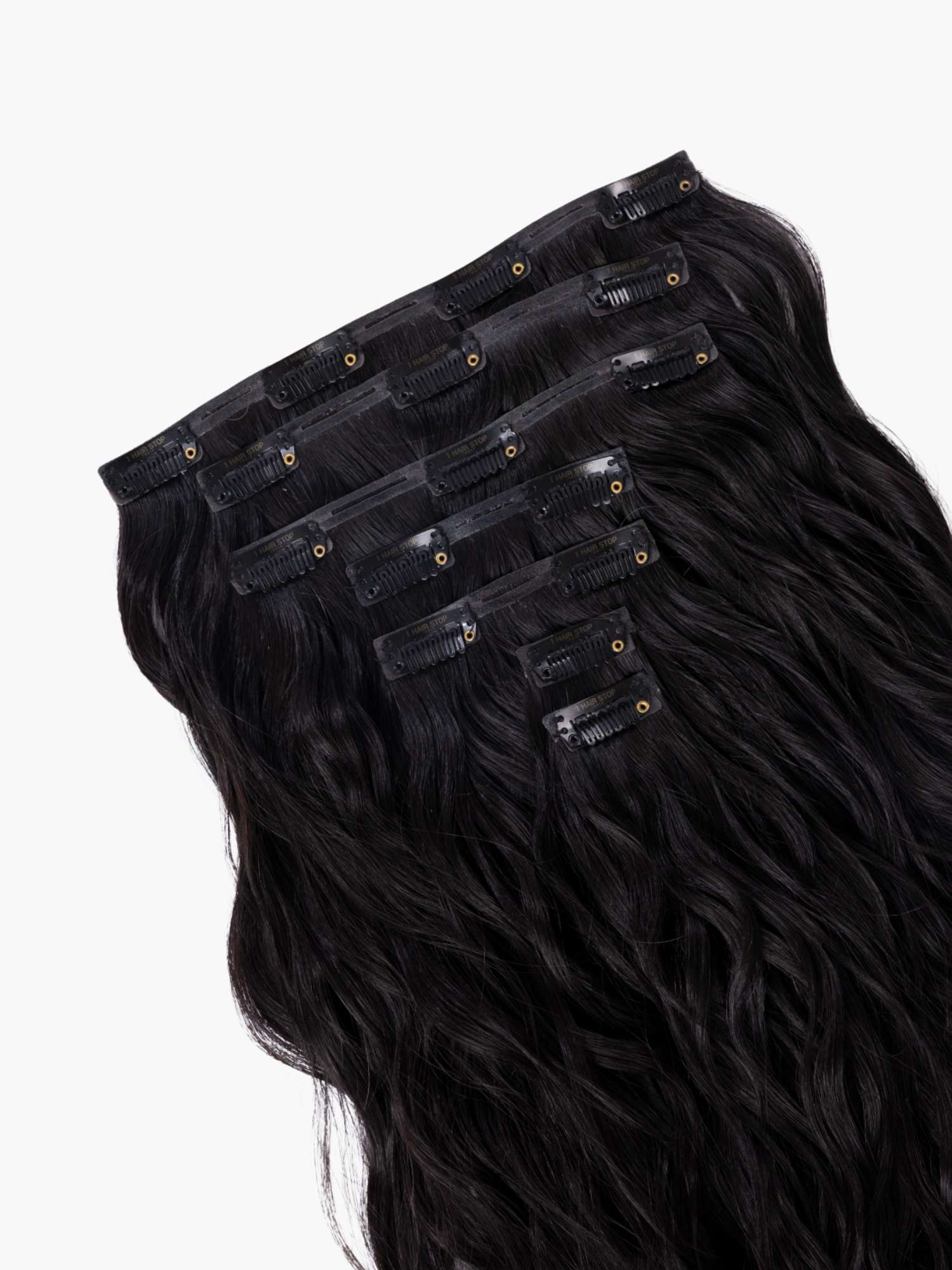
-
Normal to thick hair wanting length and body: Add real length and body with the Classic 7 Set Clip-in Extensions, which carry more hair per weft in a soft natural wave. Thick hair needs that density to blend, otherwise a set sits on top of it rather than disappearing into it.
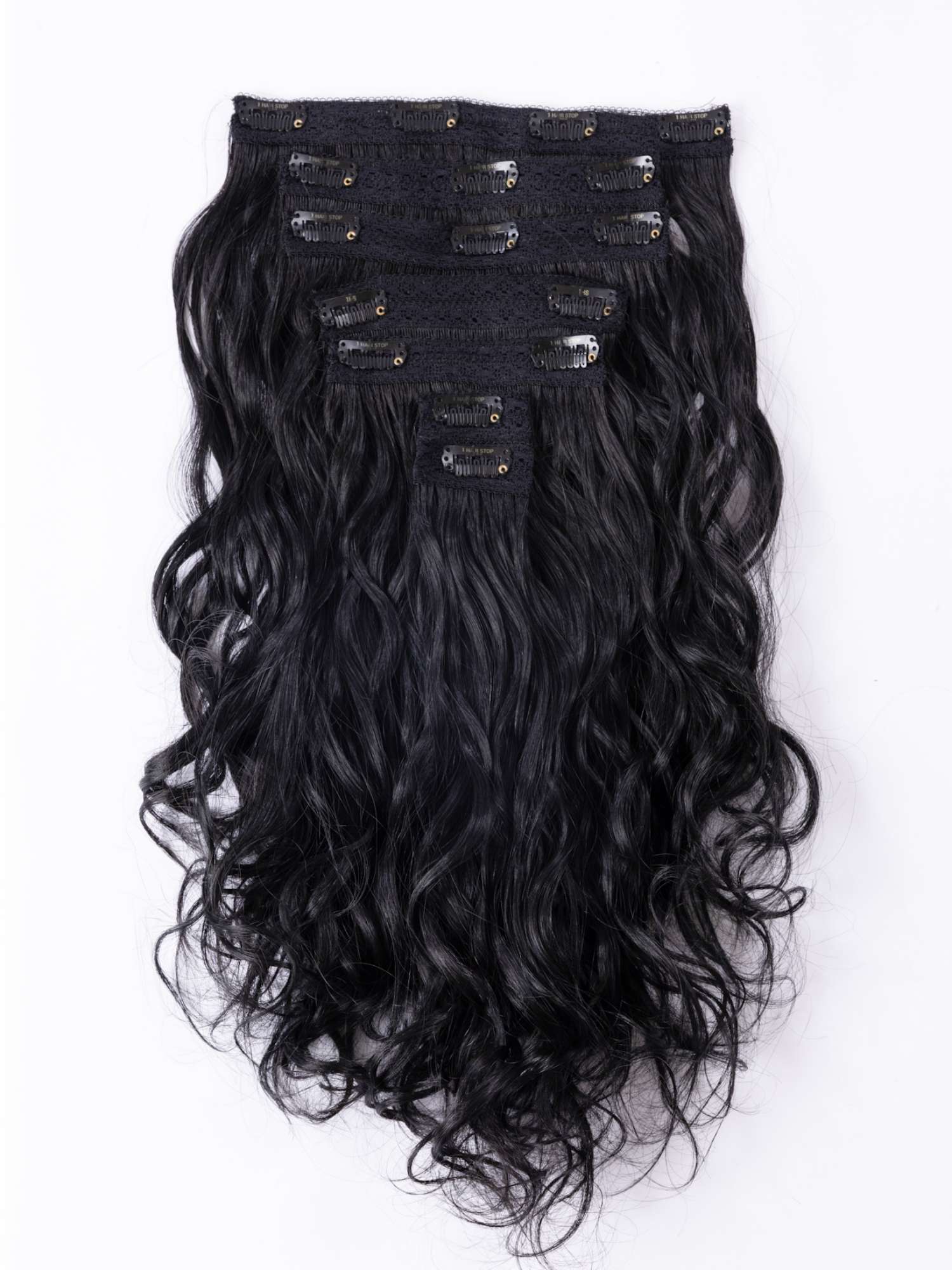
-
Poker-straight hair, where wave would give it away: Match poker-straight hair exactly with the Seamless 7 Set in Natural Straight, matched to straight texture so it falls the way your own hair does. No heat-training it flat every morning before you leave the house.
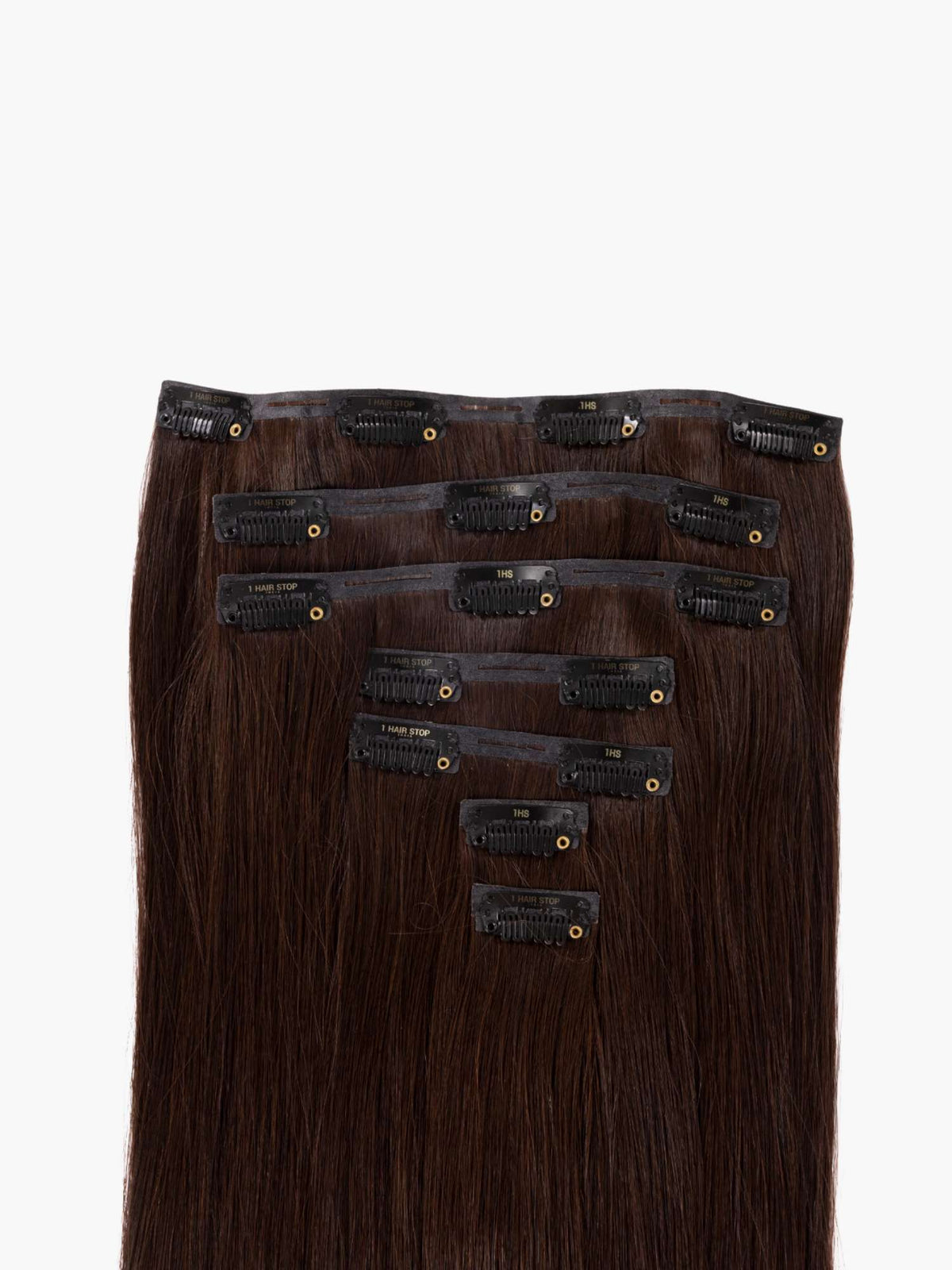
-
Curly or loosely curled hair: Keep your curl pattern consistent with the Classic 7 Set in Loose Curl, where the curl is matched at the source rather than set with heat. It holds through washing the same way your own curl does.
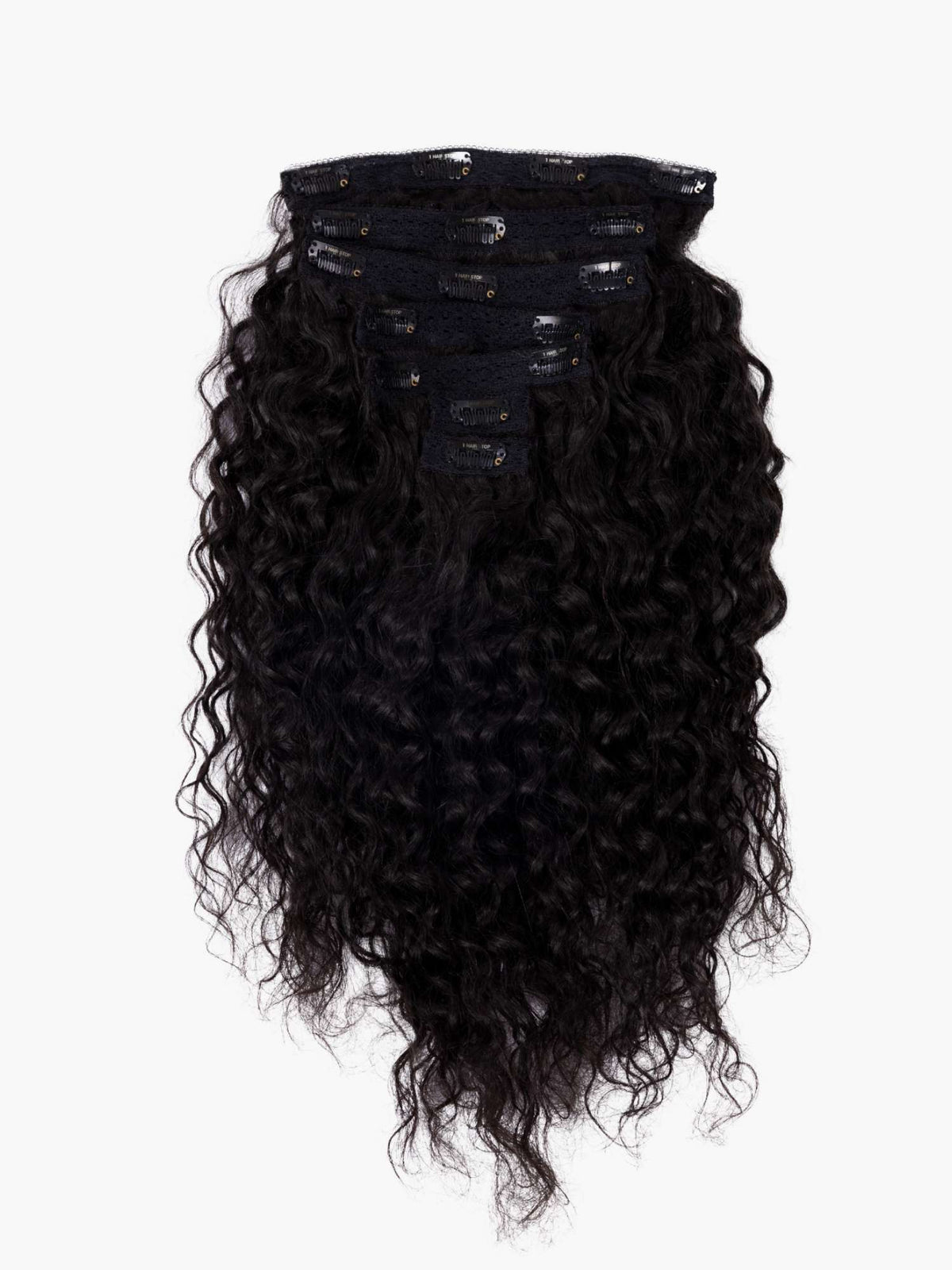
-
Fragile hair that should not take a clip: Add volume with nothing gripping your hair at all using Halo Hair Extensions, which sit on a fine invisible wire instead of clipping in. There is no tension anywhere on your scalp, which is the right answer for hair that is fragile as well as fine.
-
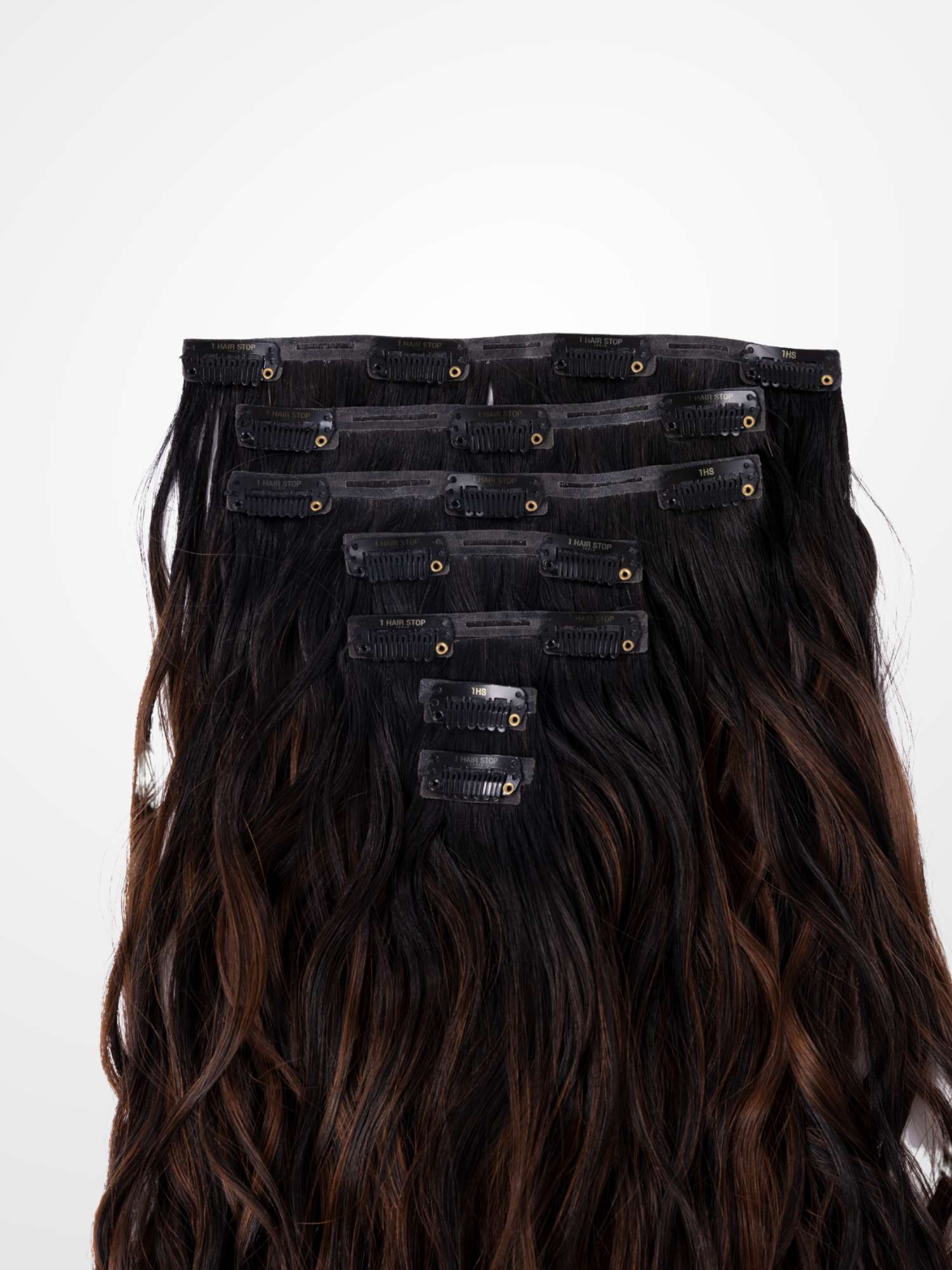
Grown-out colour, where one flat shade will not blend: Blend grown-out colour properly with the Caramel Brown Balayage Seamless 7 Set, which is multi-tonal rather than one flat shade. That is what matches hair which is darker at the root and lighter through the lengths.
- Not sure whether you need a cut or more hair? Read short hairstyles for women for the density question in full, or book a free video call.
Frequently Asked Questions
Do long layers add volume?
No, and this is the most common misunderstanding in the category. Layering is a technique for removing weight from inside the shape. What it gives you is hair that can hold volume once you style it in, which is not the same thing. The lift in an inspiration photograph comes from a round brush and a dryer, not from the scissors. On hair that already has very little weight, removing more usually makes it look flatter rather than fuller.
Are long layers good for fine hair?
Often not, despite being recommended constantly. Fine hair has little spare weight, and layering removes weight and thins the ends where fine hair is already weakest. If you do want them, keep them long, keep them few, and insist on a strong blunt outline, because a clean perimeter is what stops layered fine hair looking see-through at the ends. If you want the volume in the photograph rather than movement, adding density is the honest answer.
Why does my layered hair look like a triangle?
Because weight was left at the bottom of the shape instead of being removed from inside it. This is the classic failure on thick, long, wavy hair, and women with that hair type report it repeatedly. It is a cutting problem, not something you can style out. Ask specifically for weight to be removed internally through the mid-lengths rather than only at the ends.
What is the difference between a butterfly cut, a V-cut and a long shag?
A butterfly cut is two tiers, a shorter internal layer around the face and crown with full length underneath, so it reads as shorter without losing length. A V-cut is a perimeter shape, cut to fall into a V at the back, which suits thick hair because it removes bulk from the corners. A long shag is heavier internal layering with texture at the ends, so it removes the most weight of the three. All three are designed to take weight away, which means all three suit hair that has weight to spare.
Should layered hair be cut wet or dry?
Dry, if your hair waves or curls. Cut wet, curly and wavy hair springs up and lands considerably shorter than intended, which is one of the most common reasons a cut comes back shorter than agreed. Straight hair is usually cut wet without a problem. Say which you want before the appointment starts rather than during it.
Can you put clip-in extensions in layered hair?
Yes, and on layered hair it is usually easier rather than harder, because the layers give the wefts something to disappear into. The important step is having your stylist cut layers into the set once it is fitted, so it follows the same shape as your own hair instead of sitting underneath as a separate block. Human hair can be cut this way. Synthetic generally cannot.


