


Search this and you get galleries. Twenty cuts, thirty cuts, every one photographed on a model with a full head of glossy hair, captioned with a face shape and a celebrity name. You save four of them, you take them to a salon, and six weeks later you are on Reddit asking whether you have made a terrible mistake.
One complaint comes up again and again from women who have tried to choose this way, and it names the problem better than any article has. An article promises the most flattering short haircuts for thin hair, and every model in it has thick hair. Anybody who has chosen a short cut from a gallery has had that thought. Almost nobody has seen it said out loud
Short answer: Face shape is not what decides whether a short cut works on you. Density and texture are. Fine hair that is dense does brilliantly short, which is why so many women are surprised by how good it looks. Fine hair that is sparse does not, because short cuts remove the weight that was covering the scalp. Work out which of those you are before you look at a single photograph, and the rest of the decision gets easy.
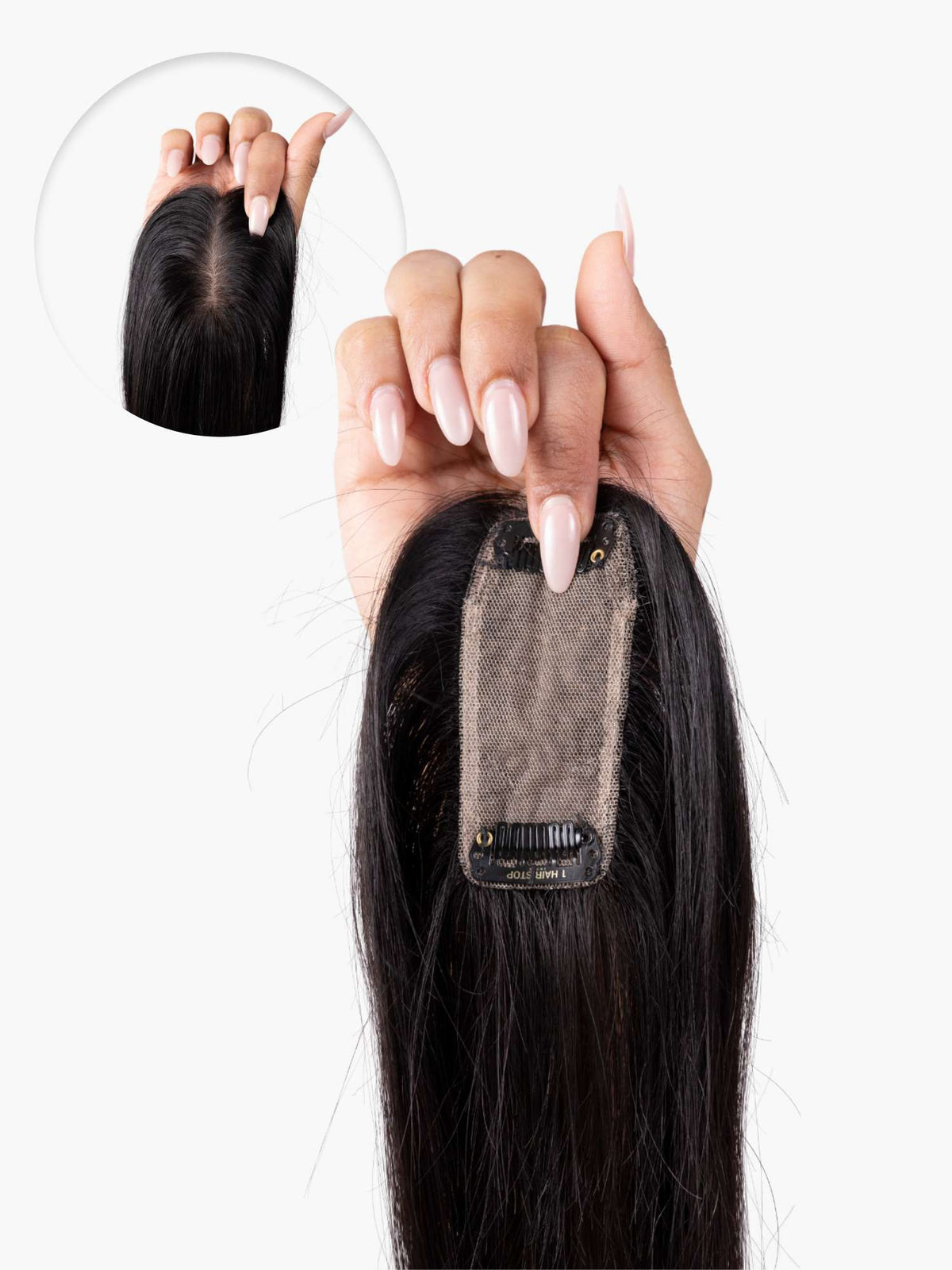
If you turn out to be the second kind, a cut will not fix it, and a Starter Silk Hair Topper will do more than any stylist can. It is a 1.5 by 3 inch silk base, the smallest piece we make, and it sits flat enough to disappear under short hair. Most women in this position do not know it exists, which is why this article starts here rather than with a gallery.
- Why Every Gallery Misleads You
- The Question a Good Stylist Asks First
- Four Hair Types, Four Different Answers
- The Four Cuts That Actually Work
- Face Shape, Honestly Assessed
- If Your Hair Is Fine and Sparse
- What Short Hair Actually Costs You
- Three Things to Do Before You Book
- How 1 Hair Stop Makes This Easier
- Shop Pieces That Work With Short Hair
- Frequently Asked Questions
Why Every Gallery Misleads You
A short cut is the only haircut where the shape depends almost entirely on what the hair does by itself. With long hair, weight does the work. Gravity pulls it into a shape whatever your density is. Take the length off and the weight goes with it, and now the shape is made by how much hair you have and which way it grows.
Which is why a gallery is close to useless. The photograph shows you what that cut looks like on that woman's density and texture. It tells you nothing about what it will do on yours. The article underneath will talk about face shape for four hundred words and never mention the one variable that decides the outcome.
The women on Reddit know this even when the articles do not. One asks about pixie cuts and the first reply is not about her face at all. It is "can I ask what hair texture you have, as that will affect what kind of pixie cut works for you." That is the question, and it is asked by a stranger on a forum rather than by any of the publishers ranking for this search.
That pair of photographs is the argument of this whole article in one frame. Same cut, same stylist, two completely different outcomes, and the only variable is how much hair each woman started with. No gallery in this category publishes the second frame.
There is a second complaint in those threads worth repeating to anyone writing in this category. Search pixie haircuts, one woman says, and you get a lot of stuff that looks like it is straight from the early 2000s. The galleries are not only showing the wrong hair, a lot of them are showing the wrong decade.
The Question a Good Stylist Asks First
Two things, and they are not the same thing, though almost everybody uses the words interchangeably.
Texture is how wide each individual strand is. Fine, medium or coarse. You can feel it by rolling a single hair between your fingers. If you can barely feel it, it is fine.
Density is how many strands you have. You judge it by how much scalp shows when the hair is dry and parted, and by how thick the ponytail is when you gather it.
Fine and sparse is one situation. Fine and dense is a completely different one, and it is the one nobody writes about. A woman on that thread puts it plainly: she has very fine hair but a lot of it, and her hair type, in her words, does phenomenally with short cuts. She is right, and she is describing a large share of the women reading this.
Here is the reason, and it is the only piece of technical fact in this article. Fine strands cannot support their own length. The longer they get, the more they collapse against the head. Cutting them short removes the weight that was flattening them, and suddenly the same hair stands up and looks twice as thick. Fine plus dense is the single best hair type for a short cut there is.
Sparse is the opposite case. The length was not weighing that hair down, it was covering the scalp. Take it off and you have less to cover with, not more.
Four Hair Types, Four Different Answers
| Your hair | How short cuts behave | What to ask for | What to avoid |
|---|---|---|---|
| Fine and dense | Best case. Looks fuller short than it ever did long | Blunt or one-length bob, or a textured pixie | Heavy layering, which removes the body you just gained |
| Fine and sparse | Hardest case. Less length means less coverage | A blunt line at the ends, kept slightly longer | Pixies and heavy texturing, which expose the scalp |
| Thick and coarse | Works, but builds bulk at the sides if cut wrong | Internal layers to remove weight without losing shape | A blunt one-length bob, which turns into a triangle |
| Wavy or curly | Excellent short, provided it is cut for the curl | A shag, or a pixie cut long enough to keep the wave | Cutting it wet to a straight-hair length, then watching it spring up shorter |
Read your own row before you look at a single photograph. Then look only at photographs of women in that row, which is the part a gallery will never let you do.
The Four Cuts That Actually Work
These four come up in every guide, including the ones Google surfaces. What none of them tell you is who each one is for.
The classic layered bob. The most forgiving shape on this list and the safest first short cut. Layers add movement and take weight out, which makes it excellent on fine and dense hair. On sparse hair the same layers work against you, because every layer is a shorter piece not covering scalp. If you are unsure, this is the one to start with and the one you can grow out without a bad stage.
The one-length or blunt bob. The most underrated cut for anyone with less hair than they used to have. No layers means all the weight stays at the ends, and a solid blunt line reads as thickness whether or not it is there. This is the cut for fine and sparse, not the pixie.
The textured pixie. The most dramatic and the least forgiving. It needs density, or texture, or preferably both, because there is nothing left to hide behind. It is also the cut with the highest regret rate, and the reason the grow-out is nine to twelve months rather than three. Worth doing if you want it. Not worth doing because a gallery made it look easy.
The French bob and the soft shag. Both are really one idea: a short cut that leans on texture rather than on precision. The French bob sits at the jaw with airy bangs. The shag uses shattered ends for volume. Both are outstanding on wave and curl, and both go limp on fine straight hair unless you commit to styling them every single day.
Labelling the photographs by hair type instead of by face shape is the entire fix for this category. It costs nothing and no competitor does it, which tells you how little thought goes into most of these galleries.
Face Shape, Honestly Assessed
Face shape is not nothing. It is just enormously over-weighted, because it is easy to write about and produces tidy lists.
What it actually governs is where the shortest point of the cut sits. A cut that ends at the jaw draws attention to the jaw. One that ends at the cheekbone draws attention to the cheekbone. That is the whole mechanic, and a competent stylist adjusts it by a centimetre in either direction while you are in the chair.
What face shape does not govern is whether the cut will hold its shape, whether you will be able to style it at home, or whether it will make your hair look thicker or thinner. Those are density and texture questions, and they matter more.
The cost of getting this backwards shows up constantly. Two women looking at the same photograph will both say a version of the same thing: this is what I wanted if my face were slimmer, or I wish I could pull this off. Both are looking at a cut on somebody else's hair and blaming their own face for the gap.
If Your Hair Is Fine and Sparse
This section is the one we have the most right to write, because it is the customer we see every day.
Going shorter is often recommended to women with thinning hair, and the reasoning sounds right. Shorter hair looks thicker. It does, on fine and dense hair. On sparse hair it frequently does the opposite, because you have removed length that was lying across the scalp and covering it.
If you can see more scalp at the parting than you used to, a haircut is the wrong lever. It is not a failure of styling and it is not something a better stylist will solve. What works is adding hair back at the top, and there are two honest ways to do that.
- A small topper at the parting. A 1.5 by 3 inch silk base is the smallest we make and sits flat enough to work under short hair. The silk hides the knots, so the parting reads as your own scalp. Our size guide walks through measuring the area.
- Clip-free coverage at the front. If what you can see is at the hairline rather than the parting, the Receding Hairline Clip-free Band covers the front and temples with no clips at all, which matters on hair that is already fragile.
If you are not sure which of those you are looking at, how to tell if your hairline is receding walks through what to look for. And if what you are seeing is bare or sparse skin rather than short broken hairs, that is a conversation for a doctor or a trichologist rather than a hair brand or a stylist.
What Short Hair Actually Costs You
Short hair is sold as the low maintenance option. It is lower effort per morning and considerably higher commitment overall, and the guides that call it easy are only counting the mornings.
Trims every four to six weeks. This is not optional the way it is with long hair. A short shape loses its outline fast, and the difference between a sharp bob and a shapeless one is about three weeks. Multiply that by a year before you decide.
Styling is compulsory. Long hair has a wash-and-leave-it is setting. Most short cuts do not. You will need a texturizing or salt spray, a lightweight pomade or paste, and five minutes with a dryer. Skip it and the cut looks flat rather than undone.
Growing it out takes longer than you think. A bob back to shoulder length is roughly a year. A pixie back to a bob is nine to twelve months, most of it in a stage nobody enjoys. This is the real reason the Hairstyle Advice post titled "I think I messed up cutting my hair short" has thousands of comments under it.
None of this is an argument against going short. The woman on that thread who has worn the same cut for fifteen years, calls it easy to maintain and says she is always getting compliments, is the normal outcome. It is an argument for knowing the terms before you sign.
Three Things to Do Before You Book
- Do the density check. Dry hair, natural parting, good light, photograph the top of your head from above. That photograph tells you which row of the table above you are in, and it is more useful than any gallery.
- Find photographs of your hair, not your face. Search the cut plus your texture and density, not the cut plus your face shape. Fine dense straight bob will show you something your own head can actually produce.
- Take the picture in, and say the one sentence that matters. Every woman in those threads who was happy had brought a photograph. Hand it over and say: this is the shape I want, tell me what it will do on my density. A good stylist will adjust it in front of you. One who says nothing and starts cutting is the one to worry about.
Three reference photographs solve a problem no amount of writing does, because density is a thing people cannot judge in the abstract. Put her own photo next to these and she knows her answer in five seconds.
How 1 Hair Stop Makes This Easier
We do not cut hair. We make it, which means the women who come to us are usually the ones for whom a cut was not the answer, and we have seen what happens when short hair is recommended to somebody it does not suit.
Trusted by 300,000+ women worldwide | 4.8★ from 14,700+ reviews | 100% Human Remy Hair | Sourced From Temples | Clip-Free | Handmade in our own facility since 2009 | Damage-free application guarantee
"A great many women are told to cut their hair shorter because it will look thicker, and for a lot of them that is exactly right. For the ones whose hair is fine and sparse rather than fine and dense, it is the worst advice they will be given that year. Nobody asks the question first, so we ask it before we sell anybody anything."
Raina Grover and Richa Grover, Co-Founders, 1 Hair Stop
Every piece we make is hand-knotted or wefted in our own facility in Hyderabad in 100% human Remy hair. If you want to know which row of that table you are in before you book a cut, send us a photograph of your parting and we will tell you honestly, including when the answer is that you do not need us.
Shop Pieces That Work With Short Hair
Most hair pieces need length to attach to. These are the ones that do not.
-
Coverage at the parting, under a short cut: Starter Silk Hair Topper. A 1.5 by 3-inch silk base, the smallest piece we make, for one thin patch or a first topper.
-
Coverage at the front hairline, clip-free: Receding Hairline Clipfree Band. Covers the front hairline and both temples with a velvet under grip and an adjustable band, so nothing clips into the hair it is covering.

-
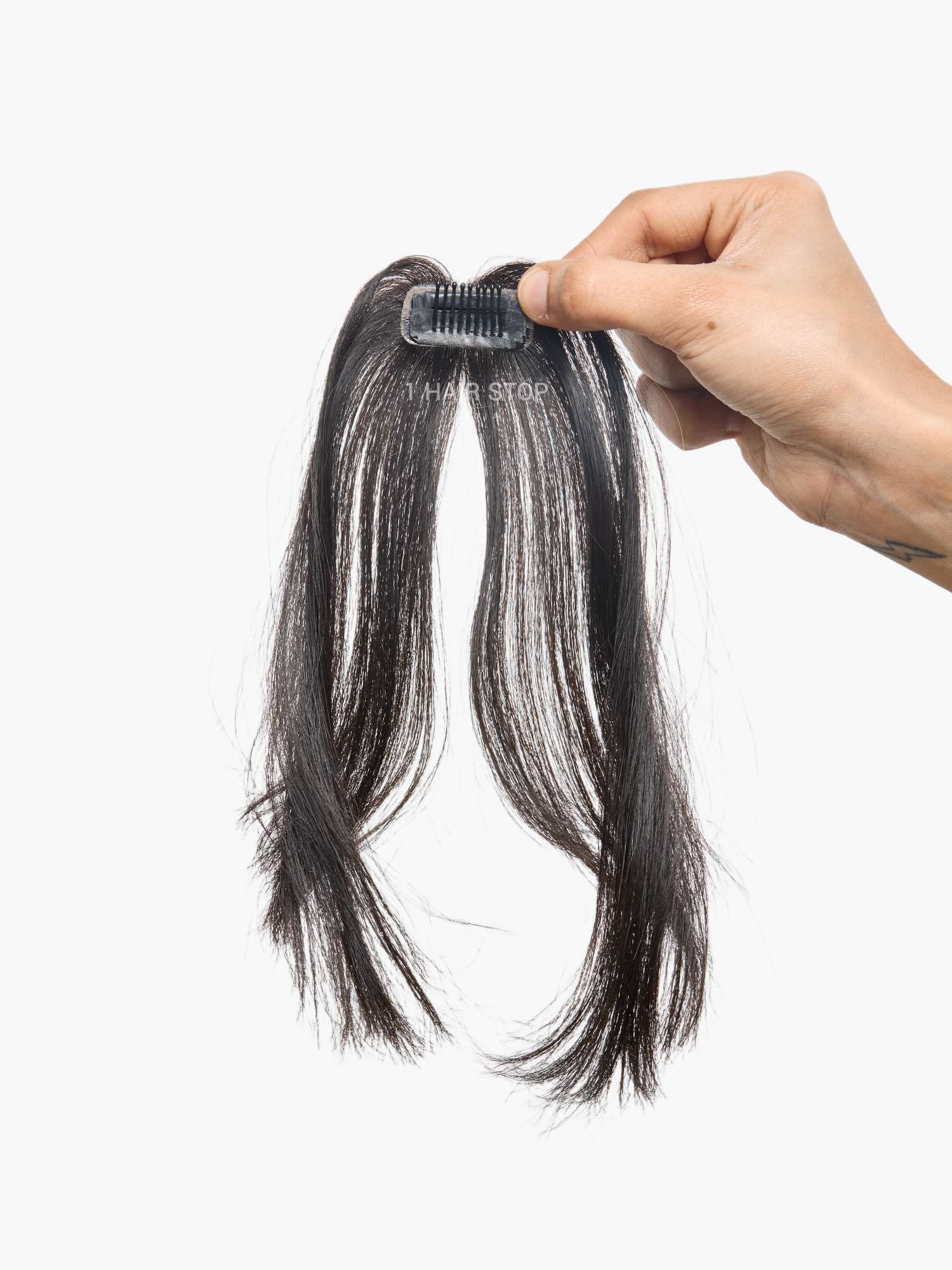
A fringe without cutting one: Clip-In Curtain Bangs. Two soft face-framing pieces that cover the front hairline and the temple corners without committing to a cut.
-
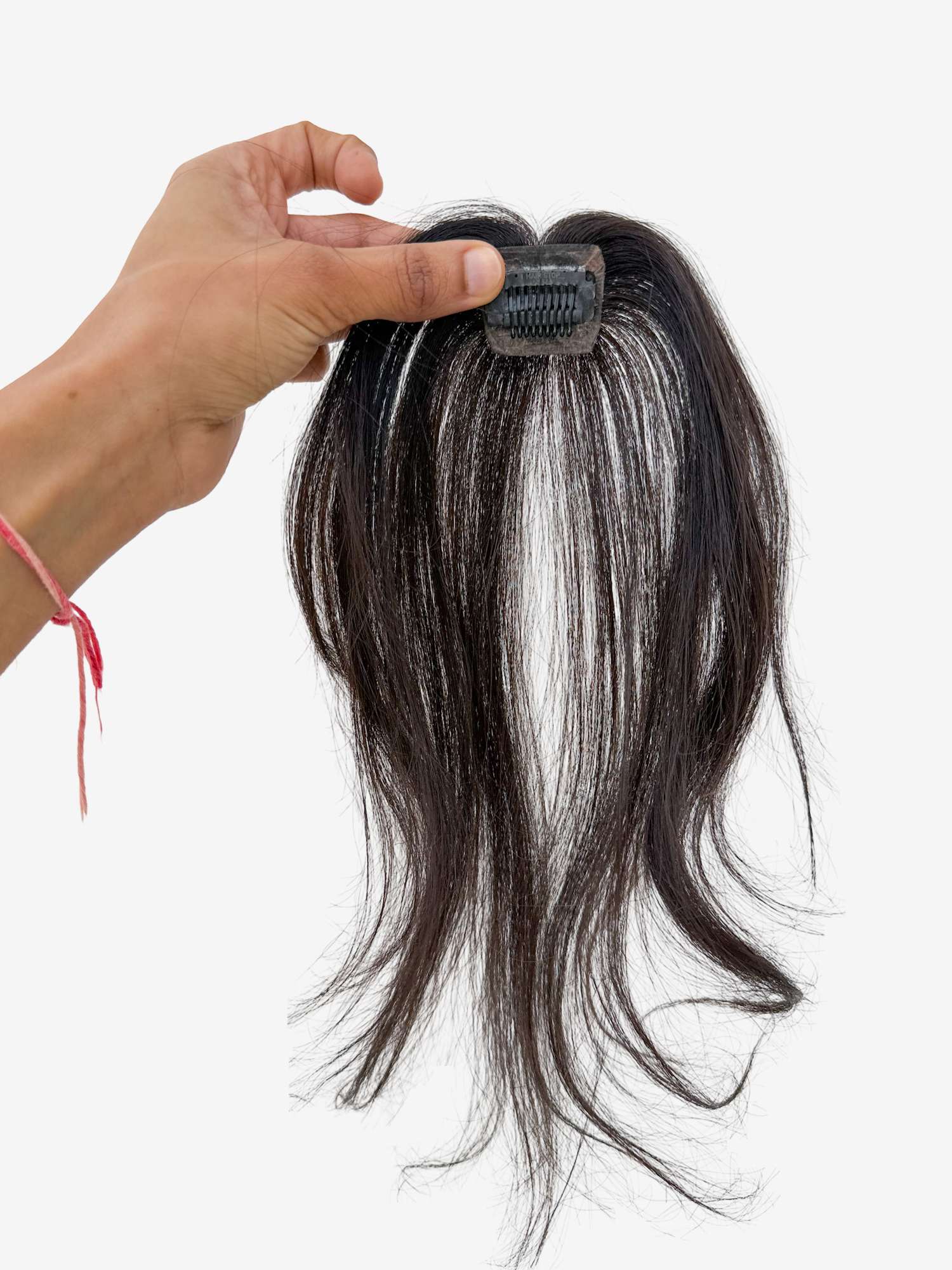
The most natural fringe at close range: SkinJect Clip-In Bangs. The same fringe with a skin-like top, so the point where the bangs start reads as scalp rather than as a base.
-
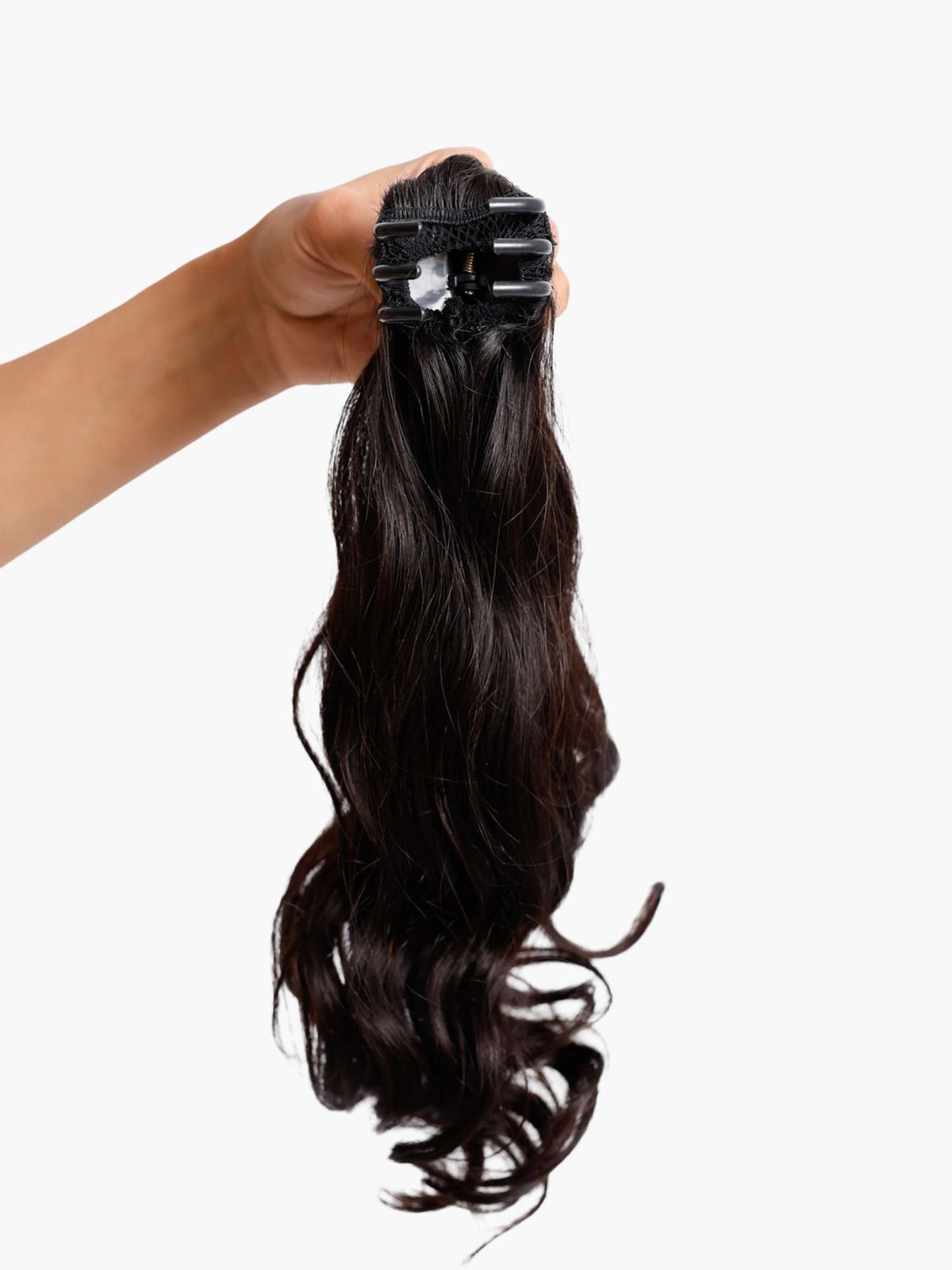
A ponytail on hair too short to gather: Mini Clip-In Ponytail Extensions. The smallest and lightest piece we make, built for short hair or very little to gather.
-
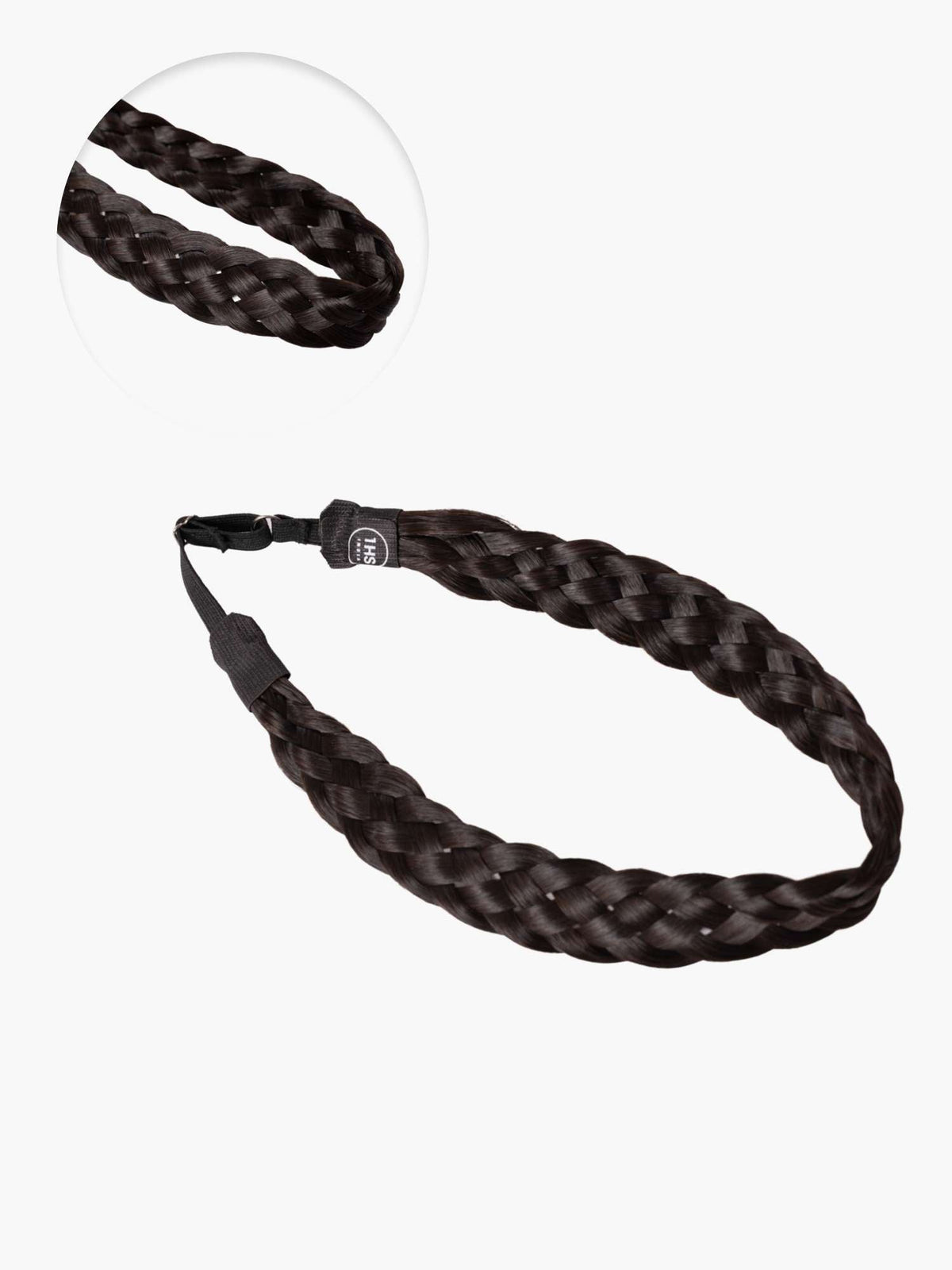
Covering the front with no attachment at all: Braid Hairband. A braid on a flexible band that sits over the hairline rather than behind it, which is what a normal fabric headband does not do.
- Not sure whether a cut or a piece is your answer? Read hairstyles that cover a receding hairline, or book a free video call.
Frequently Asked Questions
Does short hair make thin hair look thicker?
It depends entirely on whether your hair is fine or sparse, which are not the same thing. Fine hair that is dense looks considerably thicker short, because removing length removes the weight that was flattening it against your head. Sparse hair usually looks thinner short, because the length was covering scalp rather than being weighed down. Work out which you are before you cut.
What is the best short haircut for fine hair?
A blunt, one-length bob in most cases. No layers means the weight stays at the ends, and a solid blunt line reads as thickness whether or not the density is there. Heavy layering and textured pixies do the opposite on fine hair, because every layer is a shorter piece that is no longer covering anything. If your fine hair is also dense, a layered bob or a textured pixie opens up as options.
Does face shape really decide which short haircut suits me?
Less than the galleries suggest. Face shape governs where the shortest point of the cut should sit, which a stylist adjusts by a centimetre while you are in the chair. It does not govern whether the cut will hold its shape, whether you can style it at home, or whether your hair will look thicker or thinner. Those are density and texture questions and they matter more.
How often do you need to cut short hair?
Every four to six weeks, and unlike with long hair it is not optional. A short shape loses its outline quickly, and the gap between a sharp bob and a shapeless one is roughly three weeks. Work out what that costs over a year before you commit, because it is the part the low-maintenance framing leaves out.
How long does it take to grow out a pixie cut?
Nine to twelve months to reach bob length, and most of that time is spent in an awkward middle stage. A bob back to shoulder length is around a year. This is worth knowing before the appointment rather than after, and it is the single biggest source of regret in the online discussions about short hair.
Can you wear hair extensions or a topper with short hair?
A topper, yes, and it is often the better answer. A small silk base sits flat enough to disappear under a short cut and adds coverage at the parting where short hair has least. Clip-in bangs and a braid hairband also work. Long clip-in extensions generally do not, because there is not enough of your own hair to hide the wefts, and a mini clip-in ponytail is the exception built for that case.


